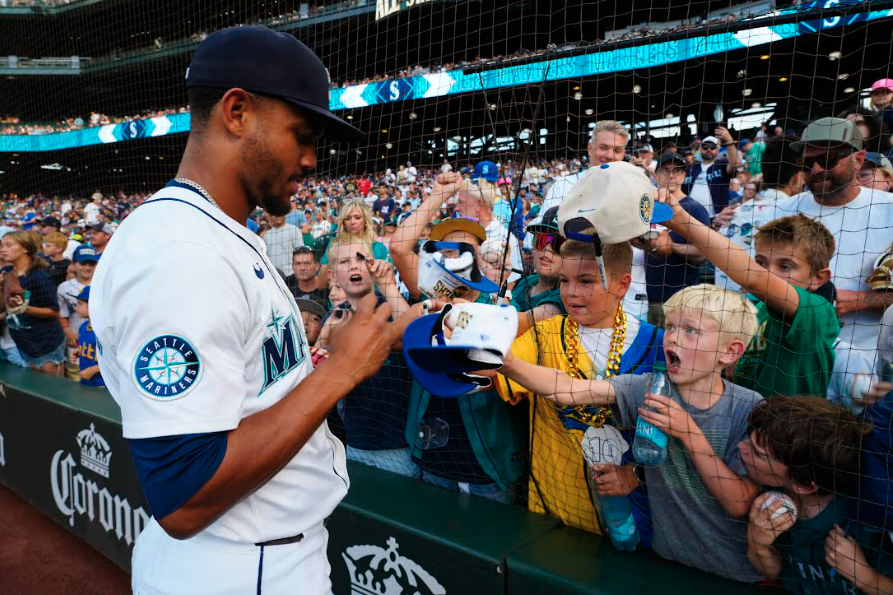
In a world of screens, apps, and instant everything, few things can match the excitement of opening your mailbox and finding an envelope from your favorite Mariner, with your card inside and signed in real ink. Through-the-mail (TTM) autograph collecting is a simple, old-fashioned hobby that lets families slow down, write real letters, and connect with the players their kids cheer for every summer at T-Mobile Park.
Best of all, it’s a hobby you can do at the kitchen table with nothing more than a few stamps, a trading card, a self-addressed stamped envelope, and a little imagination. In a city where baseball is practically a summer soundtrack, Mariners fan mail offers kids a personal connection to the players they watch under the lights at T-Mobile Park.
Why Kids (and Parents) Love It
This hobby is hands-on, inexpensive, and quietly teaches lifelong skills:
- Writing and communication. Kids learn how to compose a letter, address an envelope, and communicate politely.
- Respect and gratitude. They learn to ask kindly, say thank you, and understand that a response is a privilege – not a guarantee.
- Patience and delayed reward. In a world of instant everything, TTM collecting reminds kids that the best surprises are often the ones you wait for. And when that envelope finally returns, perhaps days, weeks, or sometimes even months later, the joy is worth every minute of anticipation.
Getting Started
- Pick the right item. Use inexpensive trading cards or 4×6 photos. Never send anything valuable or sentimental, as there’s always a risk it won’t come back. Players rarely sign bats, balls, jerseys, or other memorabilia through the mail.
- Write a short, kind letter. Encourage your child to write a simple, friendly note. It can mention a favorite game, a great play, stats, or something they admire about the player. Then include a polite request to sign the enclosed card and always end with a sincere thank-you. Typing is fine, but handwritten letters feel more genuine. Players notice and are more likely to respond.
- Include a self-addressed, stamped envelope (SASE). This makes it easy for the player to send the card back. The athlete shouldn’t have to track down postage or envelopes. Make the process as easy as possible for them.
- Send only one or two items. More than that can appear greedy or suggest resale intentions. In fact, sending just one item often leads to the best results.
When and Where to Send
You’ll have the best luck during spring training and the regular season.
Spring Training (February to March)
During spring training, you can send letters to the Mariners at their spring training facility in Peoria, Arizona. Address the envelope directly to the player, using the format below:
Logan Gilbert
c/o Seattle Mariners
Peoria Sports Complex
16101 N 83rd Avenue
Peoria, AZ 85382
The spring training home opener is scheduled for February 20, 2026 against the San Diego Padres. You can begin mailing letters to the players a few days beforehand. The final spring training home game is scheduled for March 21, 2026 against the Chicago Cubs.
Regular Season (March to September)
During the regular season, send mail directly to the player at T-Mobile Park. The home opener is scheduled for March 26, 2026 against the Cleveland Guardians. You may begin sending your autograph requests to T-Mobile Park a few days prior to that date. The final regular-season home game is September 27, 2026 against the Los Angeles Angels.
Address the envelope to the player at T-Mobile Park like this:
Luis Castillo
c/o Seattle Mariners
T-Mobile Park
1250 First Avenue South
Seattle, WA 98134
As with all outgoing mail, be sure your return address is clearly written on the outer envelope, just in case it gets misrouted.
Make It a Family Project
Create a simple chart or spreadsheet to track:
- Who your child wrote to
- The date each letter was mailed
- Where it was sent
- When (or if) something comes back
- How many days the response took
Kids love watching the tracker fill up, and it turns the hobby into a mini-lesson on dates, data, and probability.
Manage Expectations
Not every player signs. Some send pre-printed photos. Some letters disappear altogether. That’s okay. Superstars, in particular, receive thousands of letters every season, and it’s simply not possible for them to respond to everyone. Kids may write to a favorite All-Star and never hear back because they are overwhelmed with mail. Let your child know this ahead of time so they don’t take it personally. Explain to your child that TTM collecting is about practicing kindness, learning patience, and celebrating the small wins
It also helps to send a mix of letters: a few to big-name superstars, some to everyday starters and mid-tier players, and a handful to rookies or even members of the coaching staff. A few surprises from lesser-known Mariners can be equally satisfying as receiving from a superstar player.
Safety Tips for Parents
Review every letter before it’s mailed. Make sure your child doesn’t include personal details like phone numbers, school names or schedules. If privacy is a concern, consider using a family P.O. Box. Just keep in mind that some players are less likely to respond if the return address looks business-like, as they may assume the request is for resale.
Why It’s Worth Trying
Through-the-mail autograph collecting is a chance to slow down, connect as a family, and rediscover the simple joy of putting something meaningful in the mailbox.
And when that signed card from your child’s Mariners’ hero finally arrives, it becomes more than just a keepsake. It becomes proof that kindness, effort, and patience still matter, especially in a fast-moving world.