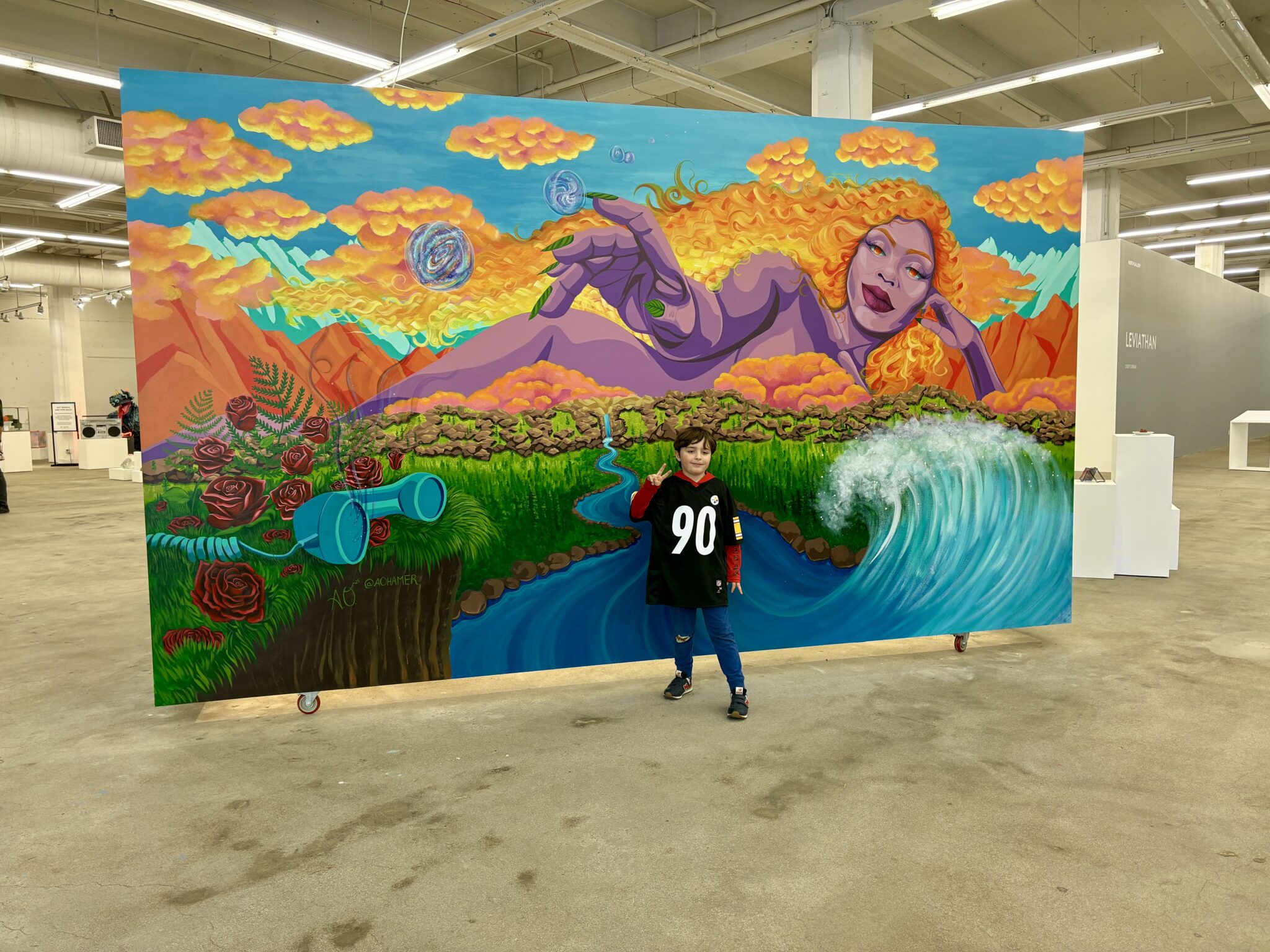
If your kids think art museums are all quiet halls and “don’t touch” signs, Seattle’s scene offers a surprise. On one end of the spectrum is Cannonball Arts, a raw, anything-goes space where kids can sketch, vote on art, and operate video installations. On the other is the Henry Art Gallery, Washington’s first public art museum, where big ideas and contemporary works spark rich conversations. I visited both with my family — and found two very different ways to experience art with kids.
Cannonball Arts: New Kid on the Block
If you’ve lived in Seattle long enough, saying Cannonball Arts is “in the old Bed Bath and Beyond” will suffice for directions; if you’re new here, it’s on 3rd and Virginia. The space is enormous: two floors of art and little else. Traditional museum niceties, like shiny floors and gallery walls, are minimal or absent. But when visiting with two kids under ten, Cannonball’s DIY aesthetic worked in our favor: no one shushed us, and we could all relax and enjoy the art.
Interactivity Abounds – Age Permitting
First, fair warning: kids are not permitted on two current installations. Stephanie Metz’s hot-pink soft sculpture “Toxic Beauty“, for example, conceals a fully functional mechanical bull ride, but only for guests 13 and up. My kids were disappointed they couldn’t ride. Their disappointment faded as we rode the escalator to the second floor and explored the indoor sculpture park, complete with live plants and a pond.
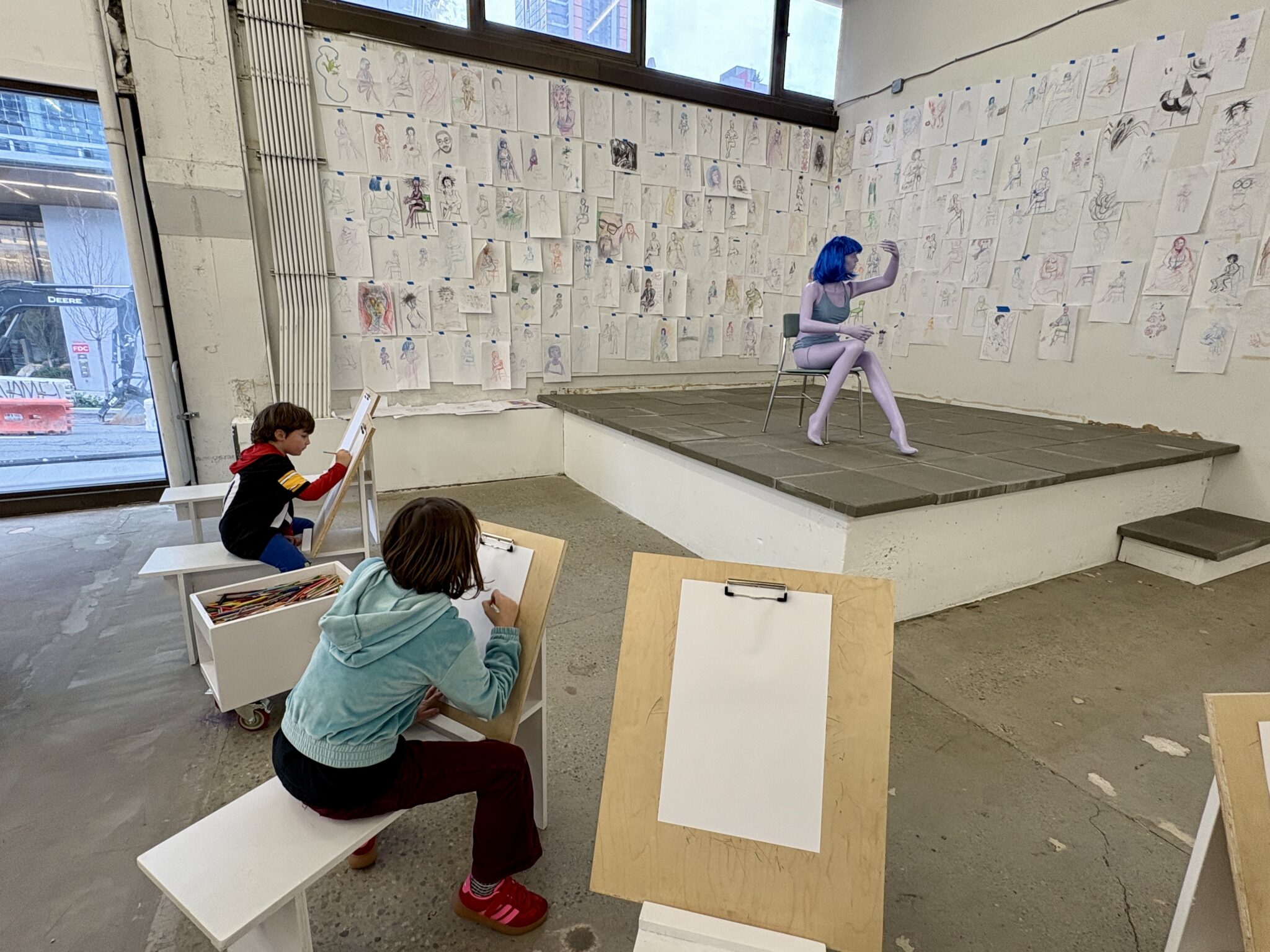
Cannonball Arts. (Image: Elizabeth Hunter / Seattle’s Child)
“I loved seeing nature inside the building,” said Henry, 7.
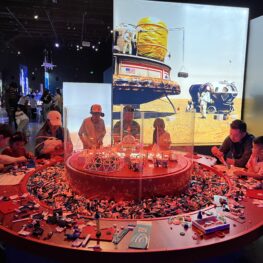
At Cannonball, interactivity abounds. The kids sketched on easels at a figure drawing session, operated video artworks at the “Electronics Department,” and voted on their favorite image for “Mirror Mirror“, an audience-generated exhibit.
Mare Hirsch’s “Transition Networks” mesmerized our family. In the darkness of a freestanding black box theatre, Hirsch arranged dozens of warm-toned hanging lights to blink on and off at random, accompanied by clicking noises like the changing of timetables at a train station.
Cannonball Arts isn’t really a museum. Most of the artworks — even the big ones — are for sale. But it doesn’t feel remotely like a gallery. It feels like something new.
Cannonball Arts is open Thursday through Saturday, 11 a.m. to 7 p.m., and Sunday from 11 a.m. to 5 p.m. Kids under 10 are free; students and seniors are $20, adults are $25.
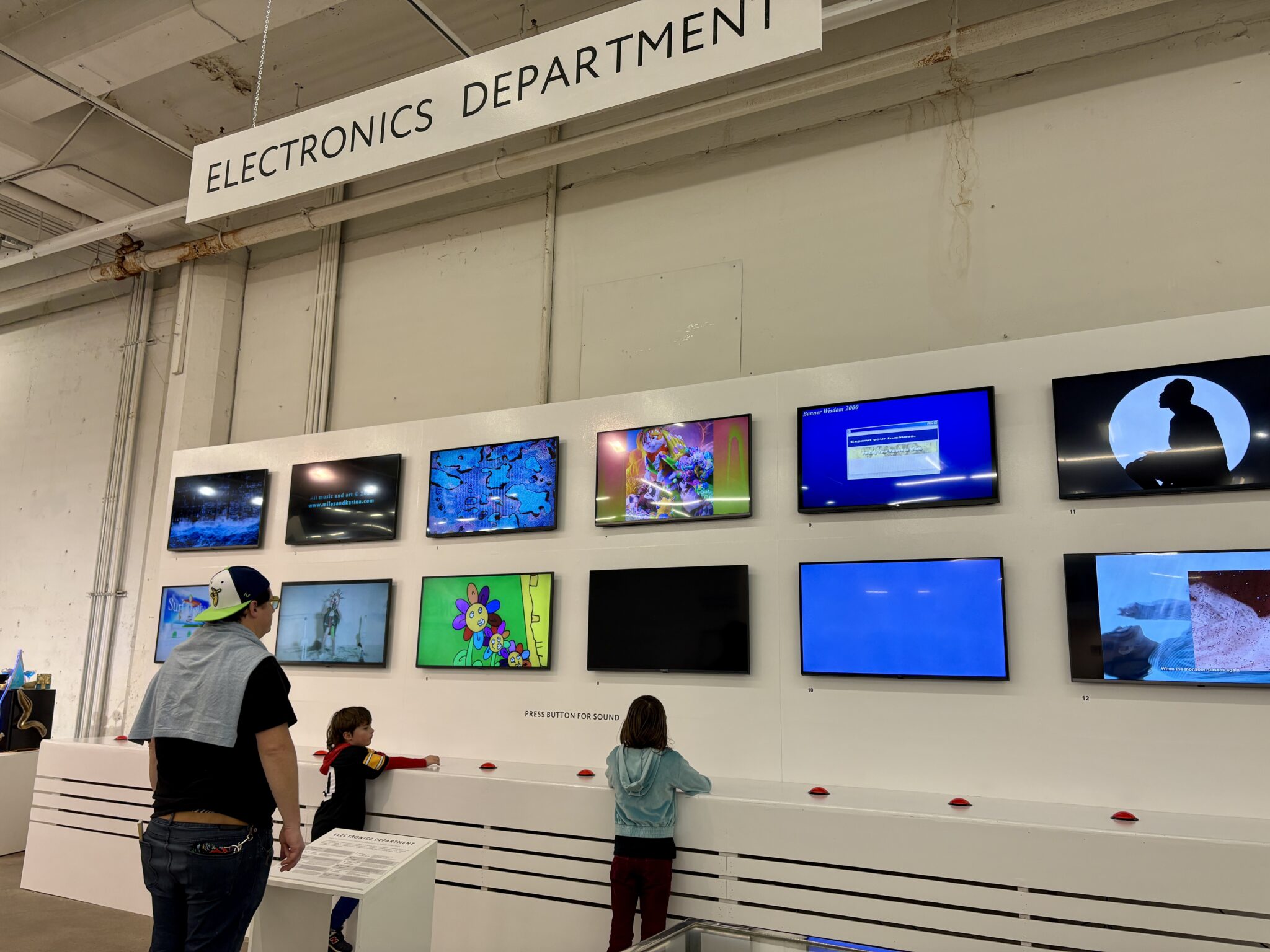
Cannonball Arts. (Image: Elizabeth Hunter / Seattle’s Child)
Henry Art Gallery: 99 Years of Contemporary Arts
On the other end of history, Washington state’s first public art museum, the Henry Art Gallery, is 99 years old. Cora, my 9-year-old, and I visited the elder statesman of art museums to see two exhibitions by prominent Black American artists: Rodney McMillian: “Neighbors,” and Kameelah Janan Rasheed: “we leak, we exceed.”
Stranger (and Beautiful) Things
McMillian, 57, is a nationally renowned artist and Professor of Sculpture at the UCLA School of Arts and Architecture. “Neighbors” is his first exhibition at the Henry.
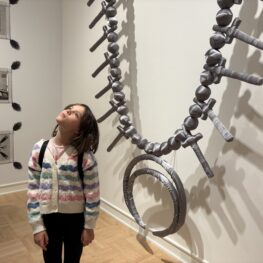
The show features sculpture, painting, and video. More than a dozen all-white sculptures, which he calls “specimens,” twist and grow like sea anemones covered in white bandages. Sitting on bits of rock or fabricated grass and not art-white plinths, they appear more like fossils in a natural history museum than sculptures. Some specimens, said Cora, look like polar bears, some like people dancing, and some like people making rude gestures.
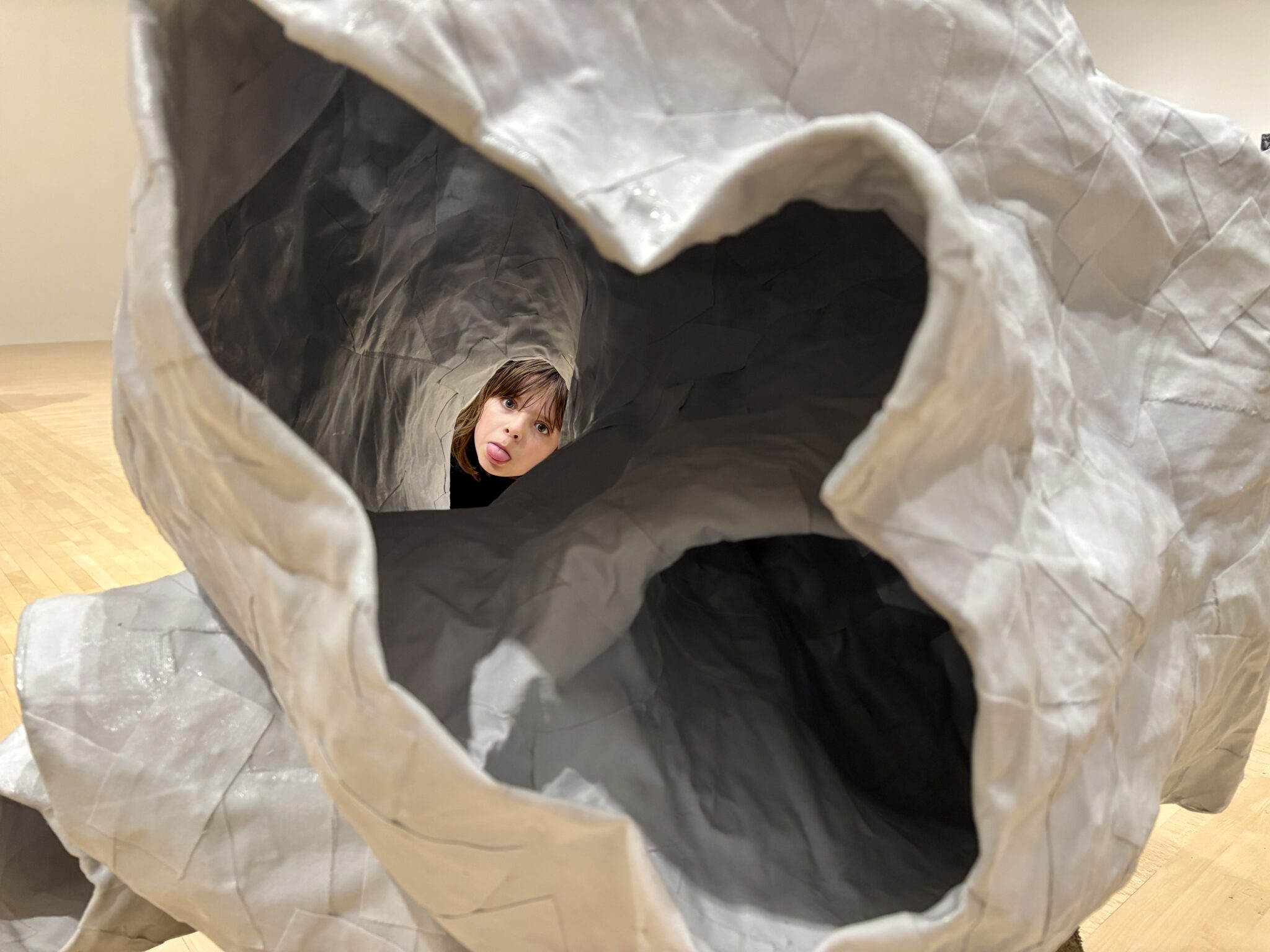
“Specimen” at Henry Art Gallery. (Image: Elizabeth Hunter / Seattle’s Child)
Together with one of the Henry’s knowledgeable museum attendants, we concluded that these specimens were journeying toward McMillian’s monumental, 40-ft painting, “44.8617 N by 93.5606 W Coordinates to an ascension (2018).” To Cora’s delight, the huge landscape depicted a world more beautiful — but equally as alien — as the Upside Down from “Stranger Things”. Cora also loved the similarly “ghostly and witchy” video work “untitled (neighbors) (2017)”, in which figures clad in eerie white robes danced and shook their bodies in the darkness.
Talk About Process
Kameelah Janan Rasheed, 41, is a multidisciplinary artist on faculty at the Yale School of Art who makes high-concept art utilizing text fragments, sharp contrasts, video, and collage.
“We leak; we exceed” was a great way to discuss the artistic process: what it takes to make an artwork and how the process of making art can be art itself. Cora was struck by the work “to chew a lapsed meaning until it loses all flavor (2020-2025)”, a series of jars, filled with various liquids and bits of torn, written text. “It must have taken so long to write it all out and then to rip it up,” she said.
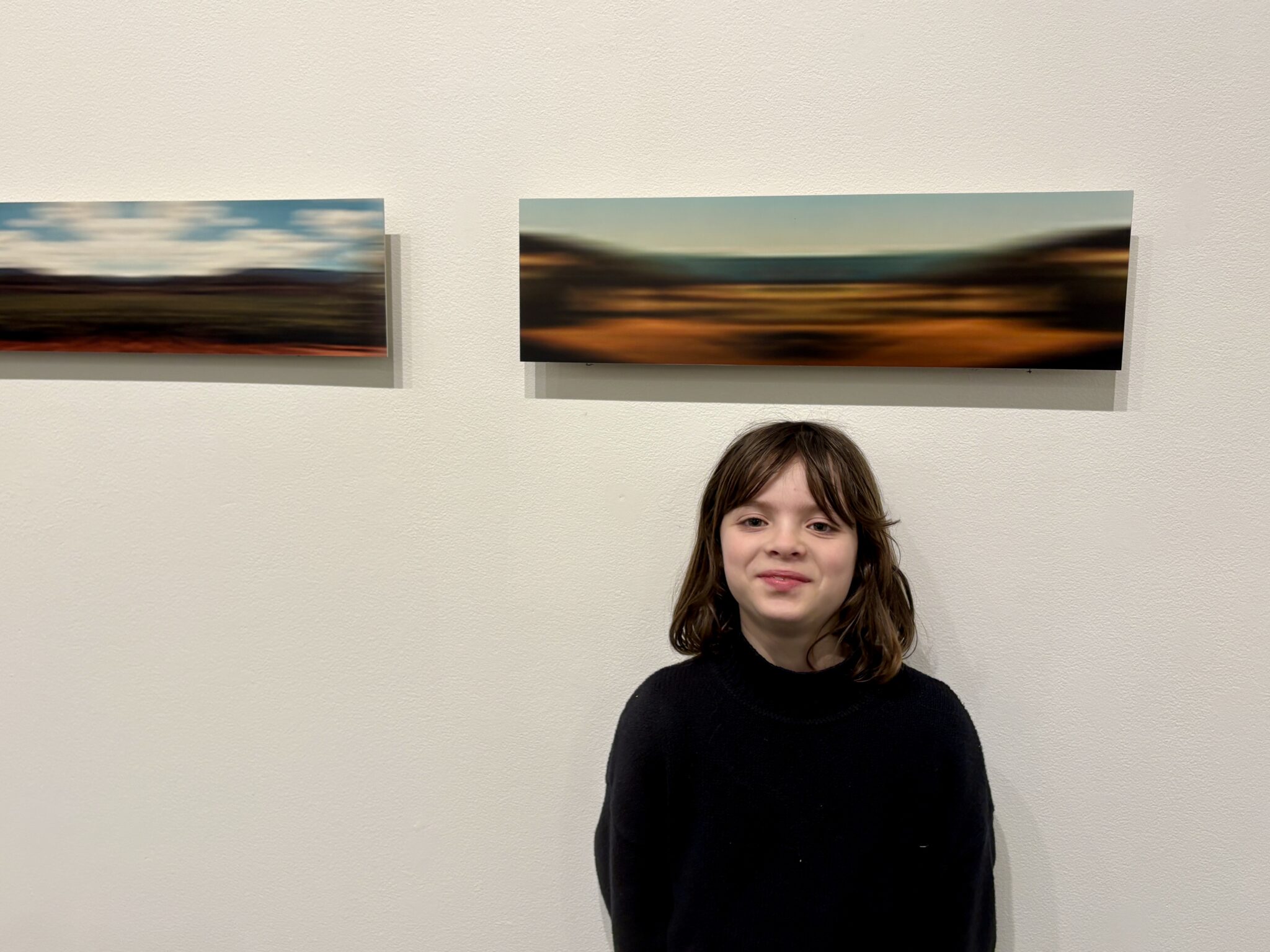
Henry Art Gallery. (Image: Elizabeth Hunter / Seattle’s Child)
There is no artwork at the Henry right now better suited to discussing the beauty in artistic process than “Event 1 – 4 (2025)”, which consists simply of four black and white pictures of a plastic bag that Rasheed filled with water, placed on an everyday scanner — and closed the lid. The image is the moment of burst, of leak. It’s glorious.
The Henry Art Gallery is open Thursday from 10 a.m. to 7 p.m. and Friday through Sunday from 10 a.m. to 5 p.m. It is always free.
More Ways to Explore Art With Kids
If these two art spaces have you thinking about creativity and curiosity, there are plenty more ways to make art part of your family outings around Seattle:
- 19 Fun Art Classes for Kids Around Seattle | From painting and sculpture to crafty after-school drop-ins, this roundup has hands-on options for kids who love making art as much as seeing it.
- Where the Art Lives: Kid-Friendly Walks Full of Wonder | Turn a walk into an adventure with vibrant murals, quirky sculptures, and artful stops that keep little legs moving and imaginations turning.
- From Dinosaurs to Giant Cats: A Kid-Friendly Seattle Public Art Guide | Seattle’s public art scene doubles as a treasure hunt — and this guide points you to the most playful, giant-sized pieces around town.