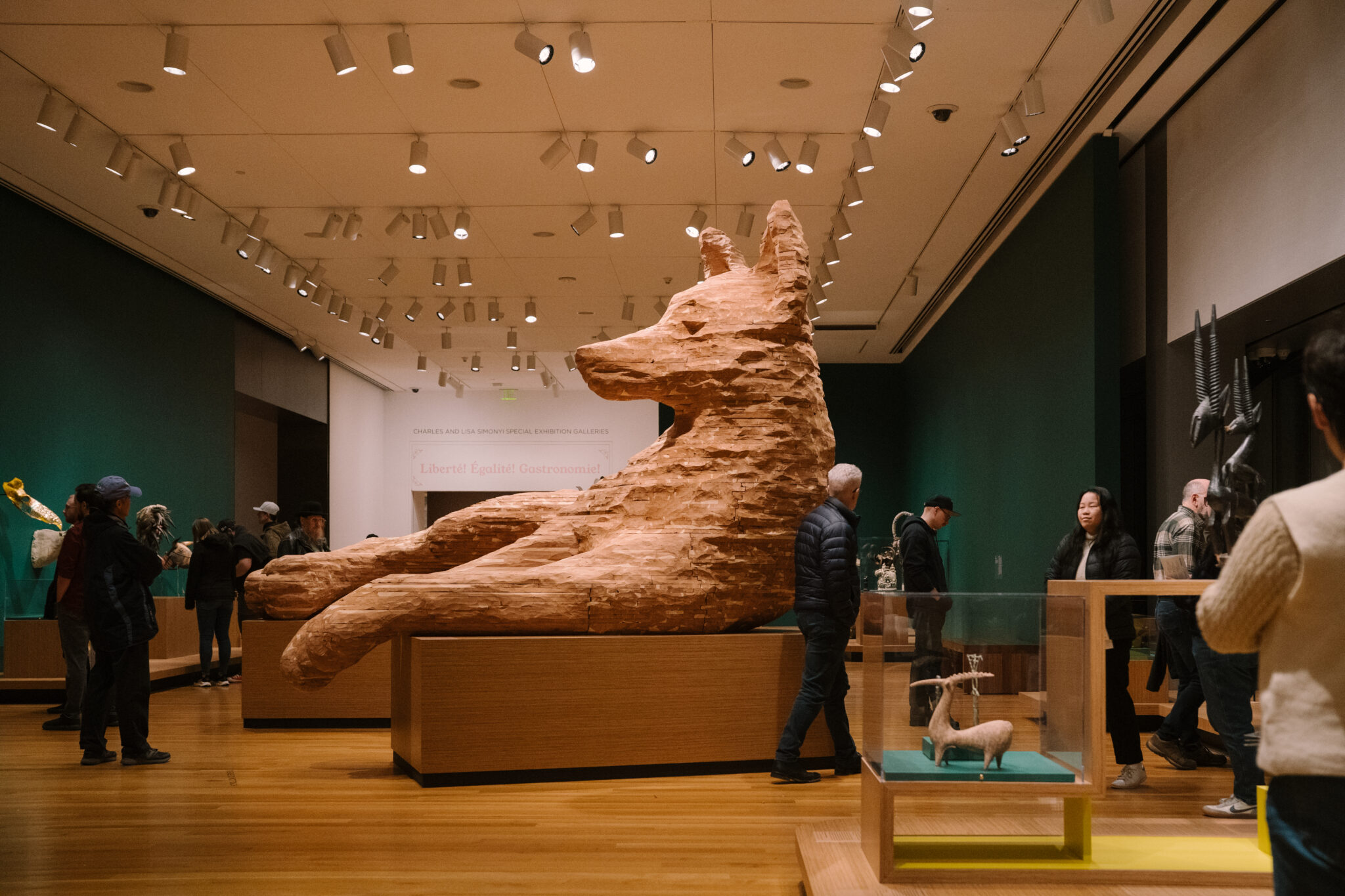
In the ninety-one years since the beginning of Seattle Art Museum (SAM), there has never been an exhibition like “A Room for Animal Intelligence.” Art about animals comes from the genius of curator Pam McClusky, who descended into the bowels of SAM’s storage to bring up beloved work and treasures never before seen. Some were even a surprise to staff, unknown till the crates were opened.
All but one work, Marie Watt’s wolf, come from SAM’s permanent collection. I suspect McClusky’s idea came from her own skill as a curator, but also the animals who are in residence at her home. Dogs, cats, and even chickens are part of her family.
You will find the exhibit on the fourth floor at the top of the escalator. It’s in space, often used as a corridor to more destination galleries. Walls have been removed to reveal windows and light from Seattle’s urban environment.
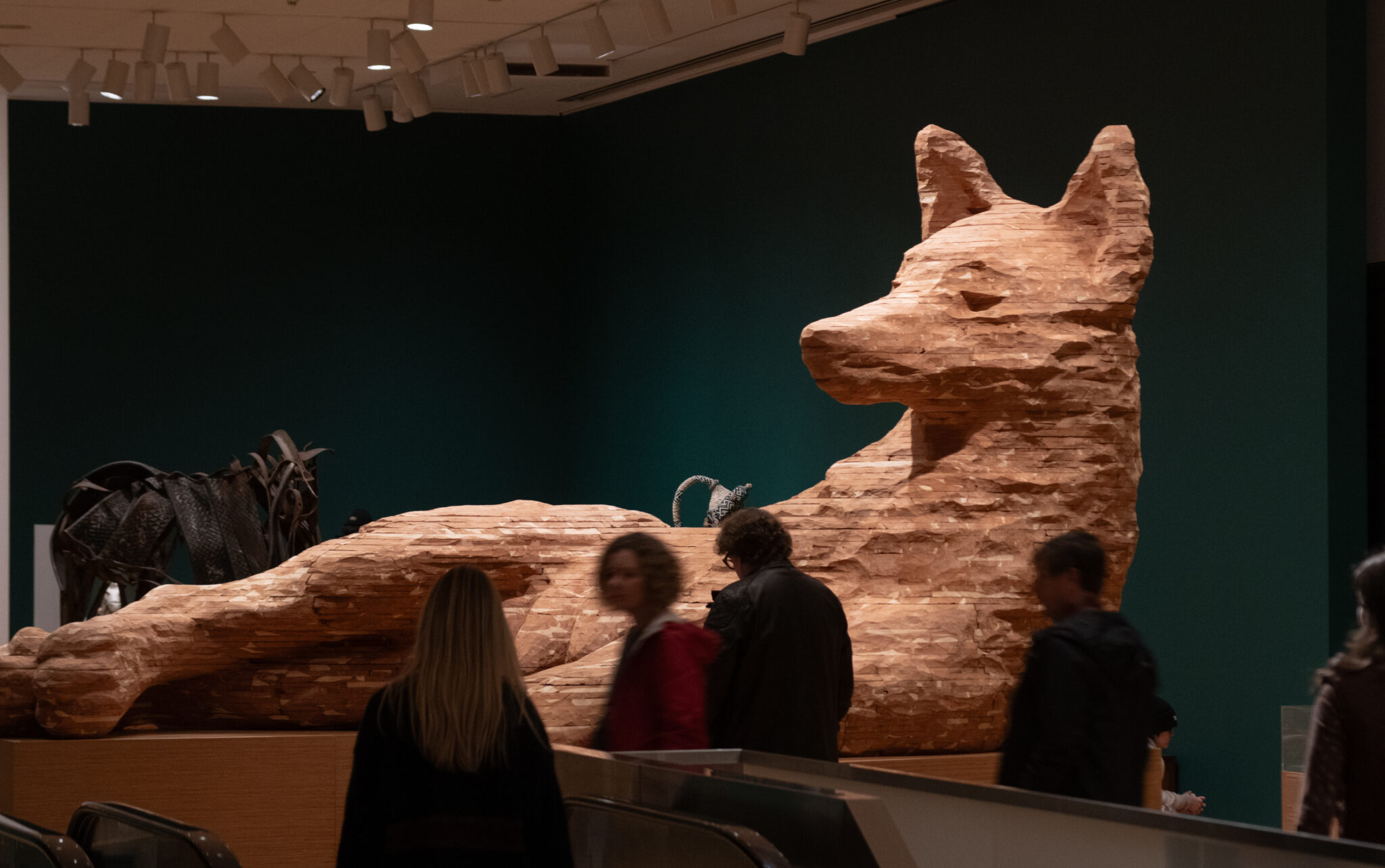
Installation view of A Room for Animal Intelligence at Seattle Art Museum, 2025. (Image: Chloe Collyer)
The first animal kids will meet is the gigantic wolf by Indigenous artist Marie Watt. I promise it is the biggest wolf your kids will ever see. Many a kid on my tours has been disappointed that we don’t have a dinosaur for them to see. Finally, this wolf gives a monumental impression. The artist calls it an entry point for a conversation about how we are related to animals and the natural world. This wolf, the mother of dogs, our pets, is a moment to talk about our companion from the animal kingdom.
Another curious element of this exhibit is that animals are their own narrators. They speak for themselves on the labels. The wolf, “Companion Species (Underbelly)” says: “My quest to help your species began in ancient times. When the twin boys, Romulus and Remus, were abandoned and hungry, I nursed them and became exhausted. Through me, wolf milk entered the human bloodstream, and I gave birth to the species you know as dogs… What a gift they are! Just as I lie here with an alert gaze and a drooping tail, so do my descendants sit by you and walk with you as your companion.”
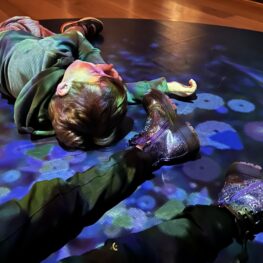
There are tons of things this exhibit will introduce your youngster to. The basic elements of art material abound. There is wood, metal, beads, stone, clay, grass, paint, and even feathers. Stories and myths from many cultures are told. Super, often secret powers are presented. The animals shown love and protect their offspring. Families are not just for us.
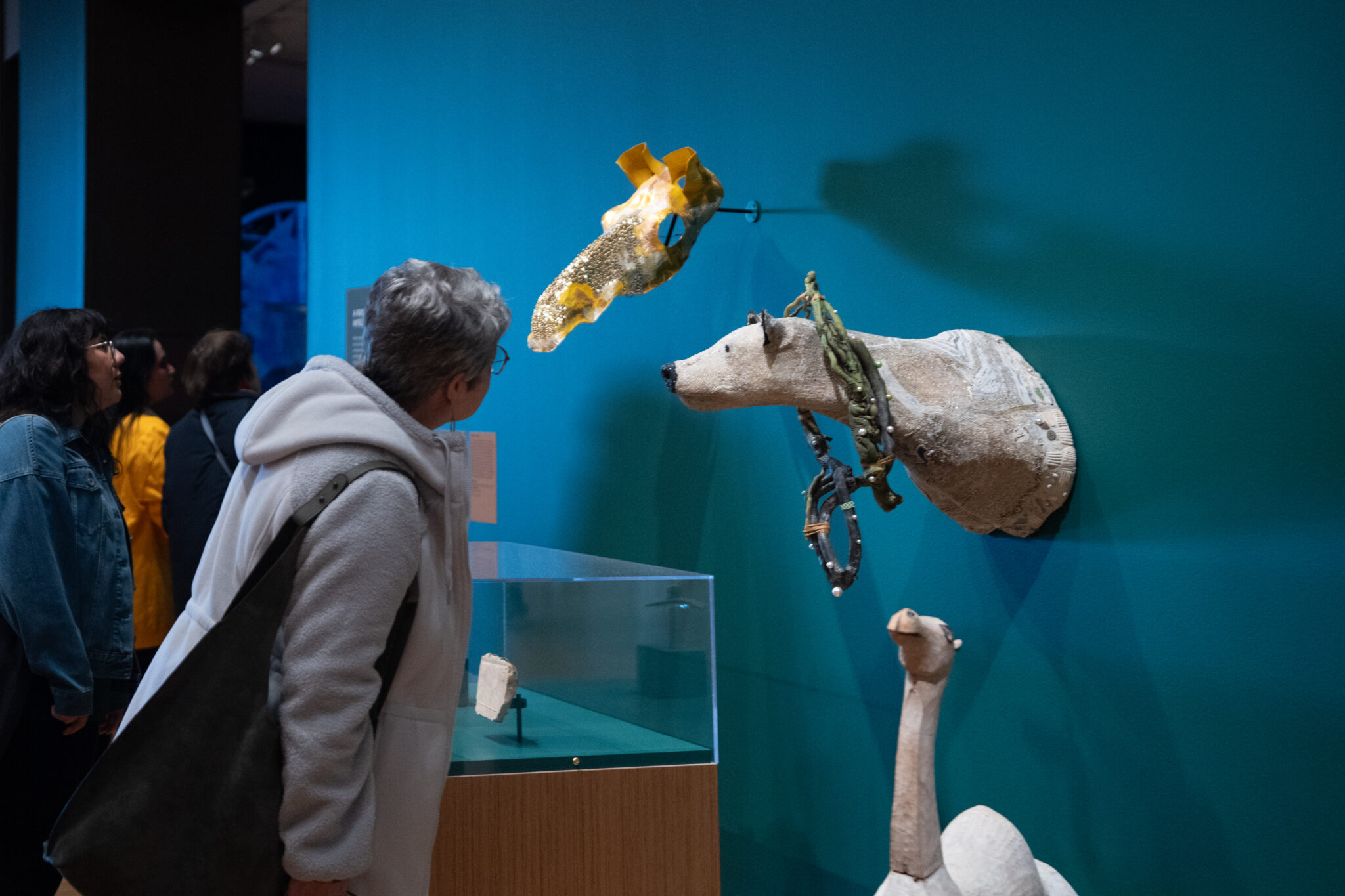
Installation view of A Room for Animal Intelligence at Seattle Art Museum, 2025. (Image: Chloe Collyer)
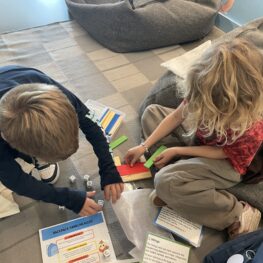
Most of all, the concept of empathy is abundant. The horses seen are all about the Golden Rule. Animals that can hear your heartbeat and respond in kind to your mood provide therapy for human anxiety. Deborah Butterfield’s steel horse called “Pascal” is a chance to peer inside someone else’s body and see through their eyes for just a minute. Finally, I offer an activity designed to slow down and really look at and learn from the beautiful sculptures in this SAM exhibit. It’s a treasure hunt that encourages a child to hear what animals have to say for themselves. Here are the clues and the answers. You decide which ones to use.
Animal Treasure Hunt
Find the animal
- The animal that can predict a heart attack before it happens and can find lost kids.
- The animal that suffered the most from contact with humans. Of 30-60 million, only 541 survived before things changed.
- The group of this animal is called a “clowder.” What is the difference between the two clowders of this animal?
- Can you find the only yellow sculpture and tell what the artist made of this animal? Hint: He has a key.
- At least three animals were made to be worn on a dancer’s head. How many can you find?
- Which animal can be ridden by a god?
- Find the animal that its creator wants you to see what’s on its inside.
- One animal is called the lord of new beginnings and removers of obstacles. Which one is it?
- This animal eats salmon, and is the national symbol of America, and in this exhibit, it is a mask.
- Can you find the pair that are a mom and dad.
- There is an animal with two heads. Why did the artist do that?
- Can you find the “snake in the grass?” Why do people say that? But why is this snake in this grass?
- Which animal seems to like cookies?
- Can you find the mother and baby? Where do they live?
- I’m called public enemy #1. Who am I? What do I do that is good?
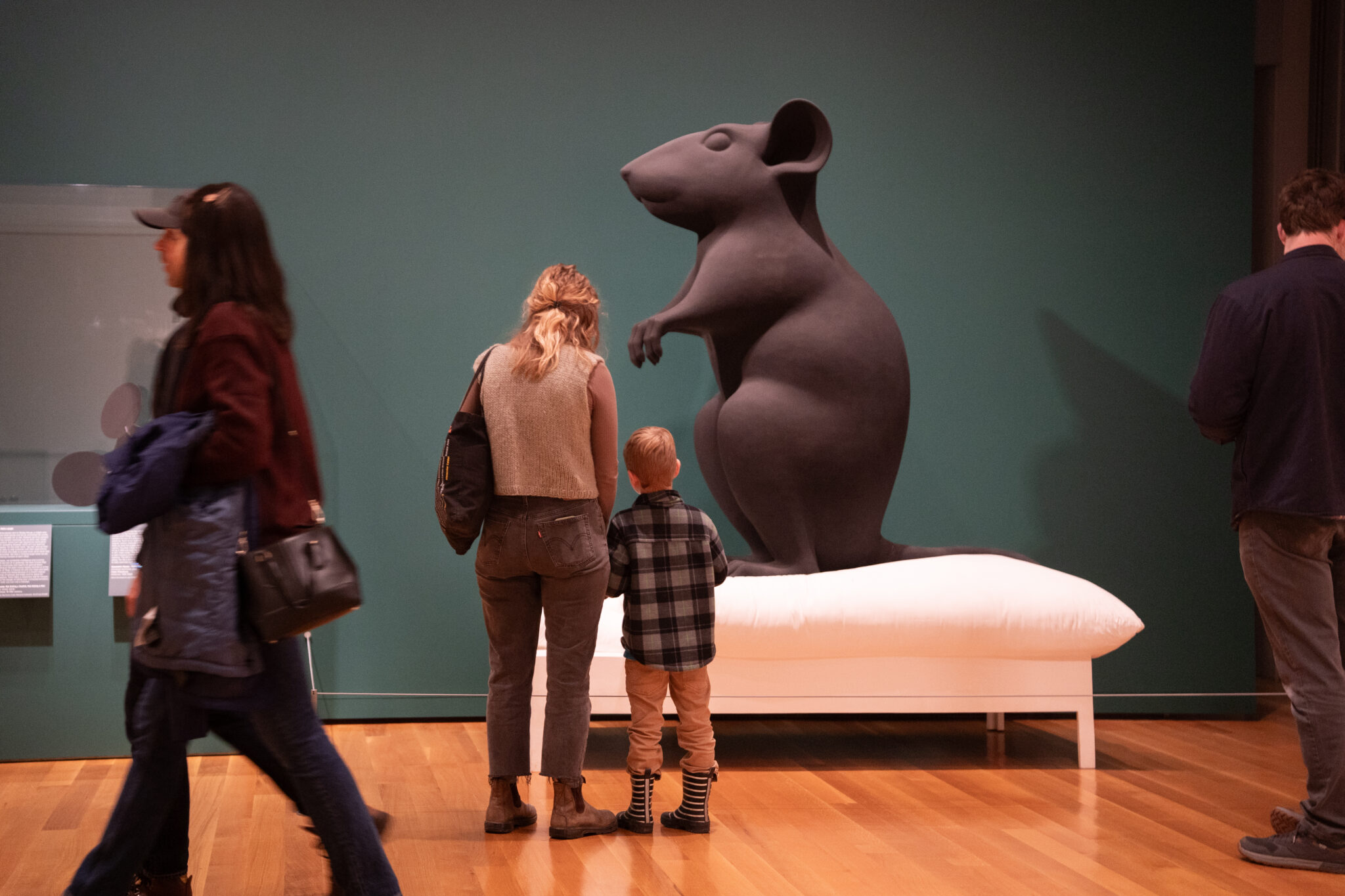
Installation view of A Room for Animal Intelligence at Seattle Art Museum, 2025. (Image: Chloe Collyer)
Answers
- Chinoiserie #3 bulldogs
- Bison #1
- 7 cats (Purr and Roar)
- Lion stool
- Leopard, Sky snake, Mukyeem Mask (there are others)
- Shimme (God Horse)
- Pascal
- Ganesha seated
- Eagle chief mask
- Rooster & Hen
- The one who made himself into millions
- Deep plate
- Osiris
- Monkey holding a baby (Japan)
- Mosquito Mask.
Seattle Art Museum is located at 1300 First Avenue in Seattle. They are open 10 a.m. to 5 p.m. Wednesdays through Sundays, and are free on the First Thursday of each month. Ticket information can be found online.