
Full disclosure: I went to cooperative (a.k.a. co-op) preschool myself, eons ago. And between my two kids, I've spent five school years at Wedgwood Co-op in Seattle. With this school year drawing to a close, I've been reflecting on my time at co-op and all that it's meant to our family. I wanted to share more about it with the hope that parents who hadn't considered co-op preschool might check it out. Many schools still have spots available for this coming fall (Wedgwood included!), and would love to welcome new families.
So What Is Co-op?
It's a nonprofit preschool run largely by the enrolled families. Many co-ops have been around for decades. Each has a parent-led school board, a dedicated teacher, and parents who take turns serving as co-teachers in the classroom.
Co-ops are often tied to a nearby community college and serve as hands-on early childhood education classes. In this case, parents are enrolled as students at the college, and also attend monthly meetings led by a parent educator who covers different developmental topics and how they relate to kids, both in the classroom and at home. Going through a rough patch with power struggles, or separation anxiety? Hearing "potty talk" in the classroom? Your parent educator can help you figure out what to do.
What Are the Benefits?
For starters, you get a high-quality school with a low adult-to-child ratio at roughly half the cost of a drop-off preschool. The curriculum at Wedgwood (and many other schools) is play-based. Play is powerful stuff, and extremely important for development. Everything in the classroom is fun for the kids, but also has some fundamental learning built in – whether it's science via the sensory table, math and engineering via unit blocks, or social skills with trains or tea sets. Classroom rules help kids move toward self-regulation, which is vital to their success in elementary school and beyond.
|
Heleyna Holmes |
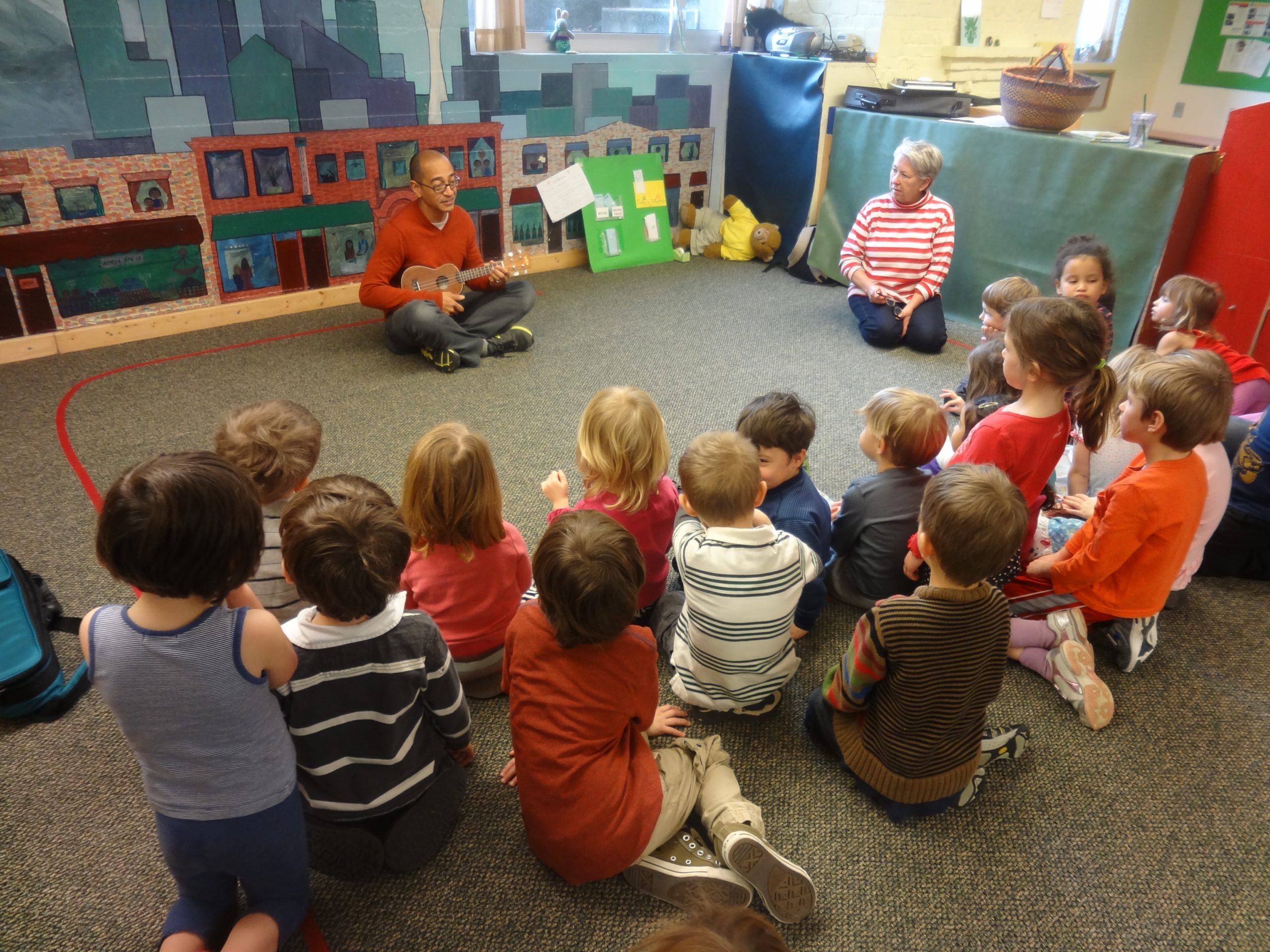
Something unique to the Wedgwood 3-5s class that we've really enjoyed is that each child gets their own special week where they introduce the class to a place or country that's meaningful to their family. It's a way to expand kids' cultural horizons as they explore the similarities and differences between people and places. Additionally, the older kids who will be in kindergarten the following year have an extra day of class that's just for them, where they help cook snacks, go on field trips around the community (like the arboretum, Airlift Northwest and Seattle Mounted Police), and practice kindergarten readiness skills like writing their names.
West Seattle parent Kelly Howard, whose daughter started co-op three years ago when she was 2, says, "I had no idea that co-op would teach me so much about how to be a good parent. From the excellent modeling of how to talk to (and listen to) 2-year-olds from teacher Dori, weekly interactions with Kylene, our parent educator, and monthly parent education meetings, I ended up feeling supported and more successful as a parent."
It's not just the great classroom experiences that bring people back year after year, but the caring community, too. "Co-op has given my children an entire community of kids and parents to belong to," says Wedgwood Co-op parent Kristi Beiter. "Those parents have all spent time with my children in the classroom, so they know them, they understand them. Wedgwood has truly become my ‘village' in raising my kids."
Is It a Big Time Commitment?
Not really. It's more than a drop-off preschool, but for the cost savings and other benefits, it's worth it. Typical requirements are working one day a week (or less) in the classroom, attending one parent meeting a month, having a school-year "job" like scheduler, librarian, photographer, etc., and taking a turn cleaning the classroom a few times a year.
You need not be a stay-at-home parent (for lack of a better term) to do co-op. Our class has seen nurses, a doctor and a real estate professional, to name a few. You may need to get a little creative with your childcare and work schedule, but it's definitely doable.
Barb Kittell is calendar editor for Seattle’s Child and mom to two kids who loved being in co-op as much as she did.
