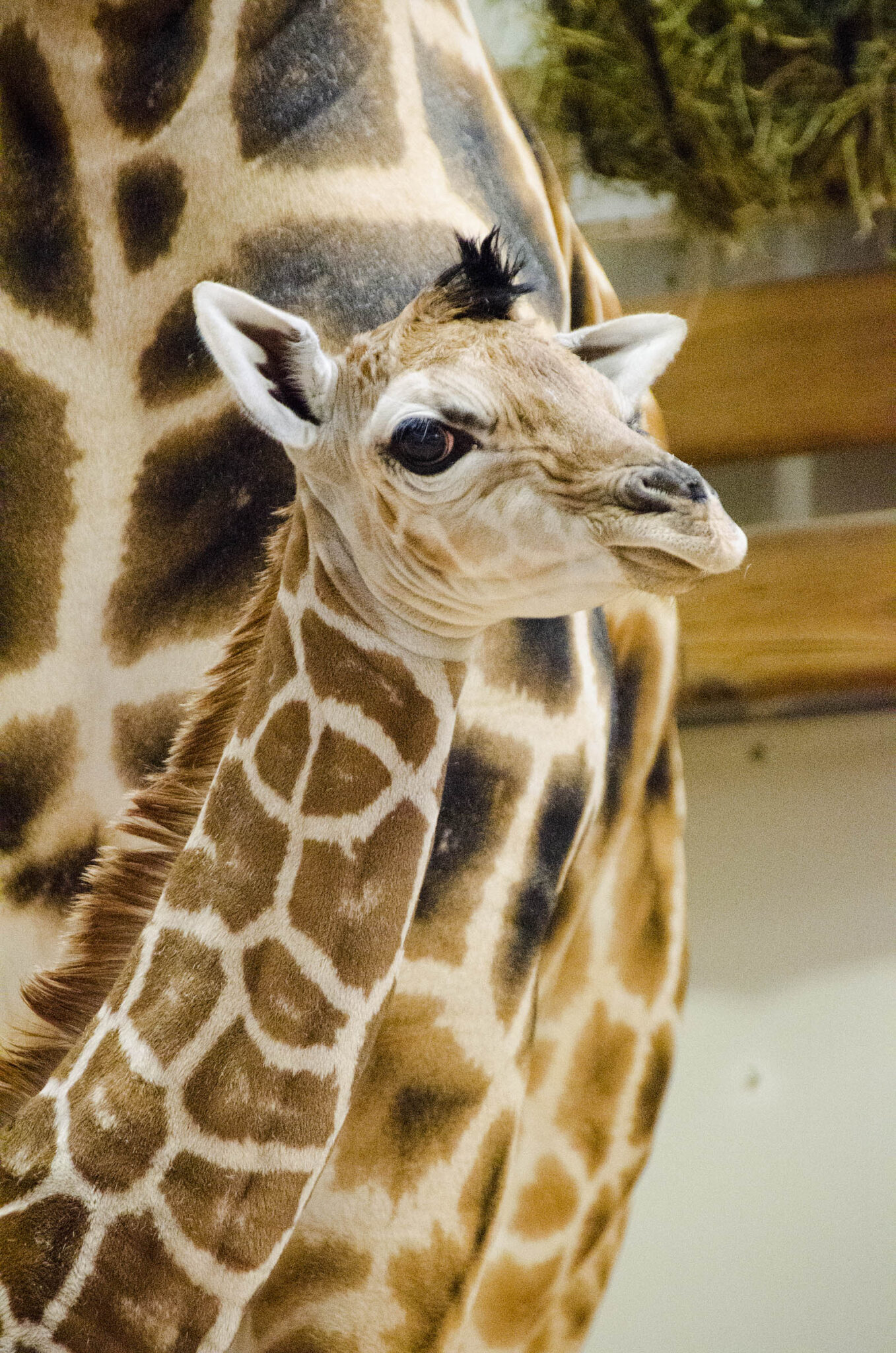
The tallest baby in Seattle made its appearance on Tuesday, Aug. 6, when 6-year-old Olivia, a Rothschild's giraffe, gave birth at Woodland Park Zoo. A neonatal examination yesterday revealed that the giraffe is a boy! The calf was born to the first-time mom in the giraffe barn at the zoo's African Savanna under the watchful eyes of zookeepers. For photos and video, visit www.zoo.org/blog.
The unnamed calf and mother are off view in the barn to allow a quiet environment for maternal bonding and nursing. "Within a week or two, we expect the newborn to follow mom to the outdoor corral where visitors will be able to see them," explained Martin Ramirez, a curator at the zoo. "Viewing is expected to be sporadic since the family also will have access to the off-view barn. It will be a minimum of a few months before the calf is introduced to the African Savanna."
Giraffes give birth while standing following a 14- to 15-month gestation period. According to Ramirez, the calf, approximately 5½ feet tall, stood an hour and a half after birth and began nursing shortly after. "The first 24 to 72 hours are critical for giraffe calves," said Ramirez. "So far, mother and calf are bonding and nursing sessions appear to be normal. We will continue to keep a close eye on the new family over the next several weeks." When fully grown, giraffes reach a height of 16 feet tall for females and 18 feet tall for males.
The father of the calf is 7-year-old Chioke, who passed away in January from complications associated with his gastrointestinal tract and kidneys. In addition to Olivia and the calf, the other giraffe at the zoo is Tufani, Olivia's 5-year-old sister.
The population of giraffes has declined by more than 40 percent over the past 15 years with current estimates of only 80,000 individuals remaining in Africa. Among the nine subspecies of giraffes, the West African and Rothschild's are endangered, with fewer than 250 and more than 670, respectively, remaining in the wild. Giraffes face a number of threats including poaching, habitat loss for their feeding ranges, and the soaring human population growth.
People can help preserve these towering animals and their wild places by taking action at home in their everyday lives. Discover a variety of steps to take at home and the workplace that positively impact our planet. Visit www.zoo.org to learn what you can do.
The new giraffe, quadruplet lions born in November, twin sloth bears in December, triplet jaguars in March, a porcupine in April, and four Asian small-clawed otters in June are among the baby boom the zoo has experienced over the past several months. Visit www.zoo.org/zoobabies to learn more.