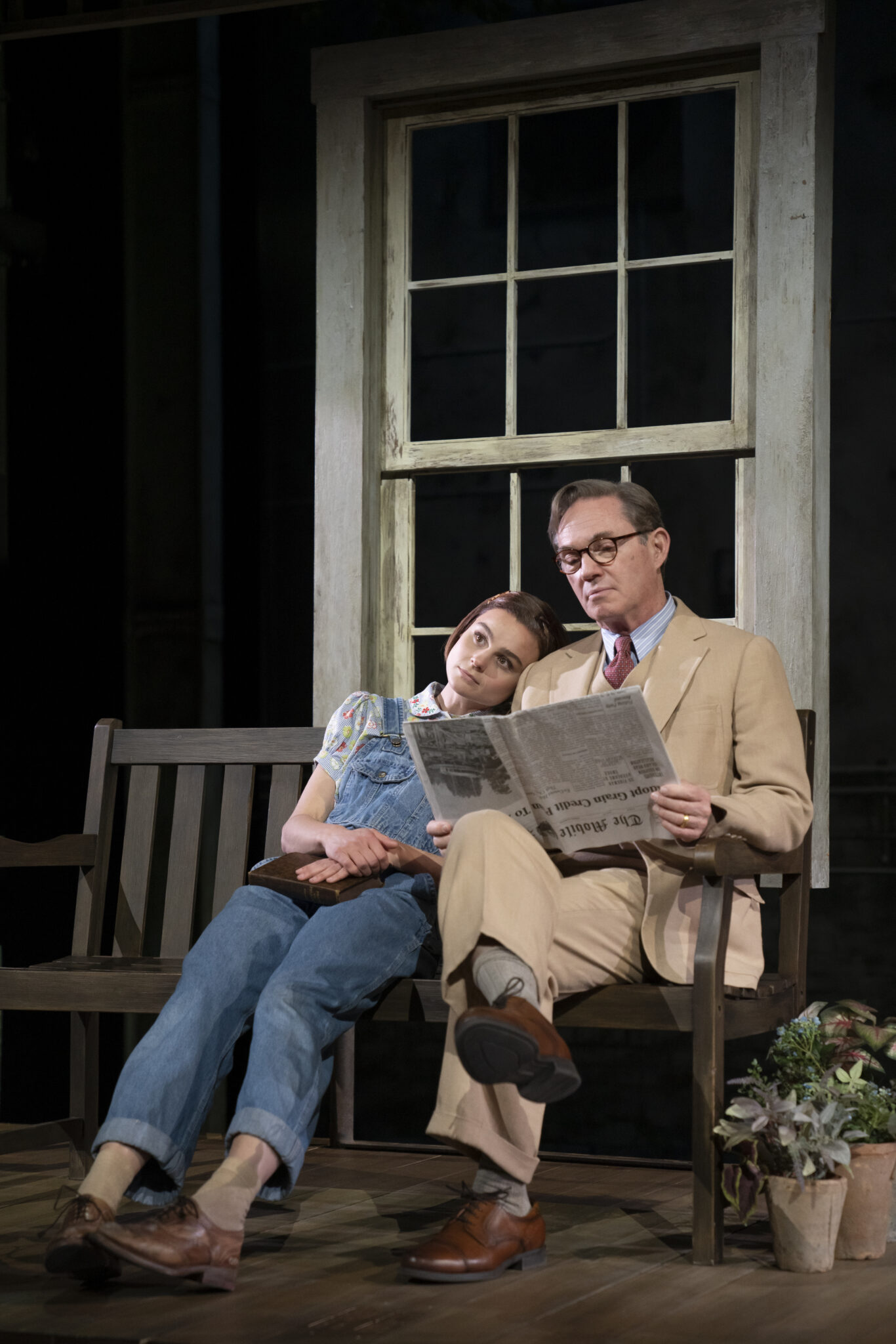
Once a high-school English class mainstay, “To Kill a Mockingbird” isn’t universally read these days, for reasons that are complicated.
But the touring production of “Harper Lee’s To Kill a Mockingbird,” on stage at Seattle’s Paramount Theater, was very well received in its opening and seems to stand up to the test of time — and the changing times.
A bit more on the controversy over the book: Mukilteo School District earlier this year moved the book from “required” to “optional” status. The criticism generally centers on the portrayal of racism and use of slurs in the book, along with presenting main character Atticus Finch as a “white savior.” The Seattle Times explains it well here.
Aaron Sorkin, the creative force behind the current stage adaptation, addressed concerns over the book and also explain how and why he made some adjustments, particularly to the Finch character. Novelist Harper Lee had chosen Sorkin to adapt her book for Broadway but later sued to block the production. It’s all explained in Sorkin’s recent interview with the Times.
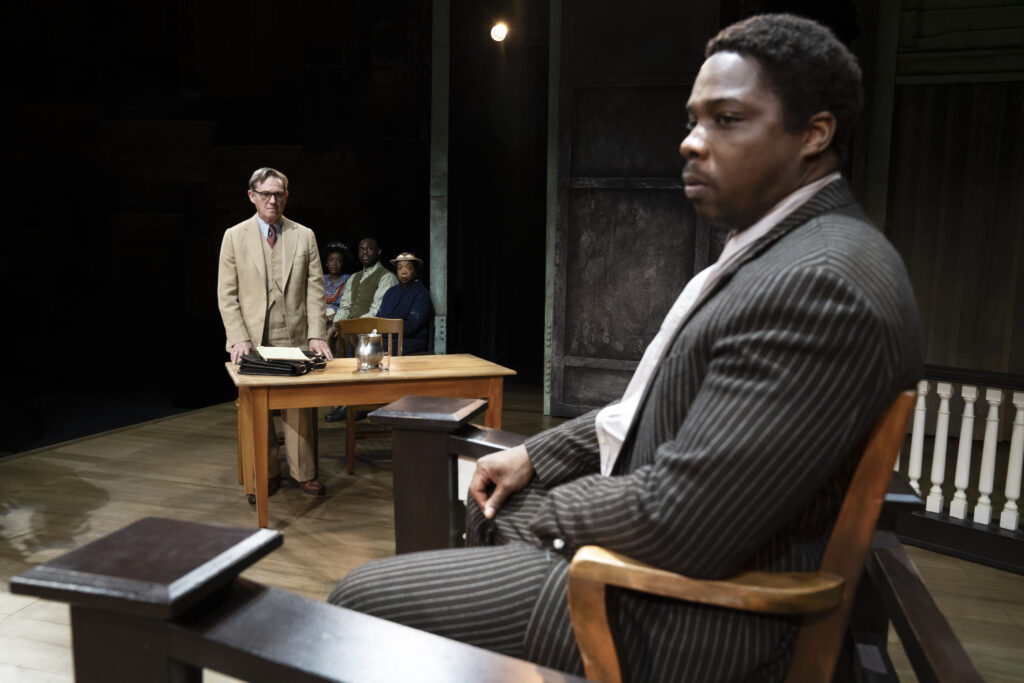
Yaegel T. Welch as Tom Robinson, the man wrongly accused of rape and defended by Atticus Finch in “To Kill a Mockingbird.” (Photo by Julieta Cervantes)
So where does all of this leave us?
I was originally drawn to the production out of sentimentality. I read “To Kill a Mockingbird” as a high school sophomore, and I read it again within the past couple of years. Full disclosure: Another selling point was to see Richard Thomas (John Boy of “Waltons” fame) on stage. Our daughter, 14, is a voracious reader and lover of theater (and of staying out late on school nights), so she wasn’t a hard sell.
She liked the show, and she had a lot to say about it. (The walk back to the car and the drive home are great for this!)
She was taken aback by the racist references and repeated use of the N-word. (Yes, it was said: repeatedly, passionately and in disturbing contexts. The story is set in the 1930s, and the book was published in 1960.) She also thought the references to rape could be tough for a child to understand and potentially triggering for someone who had suffered abuse.
In other words, she considered herself mature enough to handle the content (and we did, too, or we wouldn’t have taken her), but she ruled this definitely a 12-and-up performance.
To me, perhaps the most chilling moment came when Atticus and Scout confronted a would-be lynch mob outside the jail where Tom Robinson was being held.
Also: This is not your high school “To Kill A Mockingbird.” Sorkin clearly took liberties with the novel for this stage production that opened in 2019, pre-pandemic, to strong reviews. It is cleverly written so that the young people — Scout, brother Jem and friend Dill — narrate and comment on the story. They and others also add moments of humor and attitude that are clearly of our era, not of 1960 when the book was published. It works, though, and the occasional levity is welcome.
Super-cool tidbit: The small part of Mrs. Henry Dubose, a very cranky and racist neighbor, is played by Mary Badham, who was Scout in the 1962 “To Kill a Mockingbird” motion picture. She was nominated for an Academy Award for best supporting actress, at the time the youngest person to receive such a nomination.
“To Kill a Mockingbird” is on stage at the Paramount through Sunday, Oct. 16, 2022.