Being a parent is nonstop hard work, which makes following all the news happening in the city, state, and U.S. decision-making circles challenging. Here are highlights of Washington state political news for families from last week (June 30-July 7) and a hint at what’s up this week. I hope you will consider taking action – reaching out to those who represent you and your family in Congress and state offices — on the issues that impact families in our state.
‘I’m outraged.’ So should we all be.
This week’s passage into law of President Donald Trump’s absurdly far-reaching and, for many, life-threatening tax-and-spend domestic policy bill has forever changed the meaning of July 4th for some of us. It replaced the country’s heritage of honor and humanitarianism with greed and lack of compassion. The law will, despite its “title,” be anything but beautiful for many Americans. For many low-income families, people of color, immigrants, women, and children, it is likely to be devastating.
However, instead of expressing my personal feelings on the matter, I’ll let one of Washington’s leading child welfare advocates speak. This letter came to my inbox from Dr. Stephan Blanford, executive director of the statewide Children’s Alliance:
Dear Cheryl,
I am outraged by this morning’s passage of the Trump administration’s “One Big Beautiful Bill Act” (OBBBA). This bill includes devastating cuts to vital programs that many kids and families rely on, while simultaneously giving exorbitant tax breaks to the nation’s wealthiest individuals and corporations.
The contents of OBBBA demonstrate a total disregard for the health and well-being of the American people. As a result of the included cuts, millions of individuals across the country will lose health care coverage, many children will go hungry when their families are denied access to food assistance, and hospitals — particularly in rural areas — will be forced to close.
Washington state stands to be hit particularly hard, especially in terms of Medicaid cuts. Enrollment in our state is projected to decrease by 26% — the highest rate in the nation — over the next ten years, erasing decades of progress in terms of health insurance coverage in our state. The impact on kids’ health could be catastrophic, as almost half of the children in our state rely on Medicaid through Apple Health.
Washingtonians not enrolled in Medicaid will also feel the negative impacts of cuts to the program. Healthcare access will decline across the state, but particularly in rural communities. Many hospitals will be left with insurmountable costs due to reductions in funding through Medicaid, leaving them unable to operate. This would be disastrous for those living in communities where access to care is already limited, and it will force patients to seek care further from home, potentially overwhelming healthcare facilities that are already at capacity.
— Stephan Blanford, executive director, Children’s Alliance
The alliance has long been a leader in the fight for the physical, mental and emotional health of Washington’s children’s health in Washington state. The organization has pledged, “We won’t back down now.”
Take Action: Join the Children’s Alliance action alerts to stay informed on issues that impact kids and families, and participate in actions that speak directly to lawmakers in both Washingtons.
More time to weigh in on the SPS superintendent search
The Seattle School Board is committed to gathering more input from parents and other community members about what they want in a new district superintendent — especially from those in underrepresented communities and from homes where more than one language is spoken.
The Board is seeking a successor to outgoing Seattle Public Schools Superintendent Dr. Brent Jones, whose last day in the chief officer’s seat is Sept. 3, although he will continue on an extended medical leave until then. In the meantime, Seattle Public Schools’ Chief Operations Officer Fred Podesta is serving as the acting superintendent.
Toward that end, the Board decided last week that it will leave its online community survey open — and hold a few more community meetings — through at least mid-July to ensure it gets as much constituency feedback as possible.
The recommendation came from the firm helping the Board with the search — Hazard, Young, Attea & Associates. Representatives there say continuing to hear from community members will help the firm “capture more voice.”
At least one board member is A-OK with taking more time to hear from the public:
“I really want the next leader of Seattle Public Schools to be someone who we think can stay for six to 10 years, to give this district a chance at actually building something and moving toward something instead of treading water and scrambling,” Board member Liz Rankin said during the July 2 Board meeting. “If we start from a place of rushed appointment or selection, we are setting ourselves up for failure and we are setting up that person, whoever they may be, for failure.”
Take action: Let the SPS superintendent search firm and School Board know what you need in a new superintendent and what your priorities are. Take park in the online survey and future community meetings.
Money woes put Bellevue School District under state oversight
Here’s more proof that Seattle isn’t the only school district with troubles. Almost every district in Washington is affected by state and federal budget cuts and a lack of resources.
This week, The Seattle Times reported on Bellevue School District’s financial crisis. The district is one of the state’s largest, and its financial picture is so dire that it is now under state oversight. According to the Times, BSD has been over budget by $10-$15 million for three years and is now nearly $6 million in the red.
The Times piece offers a useful overview of how and why school districts find themselves in financial straits — and why Bellevue is now the ninth district in the state to request that the Office of the Superintendent of Public Instruction (OSPI) step in.
Child sex trafficking law kicks in
Under a new law beginning on July 1, trafficking is now part of the definition of child abuse and neglect in Washington. Expansion of the definition means that mandatory reporters now must report potential trafficking, and state agencies must use a validated assessment tool to screen children for sex trafficking. Some changes brought about by the new law include:
- Police can file petitions on behalf of kids who they suspect are being trafficked.
- Victims can ask for a sexual assault protection order.
- The Washington State Department of Children, Youth and Families is required to offer services to children identified as survivors of sex trafficking.
- The statute of limitations does not apply to certain laws used to prosecute traffickers.
“Currently, survivors of sex trafficking do not have the same rights and access to the services and support that survivors of childhood sexual assault do,” said Sen. Manka Dhingra, D-Redmond, who sponsored the bill that became the new law. “These sexually exploited children are not criminals; they are victims. This bill continues to ensure we recognize that even though their abuse is paid for, they deserve the same access to services and support. That is justice.”
King County Council passed new gender data collection rules
The Metropolitan King County Council is taking steps to protect the rights of all residents, including children and youth, regarding the collection of gender data. The council voted unanimously last week to limit when and how it collects data on gender, a move that allows people to give information that aligns with their gender identities.
Here are the most significant changes:
- County agencies may collect gender data only when it’s necessary to fulfill a “legitimate purpose” or when it’s required by law.
- County agencies cannot ask for someone’s gender assigned at birth when asking for their gender identity is sufficient to the need.
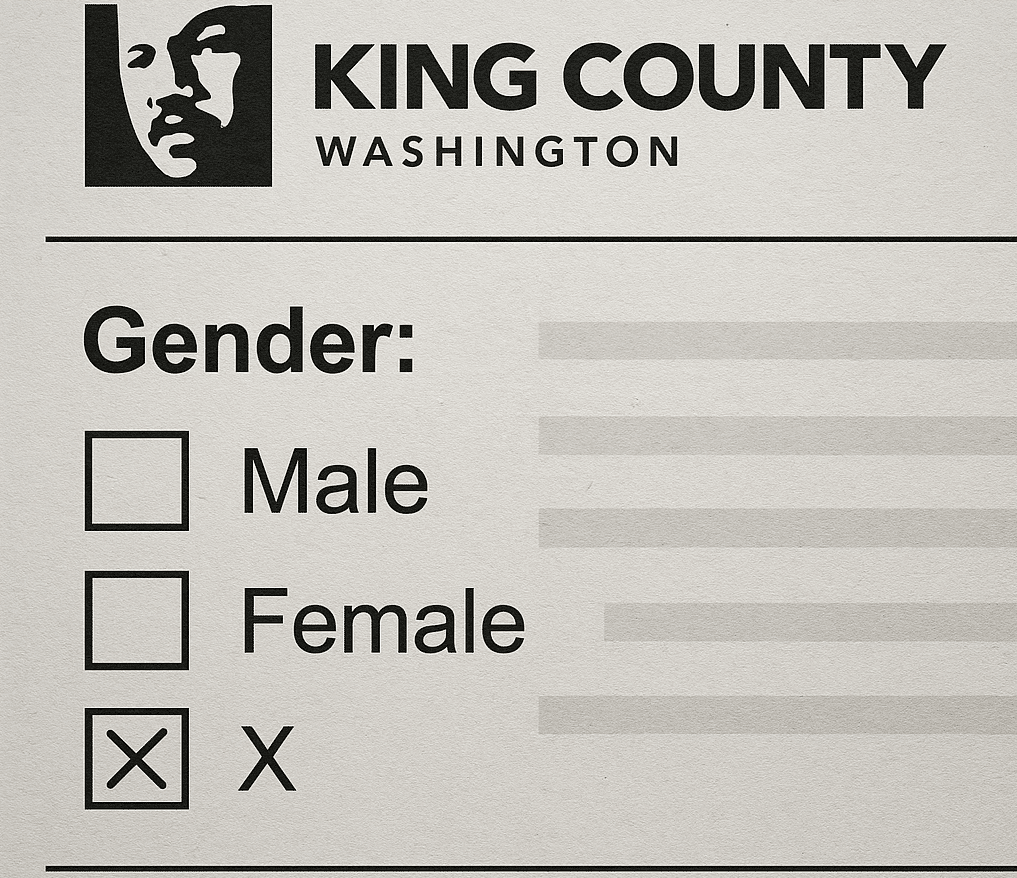
- Whenever agencies collect gender information, they must offer three options: male, female, and X, for a gender that is neither exclusively male nor female.
State law also allows for an “X” gender designation on driver’s licenses and birth certificates. I applaud the council for recognizing that one’s gender matters in very few “official” matters and kids and young people now and in the future have a right to be recognized in any iteration of gender their body chooses.