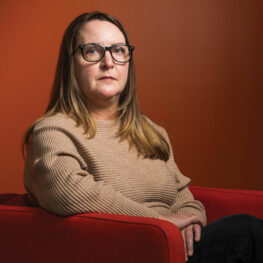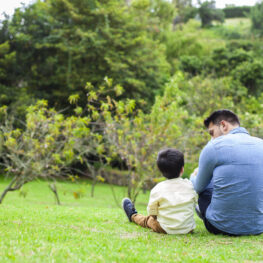
My home is a sanctuary, but it's taken a lot of courage and time to make it a space of freedom and unconditional love.
A few years ago, I took steps to get a divorce. I cared about my husband, but any love we had was eroded by his drug use. The drugs weren't in our home, but the addict was, and I couldn't change him. I knew instinctively, however, that I could and must change the precarious circumstances that my two young children, then ages 3 and 6, and I were living in. With the help of a therapist and honest friends, I finally saw that not only was my husband addicted, he was dangerous for the kids and me.
My husband had never hit me or called me names, but he regularly threatened violence. With his history of violent acts, with him telling me that he heard voices, and with my children begging me not take them for visitation, I knew I had to do something. I just wasn't sure what.
Learning I needed help and support to get through this trauma was humiliating. I didn't like that I needed help. I didn't like that my reality was far from the home life I had been trying to create. Someone recommended I go to a domestic violence shelter, but I didn't trust that a shelter could keep us safe.
Still, when things kept getting worse, I realized I had to trust someone.
I didn't indicate anything to my ex-husband when I finally decided to seek safety. I had already secretly packed our suitcases and moved them to a friend's house, and I'd been able to put some household items in storage.
I called domestic violence shelters, but all the beds in the state of Washington were full. On day two of our escape, I found a possible shelter. I had no idea what to expect.
We drove to an unfamiliar town to meet a woman I didn't know. She interviewed me and my children. She said they could help us. I started to cry. Once in shelter, I was surprised and overwhelmed with gratitude. Not only were we going to have our first safe night's sleep in years, we had our own room with bunk beds for the kids and a twin for me. Our door locked and we shared a bathroom.
I was surrounded by a web of support: a case manager, legal guidance and a therapist. Our first night, we had art therapy from a generous woman who donated her time. We stayed the maximum three weeks, which was only enough time to get a protection order and start the legal proceedings that would continue another two years. I was physically and emotionally exhausted, and some of my hardest challenges still lay ahead.
We transferred to another shelter, and after a total of three months without a home of our own, we were accepted into a two-year temporary housing program which provided us with an apartment and a case manager who supported me as I walked through scary legal proceedings, therapy for myself and my children and domestic violence recovery support groups.
When we moved our things out of storage, I was taken by surprise: I didn't expect those familiar objects to comfort me, but whether they were sentimental photos or day-to-day items like white sheets and a pillow, they did just that. They grounded me.
Our new home has become a safe zone, a place where we can all cry, grieve, talk, laugh and make mistakes. Over time, nightmares slowly started to decrease; stability and safety started to feel normal and dependable. To help us re-create home, we posted a list of family values on the fridge as a guide and reminder of what we strive for. When we slip up, we remind each other of the values we want in our home. We apologize and make up. We are continually creating a safe place to be ourselves.
As I look back on our journey from a dangerous home life to shelters to a safe and healthy home, it's these positive long term effects that I see in my children that I hold dear. Because we have a dependable, safe and mostly tension-free home, because we work through our trauma instead of pretending it didn't happen, my children are excelling in school; their friendships and the kids whom they want to be around are healthy; they are not depressed, they know they have a protector in me, and they have choices. It has changed the trajectory of their lives.
Today, the fear of coming home doesn't exist for us. But I am aware of the ways fear is absent – I don't feel that ugly ball in the pit of my stomach, unpredictability, tension and my nervous system on high alert.
I am glad to have modeled an important life lesson for my children: that is, to be grateful for and open to receiving help. Sometimes we can be supportive; other times we need the help ourselves. We are in balance when we know how to both give and receive.
*Grace Satori, a pseudonym used to protect the writer and her family, is a former Seattle resident, freelance writer, author and mother of two school-age children living in Washington state.
About Domestic Violence in Washington State and Where to Turn
According to the Seattle-based Washington State Coalition Against Domestic Violence, domestic violence is any behavior that is used to gain power and control over a spouse, partner, girl/boyfriend or intimate family member. Common ways abusers control victims include isolating them from friends or family, emotional abuse, using or threatening to harm children in order force a victim into compliance, dominating finances or other family resources, physical violence and sexual assault.
The report “Crime In Washington in 2009,” compiled by the Washington Association of Sheriffs and Police Chiefs shows that police responded to 37,041 incidents of domestic violence in Washington that year. The number does not include incidences of a domestic violence perpetrator violating a no-contact order. Many cases of domestic violence, however, never get reported to authorities. In fact, according to the state department of health, one in five women in Washington will report being a victim of domestic violence at sometime in her lifetime.
If you are or believe someone you know is experiencing domestic violence, the coalition urges you to reach out to a local domestic violence program.
Where to turn in King County:
Abused Deaf Women's Advocacy Services (ADWAS)
Seattle, WA; Office: (206) 726-0093 TTY; Crisis Line: (206) 236-3134
Alcohol/Drug Help Line – DV Outreach Project
Seattle, WA; Office: (206) 722-3703; Crisis Line: (206) 722-3700
Asian & Pacific Islander Women & Family Safety Center
Seattle, WA; Office: (206) 467-9976
Seattle, WA; Office: (206) 568-7576
Seattle, WA; Office: (206) 461-4880
Domestic Abuse Women's Network (DAWN)
Tukwila, WA; Office: (425) 656-4305; Crisis Line: (425) 656-7867
Eastside Domestic Violence Program
Bellevue, WA; Office: (425) 562-8840; Crisis Line: (800) 827-8840
Covington, WA; Office: (253) 630-7193
Jewish Family Services – Project Dvora
Seattle, WA; Office: (206) 461-3240; Crisis Line: (206) 461-3222
Seattle, WA; Office: (206) 783-4520; Crisis Line: (206) 522-9472
Seattle, WA; Office: (206) 587-4009
NW Network of Bisexual, Trans, Lesbian & Gay Survivors of Abuse
Seattle, WA; Office: (206) 568-7777
Seattle, WA; Office: (206) 721-0243; Crisis Line: (206) 721-0243
Salvation Army-Catherine Booth House
Seattle, WA; Office: (206) 405-4290; Crisis Line: (206) 324-4943
Salvation Army Domestic Violence Program
Seattle, WA; Office: (206) 442-8397
Seattle, WA; Office: (206) 324-9360
Solid Ground – Broadview Emergency Shelter and Transitional Housing Program
Seattle, WA; Office: (206) 299-2500; Crisis Line: (206) 299-2500
YWCA-East Cherry Domestic Violence Services
Seattle, WA; Office: (206) 568-7843; Crisis Line: (206) 461-4436
YWCA-Seattle Emergency Shelter
Seattle, WA; Office: (206) 461-4888
YWCA of Seattle-King County-Snohomish County
Seattle, WA; Office: (206) 490-4353; Crisis Line: (206) 461-4882
Renton, WA; Office: (425) 226-1266
Source: Washington State Department of Health, Washington State Coalition against Domestic Violence.