This year, a 15-year-old exchange student from Barcelona has joined our family. It’s been a joy to have her, and she’s having a fantastic experience. Lately, though, when she reads about ICE agents roaming American cities and detaining people based on their accents or their lack of citizenship, she comes to us with a lot of questions. She has a valid student visa, and she came here through a formal exchange program and a reputable agency. Still, when we ourselves find recent events so disturbing and confusing, it’s hard to calm her fears.
We try to reassure her that her white skin, her middle class appearance, and this progressive city we live in will protect her — but as we do, it feels profoundly wrong. We know all too well that there are other children who lack those safeguards, and who are suffering because of it. There are too many examples to count, but here are a few.
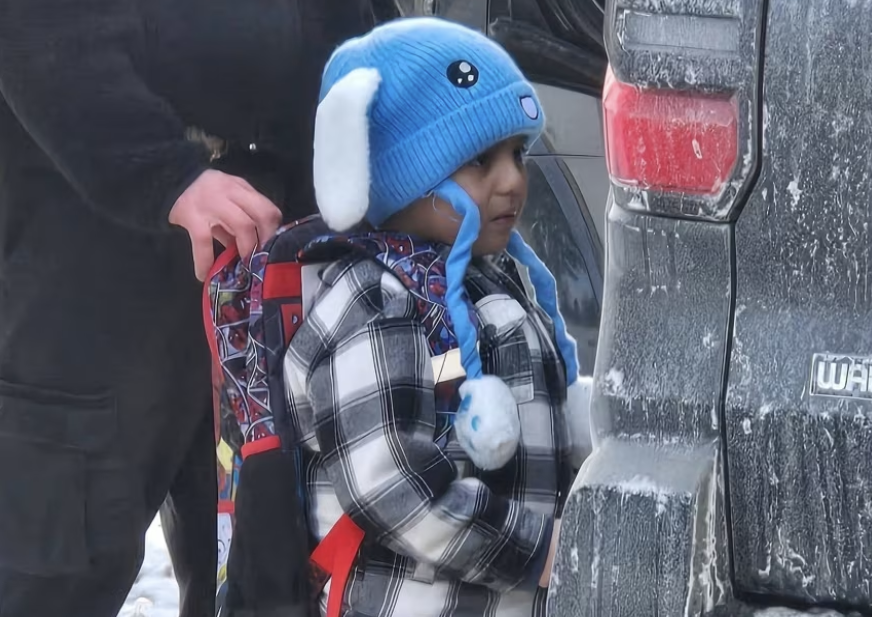
This January, a 5-year-old Ecuadorian boy named
was pulled out of his father’s car as they returned from his preschool. Masked agents took him to the door of his home and made him knock, in an attempt to lure other family members outside. He was detained with his father and separated from his mother for 12 days, until a federal judge ordered his release.
In 2017, a 10-year old Mexican girl named Rosa Maria Hernandez was detained by Border Patrol on the way to the hospital for gallbladder surgery. Agents followed her to the hospital and arrested her, without a warrant, directly from her hospital bed. She was transferred to a facility 150 miles from her family and held there until litigation gained her release 10 days later.
In 2018, a 19-month-old toddler named Mariee Newberry Juarez fled gang violence in Guatemala with her mother to seek asylum in the United States. They were held in an unheated facility in a locked cage with 20 other people, and slept on a concrete floor. From there, they were transferred to a family detention center packed with sick children. Mariee developed a fever of 103.3 degrees and was diagnosed with acute bronchiolitis and treated with antibiotics (which are useless for viral bronchiolitis) and Vicks VapoRub (which can cause respiratory irritation and distress in children under 2). Over the next several days her symptoms worsened, but she was medically cleared for travel without being examined. She was then transferred to New Jersey, where she was finally seen by a pediatrician who diagnosed her with acute respiratory distress and admitted her to the intensive care unit. She died there after a six-week struggle in the hospital.
It would be one thing if this kind of cruelty in immigration enforcement were a rare exception, but that’s clearly not the case. In 2018, the Trump administration’s border policy resulted in 2,737 documented cases of children being separated from their families for an average duration of five months. Officials warned that this tally likely underestimated the true number by thousands, because documentation and tracking were so poor. That same lack of care made reuniting those families difficult, and in some cases impossible. Human Rights Watch reported that as of December 2024, as many as 1,360 children had not yet been reunited with their families — six years after the forcible separation policy began.
Immigration is an emotional and controversial issue in this country. There’s heated disagreement about who should be allowed to come here, who should be allowed to stay, and under what circumstances. But for the most part, no one is arguing that immigration policy needs to put cruelty at its center, or to treat these children as an imminent threat or as disposable human beings.
In any civilized society, the care and protection of its most vulnerable and powerless members falls to everyone. These children belong to all of us — and the way our government treats them, in our name and with our tax dollars, reflects on us as surely and tellingly as our own actions and words.
And while we’re at it, let’s not forget that Renee Good, the unarmed protester who was shot to death by ICE agents in Minneapolis, left behind a 15-year-old, a 12-year-old and a 6-year-old.
Those children are ours now, too.