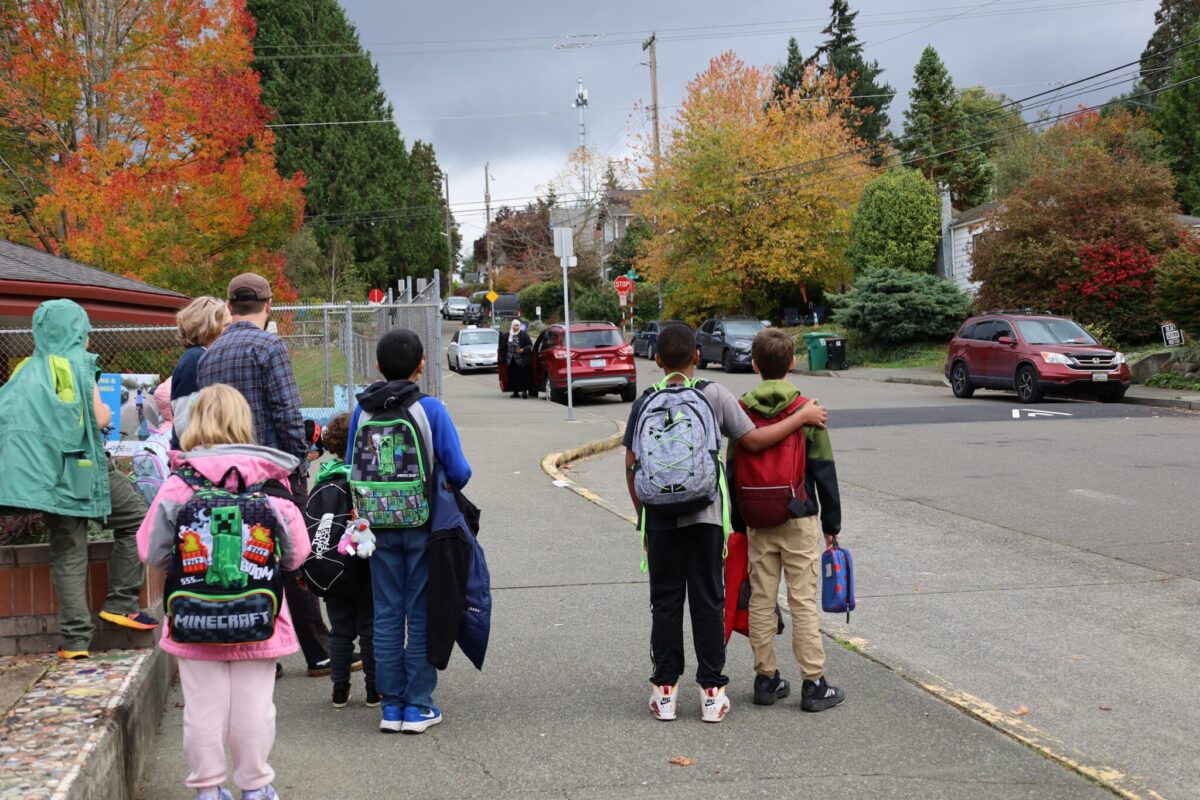
After observing from a distance as federal agents showed up during school drop-off and pickup times in Chicago, Washington, D.C., and Minneapolis, Seattle-area parents are likely wondering how they should prepare for ICE coming to their children’s schools and day cares.
They can learn a lot from the approach parents took in those other cities. The key elements, according to experts, is knowing your rights and working together as a community.
Matt Adams, legal director for the Northwest Immigrants Rights Project, said both immigrant parents and their neighbors should start planning now.
First, you should know, and schools should communicate, that ICE agents and other federal law enforcement personnel cannot enter school property without permission. That includes playgrounds, parking lots, sports fields and sidewalks near a school. The model policies written by the Washington Attorney General’s Office and the Office of the Superintendent of Public Instruction make public school property a “no immigration enforcement zone.”
All immigrant children, no matter their status, have a right to attend Washington public schools, according to OSPI, which cites the U.S. Supreme Court 1982 ruling in Plyler v. Doe. The court ruled in that Texas case that undocumented children and young adults have the same right to attend public primary and secondary schools as do U.S. citizens and permanent residents.
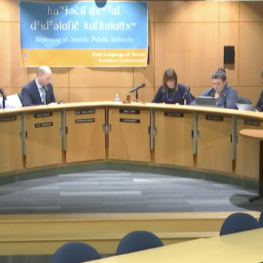
Seattle Public Schools does not ask students or their families about their immigration status and will not share any information with immigration authorities, unless legally required and after the district lawyers vet such a request, according to Eric Guerci, the district’s deputy chief of staff.
“Seattle Public Schools’ message to immigrant students and families is simple and consistent: you belong here, and our schools are safe and welcoming places for every child,” Guerci said.
Adams says a caring community is key to making everyone feel welcome and safe.
“Both school officials and parents need a plan before any of this happens,” he said, adding that there have been a few reports in Washington of federal agents arresting parents outside of preschools in Burien and Central Washington.
What immigrant families – no matter your status – need to do:
- Make sure your emergency contact information is up to date in your school office.
- Do not share your status with anyone outside of your family.
- Get to know your neighbors and the other parents in your child’s class.
- If the families in your class don’t already share emergency contact information, start a list of people who can be there for each other in case of an emergency of any kind.
- Make sure your school and your neighborhood has an alert plan for when ICE arrives.
- Help your children learn your family emergency plan and the phone number of a trusted adult.
- Know your rights by accessing the information the Northwest Immigrant Rights Project provides.
- Get appropriate legal guidance if you think you may need it.
How their non-immigrant neighbors can be helpful:
- Insist that your school plans ahead to alert families when ICE arrives.
- Do not ask anyone about their immigration status.
- Don’t ask your neighbors or the parents of your children’s classmates where they are from.
- Create a contact list for your block or your apartment building.
- Gather a contact list for your child’s class, with the understanding how this list may be used.
- Do not share these contact lists with anyone outside of the group for any reason. Communicate this intention with everyone in the group.
- Make a plan with all your neighbors to contact each other in any kind of emergency, so you can pick up each other’s children from school.
- If someone asks to add you to their emergency pickup list at school, say yes.
- Know your rights by accessing the information the Northwest Immigrant Rights Project provides.
Guerci and Adams agree that the priorities our grandparents held dear concerning their neighbors are just as important today.
“We encourage families to lead with empathy and community. That can mean checking in on neighbors, helping share accurate information, and reinforcing that schools are for learning and belonging,” Guerci said. “SPS also encourages families to avoid spreading rumors or misinformation that could unintentionally increase fear, and instead rely on trusted school communications and community‑based organizations for accurate guidance and support.”
Again, the Supreme Court ruled in Plyler v. Doe that immigrant children have the same right to a public education as any other children, and providing that education offers a societal benefit.
“These children can neither affect their parents’ conduct nor their own undocumented status. The deprivation of public education is not like the deprivation of some other governmental benefit. Public education has a pivotal role in maintaining the fabric of our society and in sustaining our political and cultural heritage,” the Supreme Court decision said.
Related: How to talk to kids about ICE and immigration enforcement
Children may hear about immigration enforcement from classmates, social media or the news — even if it doesn’t directly affect their own family. If your child is asking questions or feeling worried, it can help to be ready with a calm, age-appropriate conversation.
In our related guide, experts share advice on how to talk with kids about ICE, immigration enforcement and what it means for families and communities, along with tips for reassuring children and encouraging empathy for classmates who may be affected.