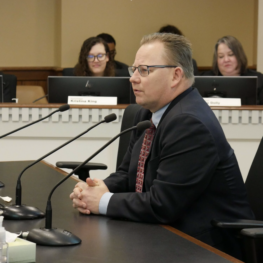
Michelle Buetow
Running for School Board District 3
What have you done or what would you do to ensure that adequate financial controls are in place at the District? How do you plan to ensure that the information you receive about financial issues and other SPS issues from SPS Staff is accurate?
As a mom active in District issues on behalf of my community and my children's school, I have attended many District meetings on budget and operations. Together with the efforts of other parents, this citizen involvement resulted in significant adjustments to funding covering the education of District special education students and to K-8 programs. The District also rolled out a trial transportation program (community stops) based in part on citizen familiarity with District finances. It is doubtful that any of these initiatives would have been driven by Staff or the Board. Parents do have the power to impact even thorny financial issues.
But even with a stronger background than an average parent, I find it is difficult to follow the flow of money and the process of budgeting in our District. On the last budget cycle the current Board committed to a more understandable budget process, with opportunities for the public to weigh in on prioritization of funds and areas of concern. That was a great start, but like all first-time efforts, ongoing and focused attention in this area is critical and requires a commitment of follow up from the Board… a commitment I am prepared to make.
Assurances from the current Board that they have resolved the internal process issues that allowed recent financial improprieties are not as reassuring as I would like. After a financial scandal resulted in the resignation of previous District superintendent Joseph Olchefske, the Board reassured the public that new auditing practices had been put in place to prevent a repeat financial scandal. But in this past year, financial problems, and probably criminal acts, were daylighted. The fact is that audits are not effective in turning up wrongdoing, though they can be helpful in identifying bad business practices.
Eliminating corruption and questionable uses of public funds requires open lines of communication with the public and a promise of non-retaliation for whistleblowers. A new partnership with the City of Seattle's ethics commission is a promising step in the right direction, but the Board needs much additional emphasis on promoting community involvement and feedback in District governance.
Additionally, the Board needs to move beyond general acceptance of Staff assurances that information provided to them is accurate. A "trust but verify" approach, with a willingness to hear additional points of view from communities outside District headquarters, would be an improvement in philosophy, while still being both professional and collaborative with District personnel. The Board should consider working with local colleges to recruit government affairs interns to further analyze Staff recommendations.
How will you shield children in the classroom from the impact of District budget cuts?
Sadly, our children cannot be fully shielded from budget cuts. Less really is less. Funding from both the state and federal levels is down significantly, and in every school in which opportunities for academic growth has been affected by the loss of a teacher, counselor, reading or math specialist, or librarian …in every school unable to supply rich offerings in art and music and physical education and advanced electives…in every school that is less clean and welcoming because of custodian layoffs, or has lesser offerings and is less supervised at lunch and recess because of staff cutbacks, the impact on students is tangible.
Board members can and must lobby for constructive federal, state and local legislation that will restore dollars to our classrooms while still allowing for local decision-making on how best to budget our monies.
This fall I expect to be active in addressing the state legislature as it considers more mid-cycle cutbacks to classrooms, despite the fact that our state Constitution mandates, as the state's paramount duty, fully funding an adequate education for all of our state's students. I am also strongly supporting this fall's local Families and Education Levy, which will be managed by the City of Seattle, to provide human services supports, student learning reinforcements and classroom enrichment opportunities to our children.
As a Board member I would work to harness our city's businesses, grant-makers and citizens in support of our schools. However, I would not approve new spending initiatives that do not have a roadmap for sustainable funding. I would also minimize the portion of the budget being spent on administrative positions while still maintaining high standards of legal compliance, safety, community engagement and system planning.
Do you support keeping Susan Enfield on as Superintendent? Should Seattle conduct a national search for a superintendent? Why or why not on both questions.
Susan Enfield is a strong candidate for the Superintendent job. Some of her positives include notably stronger communications skills than her predecessor, a commitment to addressing the opportunity (achievement) gap, prior experience working in the Northwest and of course the understanding of our District that has come with holding the title of Interim Superintendent. In recent months, following the bumpy and public Martin Floe (Ingraham High School principal) firing — and reversal of that decision — she has shown growth in the leadership role.
On the less positive side, many of the academic initiatives undertaken during her previous term as the District's Chief Academic Officer were not well-executed, though there is some question as to whether responsibility for troubled implementation rests with the previous superintendent, Staff reporting to Dr. Enfield, or with Dr. Enfield herself.
Some will argue that with funding shortfalls it is not a good use of dollars to mount a national search, especially when strong public school superintendents can be difficult to recruit and to keep. This perspective has merit. However, the "public" piece of public education means this community should have an opportunity to weigh in on the selection of our District's next leader. Past superintendents Joseph Olchefske (after the death of John Stanford) and Raj Manhas (after the resignation of Joseph Olchefske) were appointed from within the District instead of going through a search process. In both cases, the superintendent (Olchefske – financial scandal, Manhas – out-of-control public meetings and a troubled school closure process) did not achieve strong District leadership.
I believe it is more important at this juncture, with the direction of public education a topic of intense national interest and the local parent and teacher community still smarting from our last superintendent's lack of partnership with the core supporters of our students' education, to have a full search. (Though in total I believe Dr. Goodloe-Johnson's weaknesses outweighed her leadership strengths, I do still recognize and applaud that she was brought to this District via a comprehensive search.) I believe a search at this time, with the public attuned to the complexities of meeting the needs of the entirety of our diverse student body, is most likely to bring us the correct match for our District.
Dr. Enfield should be encouraged to participate in a comprehensive hiring process, as I believe she will be a very strong contender for the permanent position. If she ultimately attains the permanent position, it would then be with the backing of the majority of the community, and the Board, which would strengthen her tenure as Seattle's education leader.
How do you plan to reach out to parents who feel frustrated or unheard with the school Board or SPS administration? What new ideas do you have about public engagement, particular with SPS parents?
Public meetings are a necessity for Board members… but another priority needs to be Board members out and about in public schools… when school is in session and educational communities are at their schools. How else to better the system than to be knowledgeable as to its daily realities and available for discussion about them? As the only current or potential Board member with children in elementary school, I am aware that there can be significant gaps between the Board's intent in policymaking and the actual implementation of policies in individual classrooms.
Board members need to listen to self-identified education advocacy groups, but then to take an additional step… to actively seek the voices of the community by going to them… whether at a senior citizen center or at a community council. Perhaps it is at a food bank or house of worship or athletic event. When public opinion is sought, it tends to be freely and thoughtfully given. Our community strongly supports public schools but it is unrealistic to expect the vast majority of taxpayers to attend Wednesday night Board meetings downtown.
I would like to see a new committee added to the Board's working groups. The committee would handle community outreach, partnerships and customer service. These topics currently fall within the Operations Committee, but they need more emphasis and direction from the Board.
Committee meetings, where Board Directors' majority of work is accomplished, should be taped and available online prior to twice-monthly evening Board meetings. This would educate and inform the public earlier in the process of shaping District policy. I would also like to allow some public comment at the committee level instead of solely at the evening Board meetings.
The District needs to find a stable grant-making source, as well as community partners, to provide more comprehensive and timely translation of District documents and policies/procedures of interest to non-English-speaking families. I would also like the District to pursue a grant or donation to fund a customer relationship management (CMS) system in central administration. Currently, citizen communication with Board and Staff happens primarily via phone and email, with no central repository to track whether a question is resolved, or whether enough same-topic comments merit a change in policy.
What is your opinion on the Teach for America teachers coming into SPS? Are there enough qualified teachers applying for SPS positions?
Teach for America is a fine organization and can be a great source of classroom staffing for public school districts, especially those working with communities of poverty, who have trouble finding skilled, permanent teachers to lead their classrooms.
In Seattle we certainly have communities of poverty, and like almost every urban school district we struggle with a persistent opportunity (achievement) gap with some populations. However, given the strong colleges offering education degrees right here in Seattle as well as throughout the state of Washington, as well as the abysmal economic conditions of the past few years, Seattle does not have a systemic teaching shortage. In fact most open positions are getting dozens – even hundreds – of applications. (Special education is one area more apt than others to suffer shortages, but I do not feel that this is an appropriate category in which to place a TFA recruit in charge of a classroom.)
Teachers are already stretched thin by larger class sizes and overall lack of funding. I would prefer that our mentoring teachers spend their time with new graduates of our local colleges of education, who statistically are more likely to stay in the classroom for longer than TFA's 2-3 year average. (All starting teacher attrition rates are high, but TFA's are higher.) In addition, the groundwork for bringing TFA to the District was done behind the scenes, with the District handing over to TFA itself the "public engagement" around the idea. This meant that neither our teaching core nor general citizens were consulted before TFA was put onto the Board agenda. This was a mistake, and one reason that TFA is not being welcomed by some members of the education community.
Because the opportunity gap must be more strongly addressed by our District, the administration should put its focus on a more systemic answer to tackling the issue than the presence of TFA provides. We need to have solid working relationships with this state's colleges of education to build robust teaching programs. There are almost two dozen of these institutions in Washington, and with the majority of them SPS does little to foster partnerships that will answer our students' needs. That means training around cultural competencies and an effort to recruit bilingual teaching candidates as well as those from communities of color. It means back-and-forth communication around teaching practices that appear to be successful in promoting high academic achievement and greater parental involvement in children's education.
An additional thought on TFA: If TFA-trained teachers have moved through the program and have obtained experience and their full teaching degree, then subsequently have come to our District as candidate for an open position, they should be welcomed into the hiring pool. I don't believe the criticism around TFA in the classroom should extend to these seasoned, committed professionals.
Many of our schools have needed re-building, retrofitting and repair. What can be done to ensure that capital funds are used appropriately in the future to this end?
The complexities and timelines of multimillion $$ construction projects have meant that the public – and Board members – often find out about major changes in planning, and unexpected expenditures, too late to advocate for a different course. In addition, the District has an unfortunate habit of publicizing a list of prioritized projects at levy time, then changing those priorities, with little public discussion, once levy funds have been secured. A culture shift to earlier and better notifications and project planning is needed, fueled by tangible consequences for not doing better, such as critical performance reviews or – in the case of outsourced construction management – diminished likelihood of winning additional District construction contracts.
The District, to its credit, is recruiting new membership to its citizen-volunteer Building Excellence Oversight Committee, which provides planning and construction guidance. Fresh volunteers with knowledge of both construction and of District politics would bolster the committee's effectiveness.
I would like to see a study commissioned to benchmark, nationally, school district best practices in amounts and priorities Districts use for maintenance spends. Our District has a staggering backlog of maintenance needs, which get shunted aside year after year as funds are stretched to meet classroom needs. This problem has persisted through many superintendents and Boards and needs correction, as it is ultimately more costly to school communities and taxpayers to neglect maintenance than to attack the problem in each budget cycle.
We should build/retrofit school buildings in the same way biotech buildings are constructed… modular design, with interstitial spaces to handle ease of reconfiguration of electrical and plumbing as education and capacity needs evolve, as well as constructing wings of buildings that can be opened and closed in response to shifts in enrollment (vs. the no-win process of closing and reopening facilities.) "Green" construction is also desirable and should be prioritized within the constraints of approved budgets.
What changes (if any) do you think are needed in the District's new student assignment plan?
The move back to neighborhood schools has benefits for our District's families: more predictable school assignment patterns, less cost of transportation, the possibility that neighborhoods will strongly support their schools. However, much unfinished work remains in the plan.
The new assignment plan underlined the geographic disparity of strong schools in the city. South of the ship canal, especially in the southeast, schools tend to look less "successful" as defined by the District's new scorecards, as well as by state and federal academic achievement guidelines. In pockets of poverty north of the ship canal, one can also find schools struggling to meet student needs. For these communities, additional District resources are needed in the form of strong programming, a focus on cultural competency training and thoughtful teaching practices to reach students from families of limited economic means. The District also needs to consider how community grants, pooled fundraising contributions from other schools, etc. might boost these schools through school-identified discretionary spending priorities.
The new school assignment plan, now in its third year, also needs a variety of technical and programmatic tweaks to allow for enrollment needs that don't neatly fit the system. Sibling linkage, especially in the case of families w/ multiples (twins, triplets, etc.) is of importance to families and after a year of focus on the issue, enrollment pressures have taken the issue off District administration's radar. In the spirit of increased customer service, it should be put back. District personnel also need to work more proactively to solve the disruption and logistical problems when increased enrollment necessitates the placement of portables at a location.
Our District's high school offerings are more disparate than grade school and middle school offerings, therefore the new assignment plan reserved a level of "open seats" for non-attendance-area students to access programs that especially matched their skills and interests. This part of the enrollment plan was not well-defined from the outset, and has been modified in some cases because of larger than expected enrollments. It needs a re-look and clear communication to the public on what school "choice" looks like at the secondary level.
The special education delivery model, which was changed in the move to neighborhood schools, has proved more costly and in many families' estimation less effective than the old program. This program needs a comprehensive review and re-think, along with clear Board-approved examples of what a successful SPED delivery model will look like.
The District needs to supply at least one strong alternative or option school in every geographic assignment area, to reach families who prioritize programs or an environment different from "standard" neighborhood elementary or middle schools.
The District also needs to settle on a model for what advanced learning programs will look like, as this impacts enrollment patterns. ALOs and Spectrum delivery are a mish-mash throughout the District, and the administration needs to state once and for all whether each school has autonomy in offering the services or whether this will be standardized (in-classroom, vs. pullout, vs. travel to different building) throughout the District. APP is also sorely in need of program stability as well as identification of long-term sites that will house the K-8 offerings. Popular language immersion programs also affect enrollment patterns and likewise need a strong program roadmap.
What do you think is the District's number one problem and how would you try to solve it?
There are many advocacy groups in town who would say the opportunity gap is the District's number one issue. It is true that the issue is persistent and urgent here, as in most urban Districts in the U.S. But at this moment in time I would propose another issue specific to the Seattle School District: Its reputation.
How often have I heard a Seattle resident say, "I moved to Seattle for its great public schools." The answer, sadly, is next to never. I hear public education pride from families who have moved to the Lake Washington School District. To Bellevue. To Mercer Island. Federal Way is the latest to get buzz. But Seattle's overall reputation is hampered by a perception of a District that is not customer-service focused. That is entangled in endless bureaucratic bungles. That doesn't soar in meeting the needs of its gifted students nor its struggling students and that does an average job of addressing the vast middle tier of students. It is a District where dropout rates are troubling and where families with economic means can and do pull their children from the District when they hit middle school, or when their grade school classrooms are overflowing, or when their high school doesn't offer the programming perceived necessary to provide for a strong start to college or career. It is a District where first-generation Americans, where communities of color, where those without the money or the time to personally advocate for their own child, often feel disenfranchised from the system.
And yet… there is so much hope that this District can be the source of well-earned community pride. In many areas of our city and within the walls of its schools — even those labeled as "struggling" — Seattle does offer wonderful educational opportunities. Families are often very supportive of their own school, if troubled by District bureaucracy and unfortunate headlines. We have a voting populace, city leaders and a business community extremely supportive of public education. We have a solid teaching corps. We have parents and community volunteers who are more eager than those in comparable public school systems to involve themselves in every aspect of District business… from Board governance to 1st grade tutoring. We have an uptick in enrollment, a national anomaly for an urban District.
So the question is, how do we use our District's strengths to create a gem of a public school system? Much stronger funding, whether from government or grant makers, is not the sole solution, nor is it achievable in the near term. After watching the District for almost two decades, I have come to believe that the answer is as simple, and as complex, as "better communication and outreach." The District needs Board members and administrative leadership willing to prioritize much stronger interaction with our community. From top-notch customer service around enrollment and transportation options for new students; to invitations to individuals to participate in think tank sessions around healthy food, classroom technology, race relations; and yes… on the divisive subject of how to teach math, I want to see our District reaching out to citizens to become more innovative, more responsive and more effective in educating our children.
Why can't this city have the most active and organized volunteer tutoring corps in the country? Why can't we find more supports for non-English-speaking families? Why can't our communities help us define and implement a vision for advanced learning opportunities… or for reaching our special education population?
A great start as a Board member is the thought process "how do we as a community address…" instead of "how does the Board address…" or "how does the District address…" This is not a change that will come easily, for far too many District employees and interest groups prefer the comfortable silos of their own knowledge and self-determined actions. But, it is the power of "we" that can ultimately change the reputation of our District… and better the academic outcomes for all of our students. A strong reputation will bring about a stronger reality for this generation of students… and their children too.