Being a parent is nonstop hard work, making it challenging to stay on top of news that impacts families in Washington state. This Hits Home is your weekly hit of news, commentary, and, occasionally, opinion. Want to have a say? Look for the ‘Take action’ prompts. Here’s the update for the week of March 2-March 8.
(Image: Antoinette Grajeda/Arkansas Advocate)
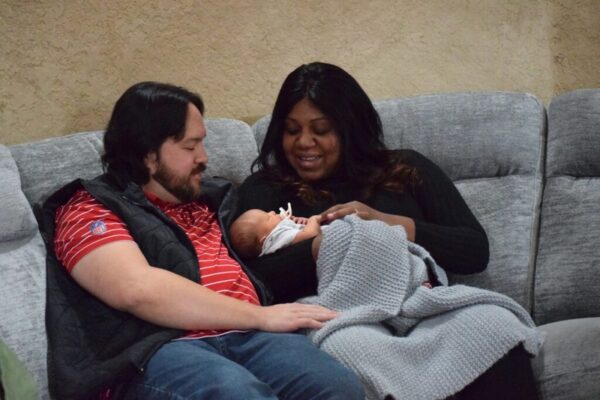
Early prenatal care declines in Washington and across US
A new analysis from the U.S. Centers for Disease Control and Prevention finds that a quarter of pregnant people in the nation in 2024, did not receive early prenatal care. That’s a drop from 2021, when 78% received care prenatal between zero and 12 weeks of pregnancy. In 2024, the number fell to about 75.5%.
Washington, which has been a leader in ensuring residents receive early prenatal care, has experienced the same troubling trend. In 2010, more than 80% of pregnant people in Washington began prenatal care in the first trimester — within the first 12 weeks of pregnancy — according to Washington birth certificate data analyzed by the state’s Office of Financial Management. At the time, Washington’s early care rate exceeded the national average, which was about 77% in 2016, according to the U.S. Centerfor Disease Control and Prevention (CDC).
But by 2024, Washington’s early prenatal care rate had fallen to 74.9%, according to March of Dimes Peristats, which provides data to the CDC. At the same time, the percentage of Washington births to people who received late prenatal care (beginning in the third trimester) or no care at all, rose to 6.9% in 2024. What does that mean in human terms? Of the 80,871 live births in 2023, roughly 5,580 birth parents late prenatal care or no care at all.
Read the full Washington State Standard story online at SeattleChild.com.

Bear Creek Campground could be impacted by state budget cuts. (Image: USFS)
Budget would close campgrounds, scale back trail services
There are just a few more days before the end of the 2026 session of the Washington State Legislature, and as of Friday state 2025-2027 supplemental budget debate negotiations were threatening to cut $750,000 from the Department of Natural Resources’ (DNR) recreation programs. Such a reduction, on top of the more than 20% DNR budget hit in the current budget, would mean possible closures of campgrounds and trails across Washington this spring and summer.
Popular Bear Creek and Chopaka Lake campgrounds are among those most likely to lose services or face closure. According to an article in The Seattle Times, cuts to the department could also impact trails in the Snoqualmie area and at Reiter Foothills State Forest near Gold Bar.
TAKE ACTION: If keeping campgrounds and trails open is important to your family, reach out to your representatives in the state House and Senate. The current session ends March 12.

(Image: iStock.com)
Initiative to ban trans athletes in girls sports could mean invasive medical testing for all players
If you’ve been following Initiative IL26-638, you already know it would keep trans girls out of girls’ sports in public schools.
What you may not know is that if the initiative is approved by voters in November (it is highly likely to be on the Nov. 4 ballot), students seeking to compete in girls’ sports would have to verify their “biological sex” with health care provider documentation. While the initiative does not stipulate a specific medical test, it directs clinicians to make that determination based on “reproductive anatomy, genetic makeup, or normal endogenously produced testosterone levels.”
What does that look like in the doctor’s office? Think blood tests measuring hormones, physical examinations of genitalia or genetic analysis. It’s not surprising, then, that pediatricians have concerns about the significant shift in their role when it comes to athlete check-ups. Passage of the initiative would put the focus on determining athletic eligibility rather than assessing a child’s health, safety, and readiness to play. And that, they say in an article from The Seattle Times, raises questions about privacy, cost, and how schools would implement the requirement.
Read the full story in The Seattle Times.
TAKE ACTION: Mark your calendars now for the November 4 election. To ensure your vote is counted, make it a goal to get your ballot in before Nov. 4.

Youth mobile crisis response now runs 24/7 in Snohomish County. (Image: Natalie Board)
Snohomish County’s mobile youth crisis program goes 24/7
Families in Snohomish County now have another option when a child or teen is struggling with a mental health crisis.
Compass Health, the non-profit behavioral healthcare agency, announced last week that it has expanded its YGo Youth Mobile Crisis Program. The program offers free 24-hour, in-person crisis response for young people throughout Snohomish County. The expansion means that when youth experience severe anxiety, depression, suicidal thoughts, panic attacks, substance-use concerns or other behavioral health crises, trained clinicians will meet them wherever they are — whether that’s at home, at school, or in a shelter or another community setting.
The program focuses on stabilizing situations early and supporting families for up to eight weeks after a crisis. Since launching in 2024, crisis teams have responded to calls from more than 4,500 youth and family members, helping prevent crises from escalating and connecting families to longer-term care. By expanding to around-the-clock access, program officials hope to quickly reach more kids in crisis.

Fentanyl pills come in many colors and can look like candy to kids (Image: U.S. Drug Enforcement Administration)
Fentanyl won’t be added to child endangerment law
The legal definition of the crime of “child endangerment with a controlled substance” will not be expanded to include the powerful opiate Fentanyl this year, despite bipartisan support. Senate Bill 5071 was part of a package of proposals aimed at addressing the increasing number of drug-related deaths and critical injuries within Washington’s child welfare system.
Other legislation aiming to address the rise in deaths fell out of the running earlier in the session.

(Image: NoDerog)
A big step clover to a state ‘Millionaire’s’ tax
After warning that passage of a state “millionaire’s” tax—a 9.9% tax on households with annual income over $1 million—might have to wait another year, Democrats on Thursday presented a revised proposal that Washington Gov. Bob Ferguson says he’ll stand behind. Before the revision, the governor and lawmakers seemed able to reach consensus on where the estimated $3 billion in income from such a tax would go.
Under the new proposal released Friday, 5% of the funds collected by the tax would go to Washington’s Fair Start for Kids program, which supports child care and early learning providers. The tax would also fund early learning programs and support for lower-income families. While it would cut out the state sales tax on more consumer products, it would also expand tax credits for lower-income families, a non-negotiable for the governor. The legislature has until the close of the 2026 legislative session on March 12 to pass the revised proposal and send it to Gov. Ferguson’s desk for signature.
Read the whole story from the Washington State Standard.
TAKE ACTION: Do you have an opinion on passage of an income tax this year? Call your representatives in the state House and make your voice heard. If it makes it to the governor’s desk, contact his office with your opinion.
(Image: Cheryl Murfin)
SCOTUS ruling on gender ID disclosure: Will it impact Washington families?
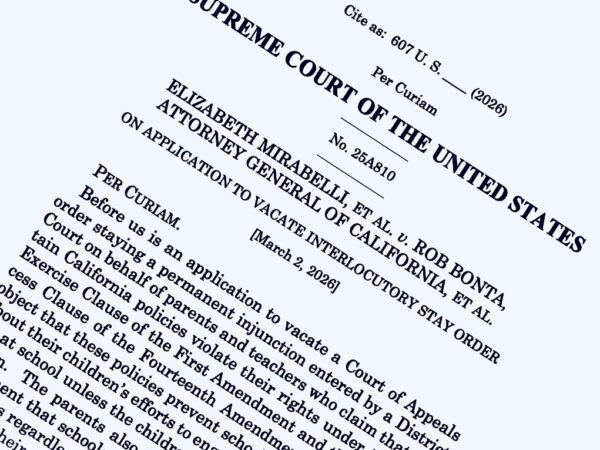
A late-night decision by the Supreme Court of the United States last Monday could eventually reshape how schools nationwide — including those in Washington — handle one of education’s most contentious questions: when parents should be told about a child’s gender identity at school.
The court voted 6–3 to reinstate a federal district court decision in a case challenging California school policies that limit when educators can inform parents if a student socially transitions or expresses gender nonconformity at school. The case centers on claims from religious parents who argue the policies violate their First Amendment rights.
The justices signaled that those parents are likely to succeed on their religious freedom claims, allowing the lower court ruling to take effect while the broader legal fight continues.
The decision does not directly change policies in Washington. However, the court’s ruling, Republicans in the state House send a letter to state schools Superintendent Chris Reykdal’s office, requesting he explain Office of Superintendent of Public Instruction (OSPI) policies on gender identity and parental rights by March 9. The 2026 legislative session ends March 12.
Schools here currently follow OSPI guidelines, which instruct districts to respect a student’s gender identity and carefully weigh student safety before disclosing that identity to parents.
Under OSPI guidance — used by districts including Seattle Public Schools — educators typically work with students to determine whether and how parents should be informed.
But the Supreme Court’s move could encourage similar legal challenges in other states. If courts ultimately determine that parents have a constitutional right to be informed about a child’s gender identity at school, Washington’s policies could face scrutiny.
The decision signals that the national legal battle over parental rights, student privacy, and gender identity in schools is far from over.
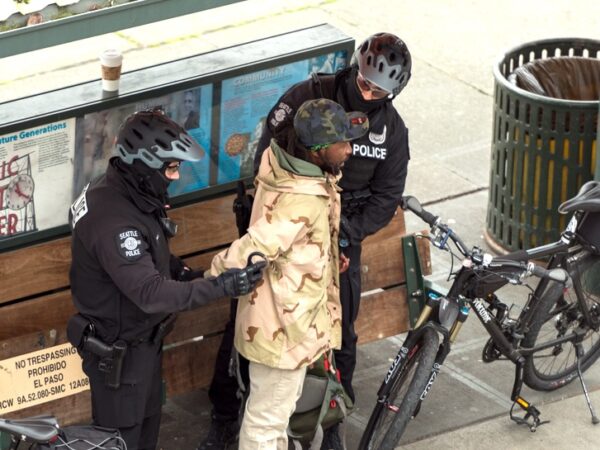
Masked Seattle officers make an arrest. (Image: 2016 bt 400tmax / iStock.com)
Statewide police face mask ban wins approval by WA House and Senate
Legislation that would prevent most police officers in Washington from covering their faces while interacting with the public is moving closer to becoming law.
The state House approved the measure Tuesday along party lines. The Senate passed it in January. The proposal has been returned to the Senate for approval of minor house changes. If approved there before the session ends March 12, it will head to Gov. Bob Ferguson’s desk. Ferguson has been supportive of the proposal.
Senate Bill 5855 gained attention amid concerns about masked federal immigration agents operating in communities. It includes several exceptions, allowing face coverings for undercover officers, health-related protective gear, and safety equipment such as bicycle or motorcycle helmets.
Read the full story at the Washington State Standard.
TAKE ACTION: Do you have an opinion of whether police should keep their faces uncovered in most interactions? Call your representative in the state Senate today.
The Fascinating Parenting Idea: Platonic co-parenting?
I’m trying to think of what it would have been like to raise my kids not with my former-husband (who remains a beloved friend), but with someone I was not romantically involved with. Would have been easier? Would removing that amorous connection have made me a better parent? I’ll never know, but according to recent article in The New York Times, tens of thousands of parents and potential parents are interested in the idea. They are seeking out and interview each other out on apps like LetsBeParents.
Read the full, fascinating story in The New York Times.

Infinity rainbow, one of several autism awareness and advocacy symbols. (Image: Luna Rose / Creative Commons CC0 1.0 )
Our kids need the new Independent Autism Coordinating Committee | Op-Ed
A group of scientists and autism experts are finally fighting back against the U.S. Health and Human Services Secretary, Robert F. Kennedy Jr., and what they describe as his autism misinformation and misinformed policy campaign.
How? They’ve announced they are creating a new national advisory panel, to be called the Independent Autism Coordinating Committee, following the health secretary’s January overhaul of the federal health department’s advisory Interagency Autism Coordinating Committee (IACC), which included the replacement of most of that committee’s previous members.
Kennedy refilled the IACC with 21 new members, many of whom critics say align with views and medical approaches not supported by the weight of scientific evidence, including unproven theories about autism causes and vaccine links to autism.
The new advisory group is loaded with recognized leaders in the field, including two former directors of the National Institute of Mental Health. It aims to ensure evidence-based autism research continues to guide policy in the U.S. To do that, the group says it will develop a coordinated, science-based autism research agenda, track progress on research including genetics, environmental factors, diagnostics, treatments, services, and interventions, and report annually on major developments in autism research.
As the mother of a son with autism, I cannot shout “HURRAH!” loudly enough.
Parents and people with autism deserve guidance from those committed to real science and treatment or prevention approaches backed by solid evidence. They do not deserve rumor-mongering and quackery.
I’ve been following Kennedy’s autism rhetoric for many years now, including his past promotions of cod liver oil, nutritional supplements, and chelation as treatments for autism. Such “alternative” hooey gives families false hope at best. At worst, it can cause children to suffer unnecessarily.
By the way, studies have found no clinical-trial evidence that chelation improves autism symptoms or behavior — and reviews warn of serious risks that can outweigh any proven benefit.
Kennedy Jr. has made many proofless claims about the causes or treatment of autism. Parent-to-parent, I want to share a few of them — and the science that refutes them:
Kennedy said: “The phrase ‘vaccines do not cause autism’ is not supported by science.”
What the evidence says: Large population studies and meta-analyses involving more than a million children have found no association between vaccines and autism, including the measles-mumps-rubella vaccine.
Kennedy said: “The whole thing about ‘vaccines have been tested and there’s been this determination made’ is just a lie.”
What the evidence says: Multiple epidemiological studies examining vaccine exposure and autism diagnoses have consistently found no increased autism risk among vaccinated children, including a nationwide study tracking more than 650,000 children.
Kennedy said: “This is coming from an environmental toxin.” (referring to autism prevalence)
What the evidence says: Research shows autism risk is strongly influenced by genetic factors, and studies indicate environmental influences alone are unlikely to explain changes in autism prevalence.
Kennedy said: Autism is a “preventable disease.”
What the evidence says: Reviews of autism research describe it as a complex neurodevelopmental condition with strong genetic contributions, making it inaccurate to characterize autism broadly as preventable. (Review)
And, most recently:
Kennedy said: “There’s two studies that show children who are circumcised early have double the rate of autism… It’s highly likely because they are given Tylenol.”
What the evidence says: Research using sibling-comparison methods and other controls has found no causal link between acetaminophen exposure and autism, and scientists say observational studies alone cannot establish causation.
We need an independent group of real scientists and advocates who believe and support evidence-based information to speak truth to power in Washington, D.C. Here are those stepping up to provide those voices:
Dr. Joshua Gordon and Dr. Tom Insel, former directors of the National Institute of Mental Health; Joseph Joyce, president and CEO of Autism Society of America; former federal committee members Dr. David Mandell from University of Pennsylvania, Autism Science Foundation President Alison Singer and Dr. Helen Tager-Flusberg of the Coalition of Autism Scientists; Dr. Kristin Sohl of the American Academy of Pediatrics (AAP); Dr. Matthew State, scientific director of Aligning Research to Impact Autism (ARIA); Dr. John Walkup of the American Academy of Child and Adolescent Psychiatry (AACAP).
I, for one, will be looking to the new Independent Autism Coordinating Committee, and certainly not to Mr. Kennedy’s yes-man in-house advisors, to offer future guidance to my kid.