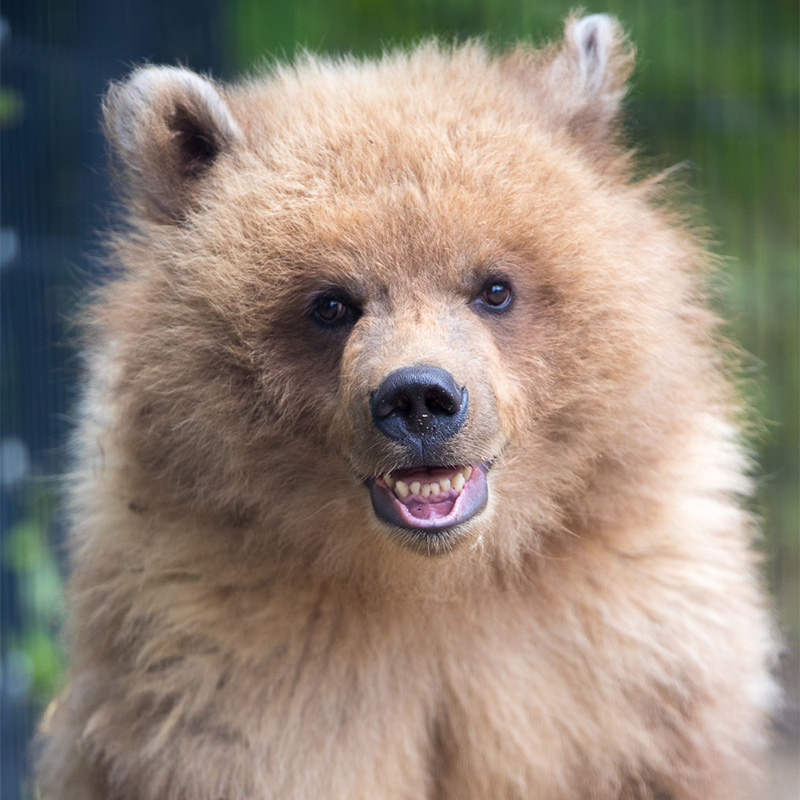
Woodland Park Zoo has become home to an orphaned brown bear cub found roaming alone on an air force base near Anchorage, Alaska. The female cub, who weighs 89 pounds, traveled via Alaska Air Cargo and arrived at the zoo on July 13.
The zoo’s newest resident was named Juniper in late August, after a plant found in the Cascades of Washington state. She was born during winter 2022 winter. She is believed to be singleton — the only cub born to her mother at her birthing rather than a multiple birth. She came to the attention of the Alaska Department of Fish and Game after they received multiple reports of sightings of the lone cub.
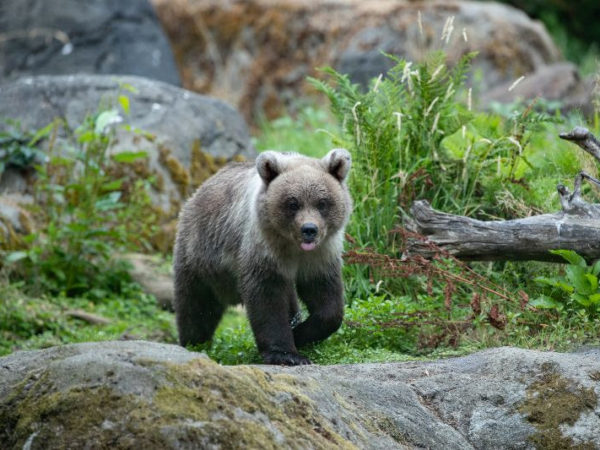
Photo courtesy WPZ.org.
Mother bear not found
The ADFG was unable to locate the bear’s mother, and baby was too young to survive on her own. With mama bear nowhere in site, the department lured the bear to safety using food as bait.
“Usually bears have a sweet tooth, so we tried drawing her in with glazed donuts. However, this cub showed no interest in the donuts — she only looked but wouldn’t enter. Fortunately, one of our agents had Vienna sausages in his lunch, so we used those as an attractant instead and she liked the sausages!” said Cory Stantorf, an assistant biologist in the Anchorage area for Alaska Department of Fish and Game told the Woodland Park Zoo Blog. “From her outward appearance and reaction, she appeared to be in good health and had the attitude to back it up. She’s going to be a good bear for Woodland Park Zoo.”
A permanent home
The Alaska Zoo provided the cub with care and a temporary home. Woodland Park Zoo offered the cub permanent residence.
The bear is being cared for in a naturalistic setting, which includes ample enrichment tools including a flowing stream and a bear-sized swimming pool with live fish. The little bear will also be able to bask in the sun on rocks, take a nap in her bear cave and scratch stops in her enclosure.
Is she a grizzly?
According to the zoo’s blog post, “Brown bears and grizzly bears belong to the same species, Ursus arctos, although the common name, “brown bear,” typically refers to a coastal bear, while “grizzly bear” usually refers to a (smaller) inland bear. Scientifically speaking, all grizzlies are brown bears, but not all brown bears are grizzlies. Meanwhile, American black bears are an entirely separate species (Ursus americanus), although some black bears do have brown fur!”
According to the zoo blog, the last time the zoo received brown bears was in 1994 when brothers Keema and Denali arrived as 10-month-old cubs from Washington State University Bear Center. Denali died in December 2020 just weeks shy of his 27th birthday. Male grizzly bears have a median life expectancy of 21 years in human care.
Get updates on the WPZ’s new baby grizzly at www.zoo.org/brownbear.