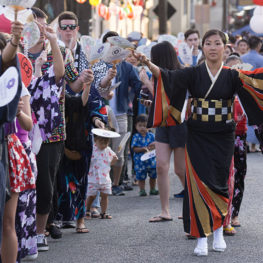
What do parents and students at international schools know that the rest of us don't?
These types of schools immerse students in a second language and infuse a global perspective into the curriculum.
Each year international education programs top the lists of best schools in America. For 2009, Bellevue International School is U.S. News & World Report's 14th best public school in the nation. Newsweek places Bellevue International 21st on its 2010 list of leading public high schools, and International Community School in Kirkland made Newsweek's list of "elite" public schools. Newsweek calls Kirkland's school an "academic powerhouse."
Test scores also indicate international school students do well – in most cases, better than their peers at comprehensive high schools. The most noticeable difference is on the science portion of the testing. Ninety-seven percent of Bellevue International 10th-grade students met the High School Proficiency Exams science standard in 2009-10, compared with 69 percent of the 10th graders at Bellevue High School. The two schools have similar student demographics, though Bellevue High is much larger.
Students at international schools seldom drop out, and between 98 and 100 percent go on to college. All students take at least one advanced placement class. In addition to gaining a global perspective through the curriculum, kids become fluent in a second language.
‘Challenging and Nurturing'
Just when this type of education seems a little too good to believe, Bellevue International parent Bart Becker makes it sound even better.
"The school is academically elite, but socially unpretentious, and that is very appealing to us," says Becker, whose daughter Elena is in ninth grade.
He says the one drawback of international schools is the lack of sports programs. Students can compete in sports through other high schools in the district. Overall, though, Becker calls Bellevue's international program "both challenging and nurturing" with a small size that's appealing because "students have less anonymity" and teachers are able to address individual kids' needs.
Bellevue International School, which started in 1991, has 545 students in sixth through 12th grades. That's smaller than many elementary schools.
Perhaps the biggest surprise about the international schools on the Eastside is that students are admitted through a lottery system. Last year Bellevue International had more than 450 applicants. Of those, the school picked 81 students at random to enter sixth grade.
"Our model is very effective for our students, and our small size allows us to really get to know the students and support them to success in every way," says Principal Jennifer Rose. "With last year's senior class, we had a 100 percent graduation rate and a 100 percent college attendance rate. We're very proud of our students, our staff and our school."
New International Schools in Seattle
Seattle Public Schools has been expanding its international education options. Two new international programs – Concord Elementary and Denny Middle School – opened in 2009. Concord becomes Seattle's third international elementary, joining Beacon Hill and John Stanford. Denny is the second international middle school, along with Hamilton.
As well, Chief Sealth High School recently became the first international high school in the district. The school opened its doors with the new program for the 2010-11 school year. World language classes include Spanish, Japanese and Mandarin.
The Seattle school district's ultimate goal is to have a dozen international schools throughout the city – a total of six elementaries, three middle schools and three high schools.
"The language piece is the challenge with creating international programs," says Karen Kodama, the district's international education administrator. "Any school can teach a global perspective, but most schools don't have teachers who are fluent in one of the target languages, and they also do not have experience teaching the language in content."
Spanish is the most common second language taught in international schools. Some offer classes in Japanese and Mandarin. Beacon Hill International School was the first Mandarin immersion school in Washington, yet now Denny and Chief Sealth also offer the language.
The benefits of becoming fluent in a second language and understanding cultures around the world are obvious to Kodama.
"Through their school years, students are learning who they are, what's important to them, what's their identity," she says. "International schools take it a step further and intentionally have students think about their role in the world."
Linda Thomas is a freelance journalist and a Seattle Schools parent. Sie spricht ein kleiner Deutscher, but is not fluent in a second language.