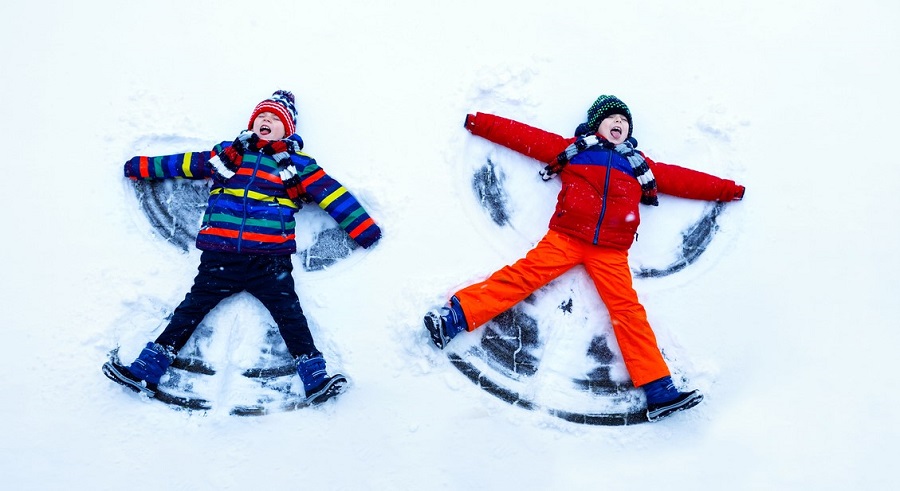
Don’t forget snow safety! Kids + snow = lots of fun, right? Here are tips to ensure that kids and babies stay safe and warm:
10 tips for snow safety
1. Layer up! Bitter cold and snow can cause frostbite. Dress your child in several layers, and make sure their head, neck, and hands are covered. Dress babies and young children in one more layer than an adult would wear.
2. Play it safe. Even when roads are closed to traffic, it’s not safe to play or sled in the street. Visibility may be limited due to snow banks, and ice on the roads makes braking difficult.
3. Beware of clothing hazards. Scarves and hood strings can strangle smaller children, so use other clothing to keep them warm.
4. Check in on warmth. Before kids head outside, tell them to come inside if they get wet or if they’re cold. Then, keep watching them and checking in. They may want to continue playing outside even if they are wet or cold.
5. Use sunscreen. Children and adults can still get sunburned in the winter. The sun can reflect off the snow, so apply sunscreen to exposed areas.
6. Use caution and put up protective gates when possible. If you’ve lost power or heat and are using alternative heating methods like kerosene or electric heaters, be sure smoke detectors and carbon monoxide detectors are working. Also, use caution around wood-burning stoves, fireplaces, and outdoor fire pits. They’re cozy but can present danger – especially to small children.
7. Get trained and equipped. Children should wear helmets when snowboarding, skiing, sledding, or playing ice hockey. To avoid injuries, teach children how to perform the activity safely.
8. Prevent nosebleeds. If your child suffers from minor winter nosebleeds, use a cold-air humidifier in their room. Saline nose drops can help keep their nose moist.
9. Keep them hydrated. In drier winter air, kids lose more water through their breath. Offer plenty of water, and try giving them warm drinks and soup for extra appeal.
10. Watch for danger signs. In the city, it very rarely gets cold enough to cause frostbite or hypothermia, but up in the mountains or in eastern Washington, where temperatures often get into the teens, the risks are real. Signs of frostbite are pale, gray, or blistered skin on the fingers, ears, nose, and toes. If you think your child has frostbite, bring the child indoors and put the affected area in warm (not hot) water. Signs of hypothermia are shivering, slurred speech, and unusual clumsiness. If you think your child has hypothermia, call 911 immediately.
More on snow safety
And here’s another one. (This one was new to me!)
During the year when the polar vortex was affecting much of the U.S., a trendy and dangerous stunt called the “boiling water challenge” gained popularity. This apparently involves hurling boiling water into the air and seeing how quickly it freezes. It probably won’t be cold enough here for this to work, anyway, and the obvious risk is a severe burn injury when the boiling water comes back down on you. Yes, people were really doing this. And they really should not have been.
Read more: