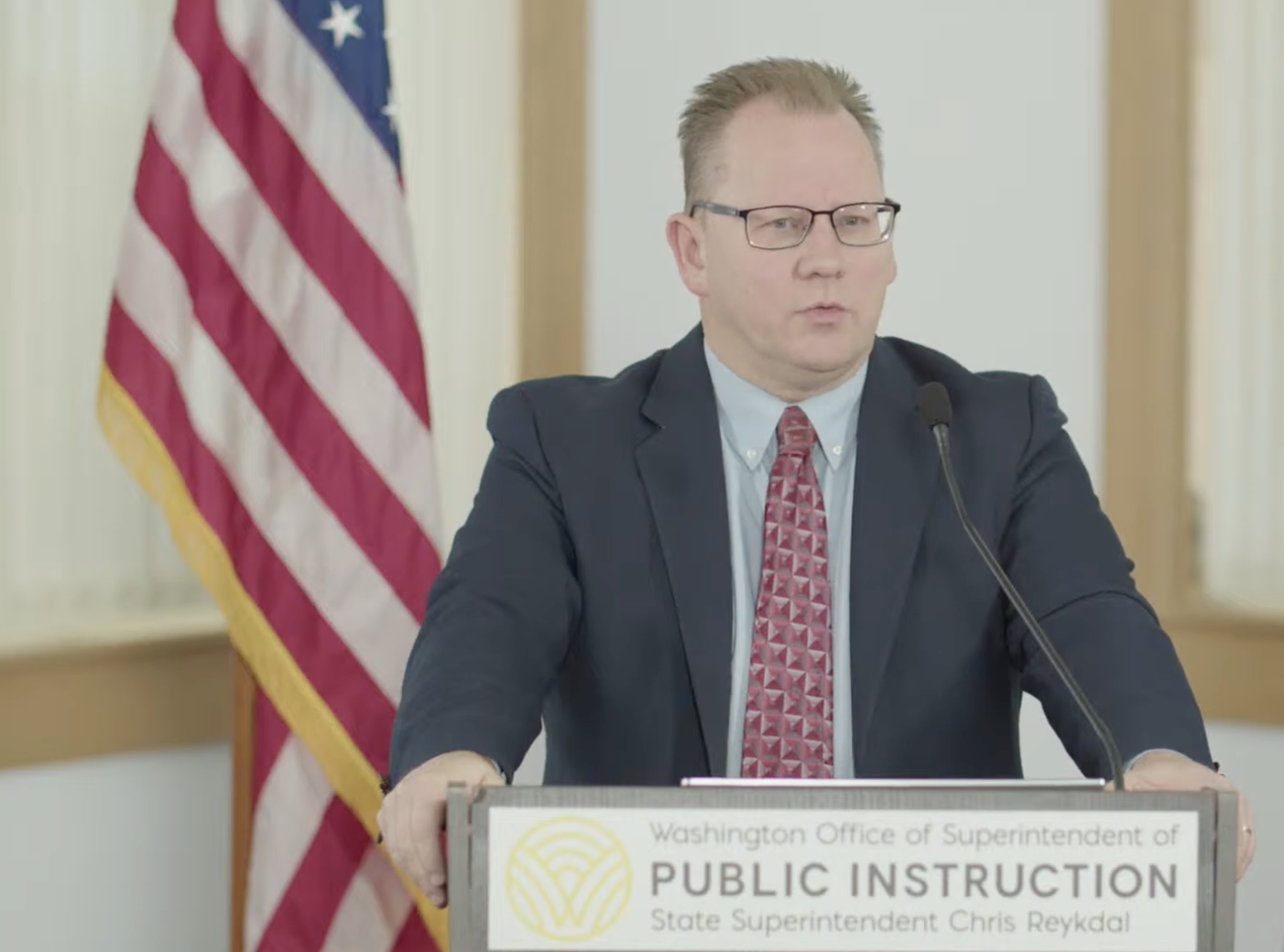
Washington State Superintendent of Public Instruction Chris Reykdal’s 2026 “State of Education” address last week landed with a familiar mix of urgency and warning:
Washington’s public schools are still carrying the weight of the pandemic, and the cracks are showing. He talked about students who need more mental health support than schools can currently provide, classrooms stretched thin by staffing shortages, and districts struggling to balance rising costs with limited resources. Reykdal framed these challenges not as temporary disruptions, but as signals that the system is being asked to do more — educate, stabilize, heal — without the funding to match.
Property tax approach doesn’t work
At the heart of his message was money and how the state raises it. Reykdal argued that Washington’s tax structure, heavily dependent on sales and property taxes, is both regressive and inadequate for sustaining public education. Because the state lacks a graduated income tax, he said, middle-class families shoulder a disproportionate share of the burden while schools remain underfunded. He stopped short of proposing a specific income or wealth tax, but made it clear that avoiding the conversation has consequences.
“Families are hurting, and I think it’s time for both sides of the aisle to drop the rhetoric and to be honest that one of the biggest challenges in our state is property taxes,” Reykdal said of a tax system that doesn’t serve the needs of families or schools.
“It’s broken. It’s time for Democrats to admit that. It’s time for Republicans to drop the rhetoric and say all taxes are bad,” Reykdal said. “We have vital services in the state that have to be paid for. The economy will continue to grow for the next 100 years, but the share of it going to public services will shrink if we do nothing.” Continuing to rely on the same revenue tools, he warned, leaves lawmakers choosing between cuts, short-term patches, or asking families to pay more without fixing the underlying problem.
Making good on the public education promise
His appeal was less about ideology than responsibility: Washington cannot keep promising opportunities to every child while refusing to modernize how it pays for schools. The question he left lawmakers with was simple, if uncomfortable — whether the state is willing to align its values with its revenue system, or continue asking schools to do the impossible.