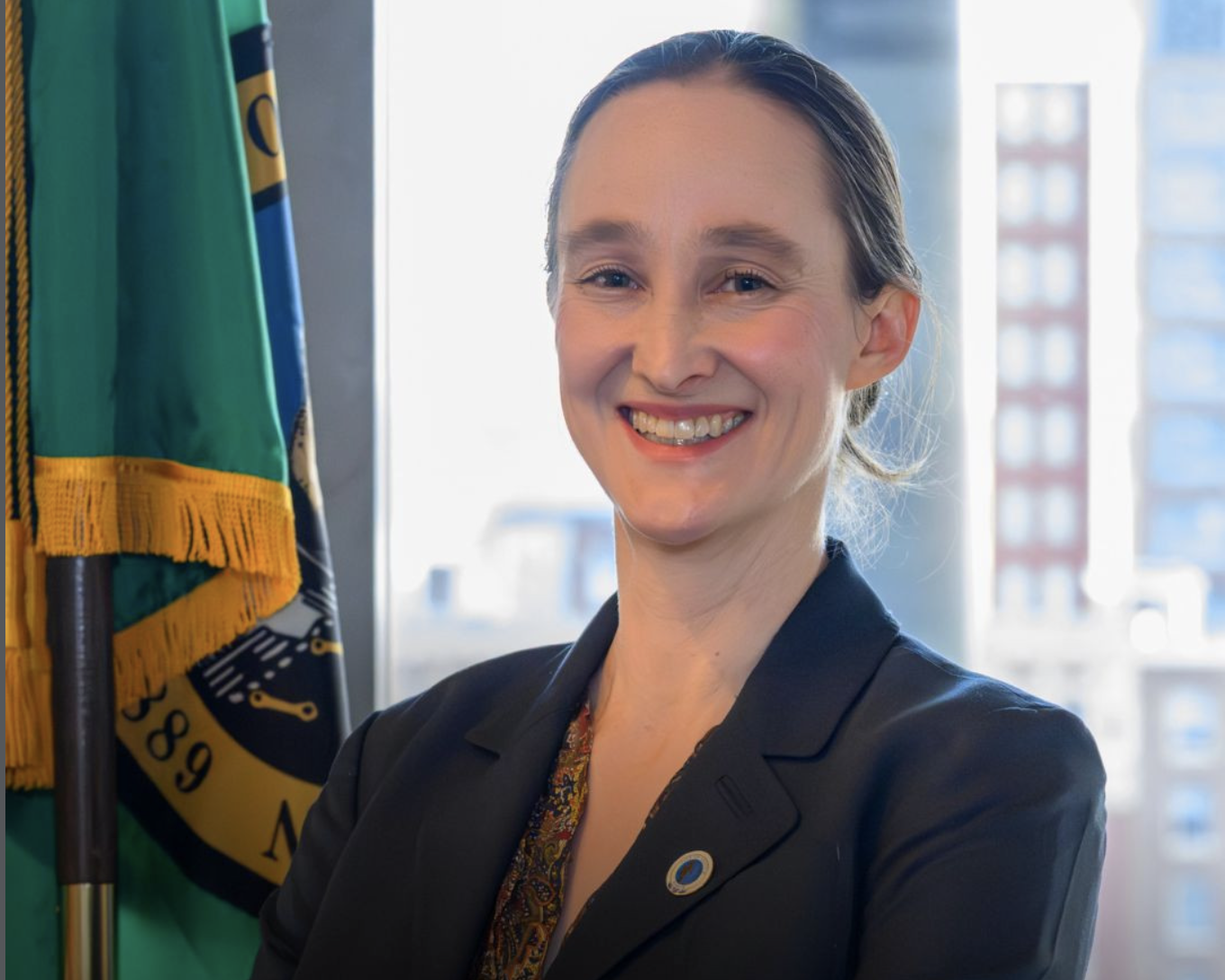
Seattle Mayor Katie WIlson gave her first “State of the City” Jan. 17 at the Hughes Performing Arts Institute, laying out her plan for addressing the City’s affordability, child care, food cost, safety and other parent concerns. Here are excerpts from Wilson’s address:
Gun violence
“I want to start by acknowledging one of the hardest things that’s happened this year in Seattle: the loss of the two Rainier Beach high school students late last month who were shot and killed while waiting for the bus after school. We have also recently seen deadly shootings in the Chinatown International District, and in Pioneer Square.
My team and I have spent time grieving with victims’ families, connecting with community members, and talking about the changes that we need to make as a city. How can students be expected to learn if you are worried, as one young woman told me, that if you leave school for lunch you might never come back? How can you be expected to concentrate in class if you’re living in a constant state of grief or fear? How can you be expected to thrive when you’ve seen so much tragedy and not nearly enough hope, opportunity, and joy? We have to do better for our kids.”
Wilson said her office will convene a panel of local and national experts to develop a strategy to address Seattle gun violence that “is tailored to the needs of our neighborhoods and communities.”
Child care
“I myself have had trouble affording childcare … Right now there are so many gaps where so many children and so many families don’t have the support they need, and our whole society pays the price. Parents are stressed, kids struggle, and working families move out of the city because they can’t afford to build a life here.”
Wilson applauded the City’s Department of Education and Early Learning and its award-winning Seattle Preschool and Child Care Assistance programs: “We’ve already been doing a lot right in this area. That’s encouraging, but it’s also a little unnerving that we are seen as leading. Because any parent would tell you there’s so much more to be done. It just underscores how far the US lags behind many other countries in our support for families.,” Wilson said.
“We need to bring down the cost of childcare, expand our pre-K program and summer enrichment opportunities, and make sure the people who are doing this work are paid enough to raise a family themselves. We also need to make it easier to site, start, and run childcare facilities in Seattle.
“It’s time we started treating childcare and early education as public goods, accessible and affordable to all — just like our parks, schools, and utilities. My administration will be pursuing this vision as we begin to implement the Families, Education, Preschool, and Promise levy voters passed last year, as well as identifying new resources and partnerships that can take us even further.”
Check out Wilson’s and former Mayor Bruce Harrell’s thoughts on increasing child care in “Think Out of the Box: Two mayors consider Seattle’s child care needs.”
Rising food costs
“The high inflation of the past few years hit us all hard. The rising cost of food, in particular, has been a challenge for families that are already struggling.
“When the Kroger Corporation decided to close the Lake City Fred Meyer last year, it further highlighted the importance of ensuring access to fresh, affordable food. The recent closure of the grocery store at 23rd & Jackson created a second new food desert in the Central District. Grocery stores are essential community assets—they support daily life, local jobs, access to healthy food, and neighborhood stability.
“We have to start treating food access as core community infrastructure. One important step in that direction that long pre-dates my administration is the Fresh Bucks program, which helps low-income Seattle residents afford fruits and vegetables at participating farmers’ markets, independent grocers, and supermarkets. As of this year, we have increased monthly benefits and cleared the waitlist, and Fresh Bucks is now supporting more than 17,000 households.
“Our Office of Planning and Community Development, the Office of Economic Development, and the Office of Sustainability and Environment are exploring a variety of approaches around how the city can work with private partners and the grocery workers union to help protect good jobs and expand access to affordable food. We are also looking at new and alternative grocery models that better fit different community needs. That’s all a long-winded way of saying we’re looking at a public grocery store, and other ideas as well.
“Everyone deserves reliable, affordable access to fresh food in their own neighborhoods, and we’ll be working to make that vision a reality.”
Community centers
“This Saturday (Feb. 21), we’re reopening the Hiawatha Community Center in West Seattle after a 6-year closure. The new South Park Community Center will be opening this year, too, and there’s going to be a spray park there, which is pretty great, because my daughter and I always have fun at a spray park.
“Community centers are such an important part of our neighborhoods – they’re places where people can gather, families can enjoy themselves, and you can connect across generations and cultures, without having to spend any money if you don’t want to.”
On history and hope
“This year marks the 100th anniversary of the first declaration that February is a month to honor the history, experiences, and power of America’s Black and African American communities. Here in Seattle, Black communities built neighborhoods, institutions, businesses, and social movements that continue to define who we are. And Black History Month calls us not only to remember, and to celebrate – but to act.
“We are in a moment when our rights are under attack from so many directions. When it feels like, at a national level, we are moving backwards. When it can feel impossible to believe our country will ever emerge from the storm clouds.
:In these moments, it is so important to look to history and to recognize that we have stood at similar junctures many times before. And to remember how much has been achieved through social movements that emerged in the toughest times, brought people together, and won transformative change.
:This month also marks the beginning of Ramadan and Lent, which are both times of fasting, prayer, reflection, and charity. And today is Lunar New Year, which is a time for renewal, for family, and to welcome the spring.
“In this season of reflection and new beginnings, I am so hopeful about what we can accomplish together. But that doesn’t mean I look at the city through rose-colored glasses. The hope I feel comes from history. From looking at an institution like this one here, how it’s evolved over time and overcome challenges to become what it is today. And from recognizing how that history lets us better imagine what is possible.”