Being a parent is nonstop hard work, making it challenging to stay on top of news that impacts families in Washington state. This Hits Home is your weekly hit of news, commentary, and, occasionally, opinion. Want to have a say? Look for the “Take action” prompts. Here’s the update for the week of March 30-April 5.
New law moves to end student isolation and restraint in Washington
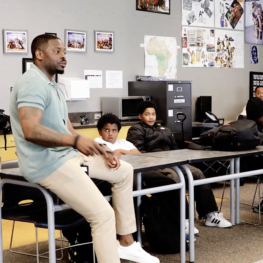
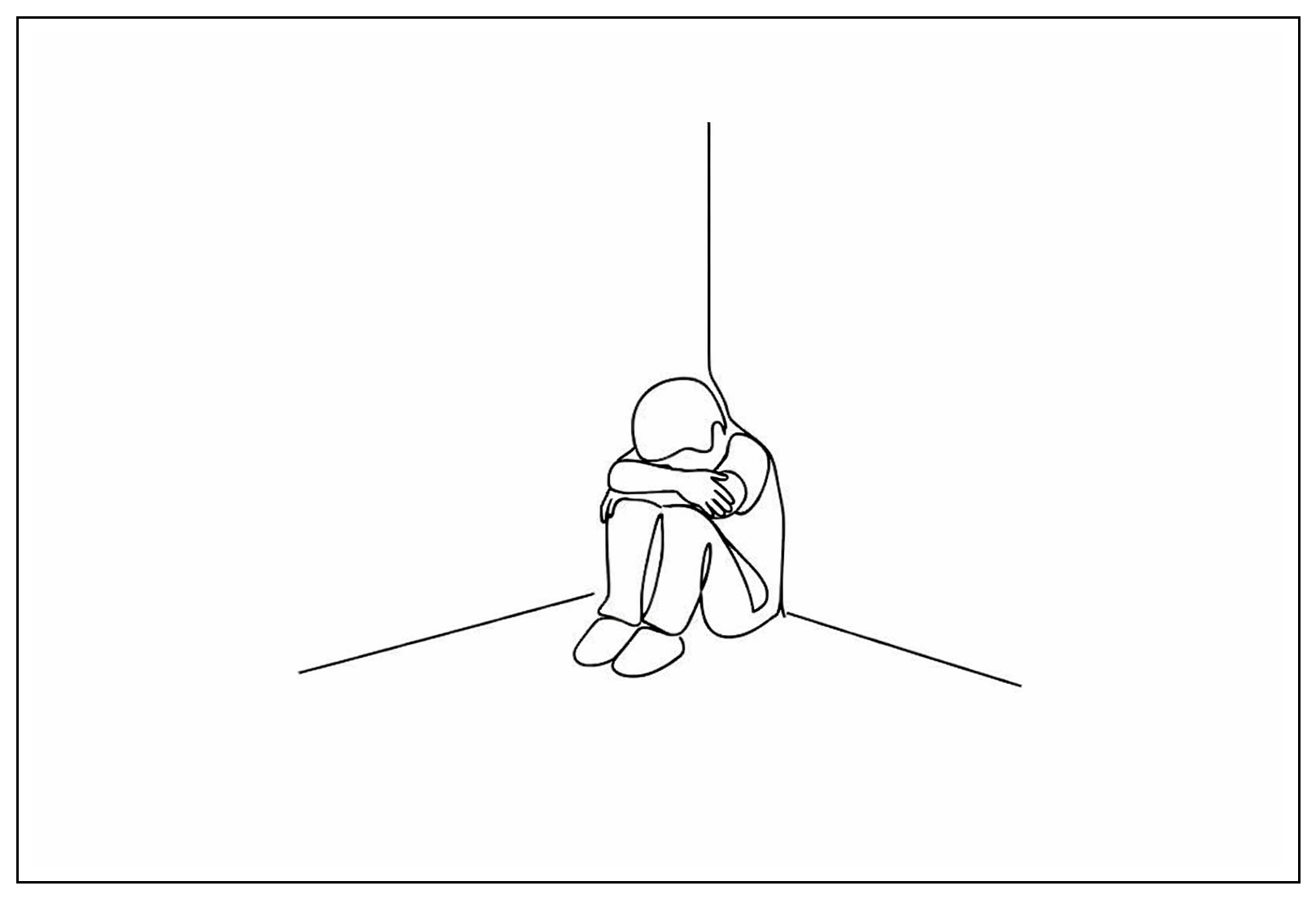
Parents and special education advocates let out a sigh of relief earlier this week when Washington Gov. Bob Ferguson signed a new law to protect students from traumatizing restraint or isolation.
Under the measure–House Bill 1795 approved by the 2026 legislature–school staff in Washington state can no longer use pepper spray, mace, sedatives, or physical restraints like handcuffs, zip ties, or belts and are limited in the use of other restraint when students are exhibiting behavioral escalation. They’re also barred from pinning students down or forcing them against a wall in ways that could restrict breathing or blood flow.
Restraint may be used only in the “likelihood of serious harm.” By that, the new law stipulates there must be substantial risk that a student will harm themself (for example, threatened or attempted suicide) or someone else.
Further, the new law says: “School districts and other providers of public educational services must not design, construct, remodel, reconfigure, repurpose, or otherwise establish any new room or other enclosed area for the primary purpose of student isolation, irrespective of how the space is labeled.” School staff are allowed to use a nonpermanent barrier to separate a child within the classroom, but only for a short time.
Parents, education advocates, and mental health professionals have been raising alarms about the use of such tactics, often on kids with disabilities, for years. Their stories are often painful. Supporters say the law doesn’t solve everything—schools still need training, staffing, and resources—but it sets a clearer baseline for what’s safe and acceptable in classrooms.
“The League of Education Voters and our partners are happy because it bans the use of chemical and mechanical restraints on students and eliminates new construction of isolation rooms, which greatly traumatize students,” said Arik Korman, CEO of the League. “However, the overall work to end isolation and reduce restraint in Washington state is like an ocean liner, and HB 1795 is the equivalent of a lifeboat. There is still much work to do.”
TAKE ACTION: Concerned about use of isolation and restraint on students? Sign up for the League of Education Voters mailing list for updates about ongoing advocacy on this issue.

JSIS Global Reading Challenge winners (Image: Seattle Public Schools)
Go readers! JSIS students win 30th Annual Global Reading Challenge
A team of students at John Stanford International School (JSIS) took top honors last week at the 30th Annual Global Reading Challenge, a long-running reading incentive program hosted by Seattle Public Library for fourth- and fifth-grade students in Seattle Public Schools. This year, 72 schools participated in the challenge, with more than 3,500 students participating across the district.
During the competition, student teams read books from the challenge book list, then come together to test their knowledge of what they read over three rounds of questions.
Seattle School Board Director Vivian Song’s daughter was part of the JSIS winning team. But Song said she was equally excited that three schools from her region—Bailey Gatzert, Madrona, and Thurgood Marshall—were also in the finals.
“I am so grateful to the Seattle Public Library for this opportunity to make reading a shared and fun experience citywide,” Song said in the winner announcement. “It’s a special event, and there is nothing like it.

(Image: iStock)
State auditor’s report finds $37M in questionable child care payments
Washington state may have misspent—or at least poorly tracked—tens of millions of dollars meant to help families pay for child care, according to a new state audit. The report estimates about $37 million in questionable payments over a one-year period, tied to federal programs that subsidize care for working families. The issue isn’t necessarily fraud, auditors say, but a system that too often pays providers without first verifying documentation, leaving gaps that can lead to overbilling, missing records, or payments that don’t meet federal requirements.
For parents, the concern is less about paperwork and more about what’s at stake: a child care system already stretched thin. State officials say most funding—hundreds of millions annually—does reach providers and families as intended, but acknowledge longstanding weaknesses in oversight.
Lawmakers on both sides of the aisle are now pushing for tighter controls, faster audits, and better tracking to ensure dollars actually reach the families that depend on them. The bottom line for Washington families: the safety net is still there, but scrutiny over how it’s managed is intensifying—and could shape future access to child care support. Read the full story from Washington State Standard.

(Image: iStock)
Governor signs bill to protect rights of homeless students
As federal education policy shifts, Washington has moved to lock in protections for one of the state’s most vulnerable student groups: kids experiencing homelessness.
Last week Gov. Bob Ferguson signed a new law that writes key provisions of the federal McKinney-Vento Homeless Assistance Act into state law. The move requires Washington schools to do what they are already doing: help students with unstable housing stay enrolled, access transportation, and receive support services—even if federal protections weaken.
For unhoused kids or families, the move is both practical and preventative. Currently about $129 million is tied to the federal act to help students across the country, with a portion of that coming to Washington. That funding remains in place, but uncertainty around the future of the U.S. Department of Education has raised concerns about its continuation. State lawmakers approved House Bill 2594 earlier this year to address those concerns.
The impact of the new law is far-reaching. According to a report by Northwest Public Broadcasting, about $2 million in McKinney-Vento funding went to Washington school districts in the 2024–25 school year. A report from Building Changes, estimated that there were 42,000–43,000 students in Washington’s K–12 system experiencing homelessness during the 2023–24 school year — roughly one in every 30 students. Washington has one of the highest homeless student rates in the country.
By codifying McKinney-Vento protections in Washington, lawmakers offer kids and families hope that no matter what happens at the federal level, schools here will still be required to provide stability, continuity, and access for students who need it most. Read more on this story.
(Image: Alachua County Internal)
SCOTUS rejection of Colorado ‘conversion therapy’ ban for LGBTQ+ minors could open door to Washington law challenge
A U.S. Supreme Court ruling this week is poised to ripple well beyond Colorado, and potentially into Washington classrooms, clinics, and counseling offices in the future.
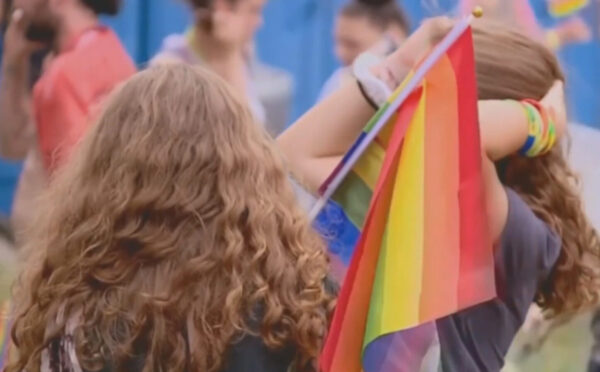
In siding with a Christian therapist, the court struck down a Colorado law that barred licensed providers from attempting to change a minor’s sexual orientation or gender identity through talk therapy, finding it violated free speech protections. The decision doesn’t automatically overturn other state laws, but it opens the door to challenges—including here in Washington, where lawmakers passed a similar ban in 2018.
Washington’s law, like those in more than 20 other states, was built on a public health framework: that so-called conversion therapy is ineffective and can harm young people. If the ruling triggers legal challenges to the state statute, it could reshape what kinds of counseling practices are allowed, and how the state balances protecting minors with protecting speech.
What’s clear is this: a national legal shift just landed, and Washington is directly in its path. Go to The New York Times for the full story on the Colorado ruling,
TAKE ACTION: If you have an opinion or position about protecting Washington’s youth from sexual identity conversion therapy, make your voice heard. Call 800-562-6000 and leave a message for your legislators. Lawmakers track and pay attention to calls.

(Image: Sky Nesher / iStock)
State lawmakers punted on a school cellphone ban; Advocates say the Washington is being left behond
Washington has taken what parents and advocates say is an overly cautious step on one of the biggest flashpoints in schools right now: student cellphone use.
A new law signed by Gov. Bob Ferguson doesn’t set limits—it asks for a study. It requires that the Office of Superintendent of Public Instruction spend the next few years examining how phones affect learning and student well-being, with recommendations due in 2027.
But for many parents and some lawmakers, that timeline feels out of sync with what’s happening in real time. While most districts already have some form of phone policy, only a fraction require students to keep devices put away all day. That gap is driving frustration, especially as other states move faster with statewide restrictions.
Parent advocates argue the issue isn’t theoretical—it’s already showing up in classrooms, social dynamics, and student mental health. “We don’t have that kind of time,” said one Washington parent pushing for stronger action. For families watching the daily pull of screens play out in their kids’ lives, the question isn’t whether phones are a problem. It’s how long the state is willing to wait before treating it like one. Read the full story from the Washington State Standard. I’ll add that Seattle Times columnist Danny Westneat’s review of the legislative punt on a statewide ban is well worth the read.
TAKE ACTION: Do you have an opinion about passing a statewide cellphone ban in school in Washington? It doesn’t matter that the 2026 session is over, lawmakers are already focused on next year. Reach out to your state lawmakers. Contact the Washington Governor’s office.
Seattle Central Community College (Image: SCCC)
More Washington students starting 4-year degree at community colleges, even as colleges struggle
Enrollment at Washington community and technical colleges (CTCs) is on the rise.
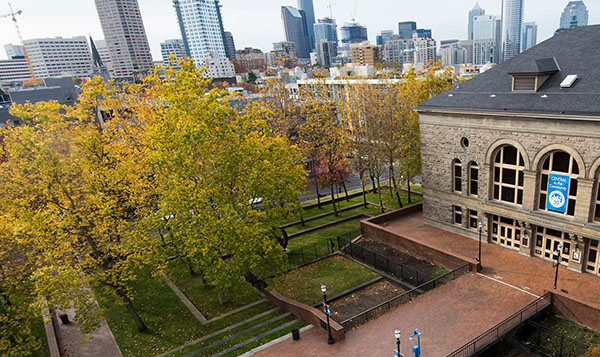
According to data from the Washington Student Achievement Council’s fall 2025 enrollment trends report, some universities are still struggling to return to pre-pandemic enrollment numbers. Community and technical colleges, on the other hand, are seeing steady growth. The report, released in January, shows CTE enrollment climbed from 169,913 in 2020 to 191,248 in 2025. Within that, the number of students entering on a 4-year degree track rose from 96,912 to 103,174.
What’s driving the trend? Turns out there are several things, including a growing interest in saving money. It costs about $5,000 a year in tuition at a state community college. Tuition for one year at the University of Washington runs about $13,500. That’s a $17,000 savings for the student who transfers into the UW to complete a baccalaureate degree after two years at local CTC.
At the same time, community colleges across Seattle and the state have seen budget cuts and are finding it harder to cover their costs. To address its budget deficit, Seattle Colleges proposed last month to sell the popular Wood Technology Center building. And Washington lawmakers are ordering a new review of the state’s community and technical college system, asking whether campuses, programs, and administrative structures can be streamlined to reduce costs even more. Lawmakers say the goal is accountability and long-term sustainability, but educators and some legislators warn that even a search for efficiencies could lead to reduced access for students in a system already under financial strain. The state may need to do some rethinking on how it funds higher education.
Learn more about why some students are making community college their first stop and the potential impact of the CTC audit in The Seattle Times (Search term Community Colleges).

A doula offers emotional and physical support to a laboring mother.
(Image: Brian Stevens)
Wake up, Washington insurers: Join the movement to cover doulas | Op-Ed
By Cheryl Murfin, CD, L, MA/IAE
At a time when nearly one in three births in the United States ends in major surgery, we should be asking a straightforward question: why isn’t every birthing parent offered the kind of support proven to reduce those outcomes?
Doulas—trained, non-clinical professionals who provide continuous emotional, physical, and informational support—have been shown to reduce cesarean rates by as much as 39% to 53%. They help people navigate labor, manage pain without medication, and make informed decisions in real time. They don’t replace medical care. They complement it. And in doing so, they often change the trajectory of a birth.
I worked as a doula for more than 25 years. I’ve been in rooms where a birth seemed to be heading toward surgery—where exhaustion, fear, or hospital timelines pushed things in that direction—only to see it turn with something as simple as repositioning, hydration, or a few more minutes of steady support. I’ve seen laboring parents regain confidence when someone stayed with them, explained what was happening, and helped them make decisions they felt good about.
Here in Washington, some families are finally getting access to professional doula support. As of last year, Apple Health, the state’s Medicaid program, covers doula services, reimbursing up to about $3,500 per birth. That means many low-income families can now receive support from pregnancy through postpartum without paying out of pocket. It’s a meaningful shift—and one grounded in both evidence and equity.
But outside Medicaid, access to doulas remains largely a privilege — most families still pay out of pocket, even though doula care can cost far less than the medical interventions it helps avoid. Unless an employer offers it as a benefit—and most don’t—doula support is simply out of reach.
That’s what makes a recent move by UnitedHealthcare worth paying attention to. The company has begun offering doula coverage in its employer-sponsored plans. The company cites reductions in preterm births and caesarean deliveries, as well as improved maternal mental health and satisfaction with care. It is the first sign of a shift in maternity care toward recognizing that non-medical support can improve outcomes and reduce costs. Employers who have offered doula benefits outside traditional insurance models have known this for years. And here, for once, is an insurance decision that reflects both data and common sense.
Doulas don’t have magic solutions. What they have is compassion, time, training, and focus. They aren’t rotating in and out between patients. They aren’t tied to hospital schedules or institutional pressures. They are there for one person, one family, for as long as it takes. And yet, access still depends largely on who you are and what insurance you carry.
If we truly care about maternal health, about reducing unnecessary interventions, and about giving families the best possible start, doula care shouldn’t be optional. It should be standard. It should be covered. And it should be accessible to every family, not just those who can afford to pay for it out of pocket. It’s time for all insurers to follow the lead of Apple Health and UnitedHealthcare. Read the full opinion.
(Graphic: Proton)
Proton launches Born Private, an email reservation program to protect children’s digital identities from birth
In general, I try to keep this column focused on local news, but with the recent failure of the Washington State Legislature to pass meaningful online protections for kids and congressional representatives still working on it in the “other Washington,” news from the Switzerland-based, privacy-focused email company Proton has caught my eye.
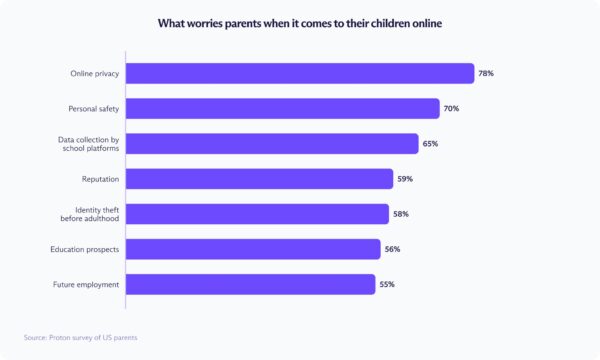
The company recently launched “Born Private,” a program that lets parents reserve an encrypted email address for a child at birth (or any time in early childhood) for a $1 donation. Proton Mail, an email service provider, then holds the address unused for up to 15 years. The idea: when kids eventually need an email—often by around age 10 for school or social use—their name email is already reserved, and, more importantly, going forward it or a child’s data will not be tracked by marketers and others.
Research done by Common Sense Media indicates that 42% of kids have a phone by age 10, 71% have one by age 12, and 91% by age 14, while research from Common Sense and Pew Research Center show the vast majority of parents worry that tech companies are collecting and profiting from their children’s data. Proton than an email address, the company argues, is the “root” of a child’s digital identity and once it’s created outside an encrypted platform, it can begin generating a trail of behavioral data that follows kids for years. At least one other company also offers end-to-end encrypted email and calendar: Tuta, based in Germany. It does not currently offer address reservations for kids.
Using Born Private, parents can lock in an address with a $1 donation to the nonprofit Proton Foundation, an organization with a mission to defend digital privacy globally. Register a child’s email here.
SCOTUS Round 2: Judges hear challenge to Trump’s executive order to end birthright citizenship
The Supreme Court began hearing oral arguments Wednesday in a case that could reshape what it means to be born on American soil for children born to parents without legal status or who are in the country on temporary visas.
The case, Trump v. Barbara, challenges an executive order signed by President Donald Trump in January 2025 that would deny automatic citizenship, called “birthright citizenship,” to such babies. The Trump administration petitioned the high court in December as a last hope for maintaining the order after multiple lower courts struck it down, finding it violated the Constitution.
If the Court were to overturn lower court decisions and side with the administration, a core principle of the United States could be upended. Since an 1898 Supreme Court decision extended citizenship to most children born in the United States (excepting children born to foreign diplomats), birthright citizenship has been the law of the land.
According to news reports, however, the justices seemed dubious about arguments made by administration lawyers and possibly poised to strike down the order. Chief Justice John Roberts called the administration’s main argument—that the Constitution’s 14th Amendment citizenship clause was only intended for the offspring of freed slaves— “quirky.”
Washington state was a leader in challenging the order. In 2025, state Attorney General Nick Brown led several other states in a lawsuit against the policy. That case, Washington v. Trump, resulted in an early injunction blocking the policy and was upheld on appeal. According to plaintiffs, about 153,000 babies across the country were born to two parents without legal immigration status in 2022, including an estimated 4,000 in Washington.
The Supreme Court is expected to decide the case before its summer recess begins. Read more on this story from Washington State Standard.
For additional information, check out “Most Americans Favor Birthright Citizenship. That Wasn’t Always True” from The New York Times.