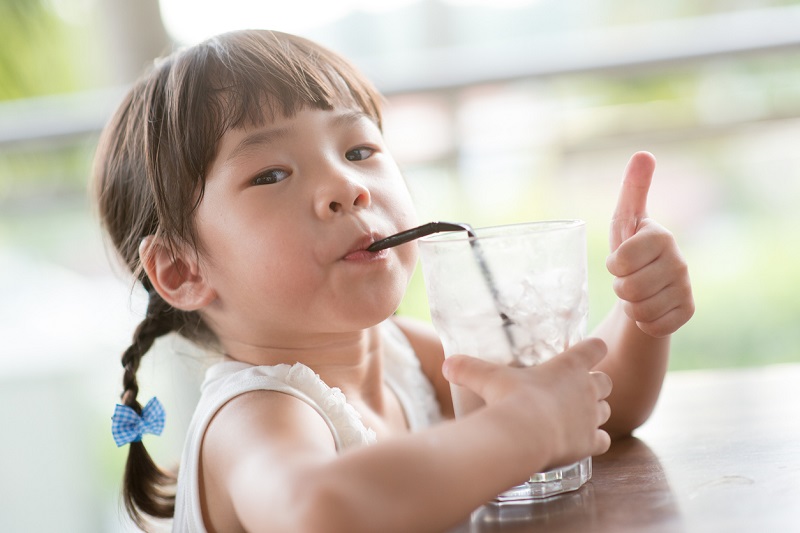
Public-health organizations are thrilled that a bill in the Washington State Legislature would require restaurants to make healthy drinks the default offering on kids' menus.
The "Healthy Drinks, Healthy Kids" bill, House Bill 2383 and Senate Bill 6455, (use those links to track its progress) defines a "healthy beverage" as water, unflavored milk or certain non-dairy milk alternatives.
“Sugary drinks are among the top contributors of calories from added sugars that kids consume when eating fast food,” Kirkland dietitian Amy Reuter was quoted in a press release on the subject from the Childhood Obesity Prevention Coalition. “Unfortunately, consuming sugary drinks regularly leads to a 26 percent increase in the risk of developing type 2 diabetes."
Hawaii, Delaware, California and multiple cities have already adopted similar rules. Advocates says it's particularly important as busy families eat more restaurant meals.
Reuter, the dietitian, also said: "We are seeing that families are not eating at home as often. That’s why I support making the default choice a healthy choice so that we can help support a healthy routine for kids when they are eating out and build a healthy foundation for the rest of their lives.”
For more on this subject, here is an American Heart Association article, published in September 2019 (and reprinted with permission) explaining the kids' beverage recommendations from the Academy of Nutrition and Dietetics, American Academy of Pediatric Dentistry, American Academy of Pediatrics and the American Heart Association:
Parents confused about what exactly their young children should be drinking just got help from several large health organizations, which have issued a common set of recommendations.
Breast milk or formula, plain cow's milk and water are encouraged; sweetened drinks – including most plant-based milks – are not.
Individual organizations have made recommendations about beverages before, but often not in a comprehensive way for this age group, said Dr. Stephen Daniels, chairman of the Department of Pediatrics at the University of Colorado School of Medicine. He led a panel that united experts from the Academy of Nutrition and Dietetics, American Academy of Pediatric Dentistry, American Academy of Pediatrics and the American Heart Association.
"This really covers essentially all issues related to beverages for kids ages 0 to 5," he said. The panel was convened by the nutrition research organization Healthy Eating Research, a Robert Wood Johnson Foundation program.
The guidelines include these highlights:
* From birth to 6 months, babies need only breast milk or infant formula.
* From 6 to 12 months, parents should offer a small amount of drinking water once solid foods are introduced to help babies get familiar with the taste. Children younger than 1 should avoid juice, even 100% fruit juice.
From 12 to 24 months, parents should add whole milk, along with plain water. Unsweetened and fortified soy milk is an option for children who are allergic to dairy milk, are lactose intolerant or whose families abstain from animal products. A little 100% fruit juice is OK, but small pieces of real fruit are healthier.
From ages 2 to 5, milk and water are the preferred beverages. Flavored milks, toddler formulas, low-calorie and sugar-sweetened beverages, and milks made from almonds, rice or oats should be avoided.
"For the average child who isn't intolerant to cow's milk and doesn't have an allergy, we came to the conclusion that cow's milk really is the best choice," Daniels said. For families that take a vegan approach, some plant-based milks "are maybe a reasonable choice," but parents have to be "very careful," he said.
Plant-based milks may look and taste like dairy milk, but their nutritional value varies from product to product – and they just aren't the same as cow's milk, he said. Also, he said, "many of those plant-based milks – they're sweetened. So, they have extra sugars and extra calories, which kids do not need."
Marie-Pierre St-Onge, an associate professor of nutritional medicine at Columbia Medical Center in New York, represented the AHA on the panel. She explained such milks are typically lower in protein and calcium, so they just aren't as nutritious for growing children.
And from a research standpoint, she said, "We don't have a lot of available evidence to say that these are safe for young infants to consume and that infants will grow well with plant-based milks alone."
Fortified soy milk is a bit different, St-Onge said, which is why it gets the nod in some cases. But she and Daniels echoed the panel's advice that parents who are intent on avoiding dairy should do so only with help from a dietitian or pediatrician.
The guidelines say parents should avoid offering all kinds of sweetened drinks, which include not only soda, fruit-flavored drinks and sweetened waters but also chocolate milk and the newer category of "toddler" milks, sometimes called "transition" or "weaning" formulas, which are often sweetened.
"We are trying to avoid any sweetened beverages for young children," St-Onge said.
The goal is to help shape healthy preferences over the long term, she said. "If children are exposed to highly sweetened foods at an early age, we get concerned that this is what they expect and anticipate and desire as they grow."
That's why, she said, babies can be given a few sips of water starting at six months. Young infants don't need water because their diet is basically all liquid. "But as we start introducing solids, some fluid could be replenished through water consumption. So that could habituate them to consuming plain water."
Although pediatricians have advised against offering fruit juice to children before age 1 in the past, St-Onge said parents often want to introduce it too early. The guidelines say children 12 to 24 months old should drink no more than 4 ounces of 100% fruit juice a day.
"We came to the conclusion based on the evidence that children under a year of age should not be drinking fruit juice, but that as they get to a year old and older, it's an acceptable drink," Daniels said. "But it has to be in the right portion size."
Having relatively straightforward recommendations endorsed by so many organizations should make life easier for parents, he said.
"It's really the basics that are the key here. And that children ages 0 to 5 don't need anything in their beverages. And I hope that's a message that people will get."