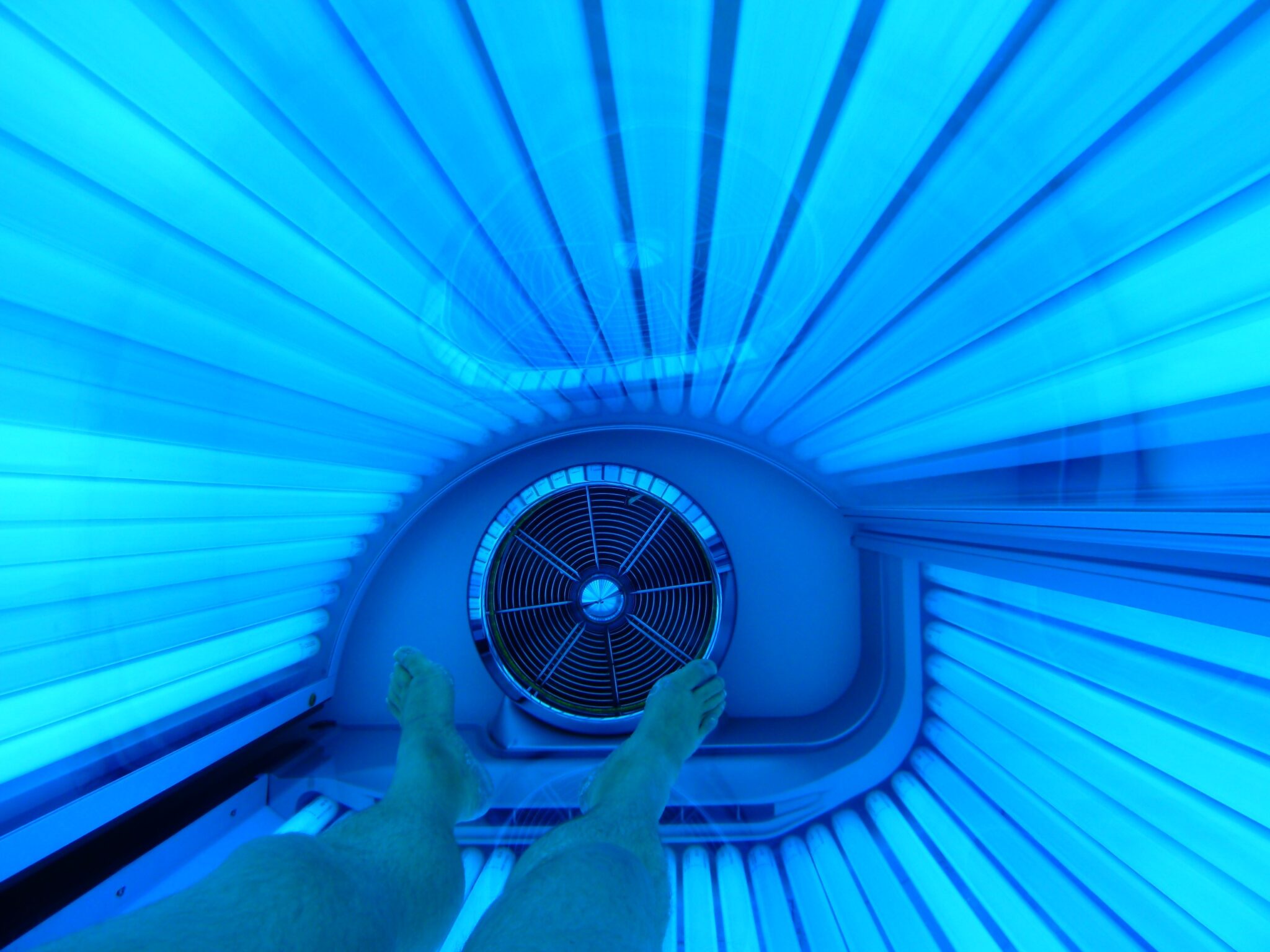
Results of a survey by the American Academy of Dermatology found that tanning salon employees, aren't informing a troubling number of Caucasian teen girls and young women about the skin cancer dangers of indoor tanning beds by .
"Indoor tanning poses a significant health risk, especially for Caucasians because of their fair skin. Studies have found that UV radiation from indoor tanning beds increases a person's risk of developing melanoma by 75 percent," said dermatologist Ronald L. Moy, MD, FAAD, president of the Academy. "Contributing to this problem is the fact that tanning bed facilities currently are not required to verbally warn patrons of the known health risks of ultraviolet (UV) radiation and, in some cases, they may be misleading the public by falsely promoting artificial UV light as safer than natural sunlight."
The American Academy of Dermatology Association supports the Tanning Bed Cancer Control Act (TBCCA), which calls on the FDA to examine the classification of indoor tanning beds and implement enhanced labeling requirements.
The Academy's survey found that 43 percent of indoor tanners reported that they have never been warned about the dangers of tanning beds by tanning salon employees. When asked if they were aware of any warning labels on tanning beds, 30 percent of indoor tanners said no. By age group, younger tanning bed users (age 14-17) were significantly more likely to be unaware of any warning labels on tanning beds than older tanners (age 18-22).
Despite the fact that the United States Department of Health and Human Services and the World Health Organization's International Agency for Research on Cancer have classified UV radiation from tanning devices as cancerous and in the same category as cigarettes, a number of younger tanning bed users still think tanning beds are safer than the sun. Specifically, younger tanning bed users are more than twice as likely to think tanning beds are safer than the sun than older tanners. They are also more than three times as likely to think that tanning beds do not cause skin cancer.
This ignorance is dangerous, as one in five Americans will develop skin cancer in his or her lifetime. Approximately 75% of skin cancer deaths are from melanoma, and the incidence of melanoma has been rising for at least 30 years—particularly among young, white women.
"The indoor tanning industry needs to take responsibility for educating its patrons so they can make informed decisions," said Dr. Moy. "However, as we do with alcohol and tobacco laws, we need to protect our nation's young people because research shows they are not heeding health warnings."
Take education into your own hands, by visiting www.melanomamonday.org to find out how to perform a skin self-exam, download a body mole map, or find free skin cancer screenings in your area.
For more information, visit the Academy website.