 |
Anna will remember that day in May, 2011 for the rest of her life.
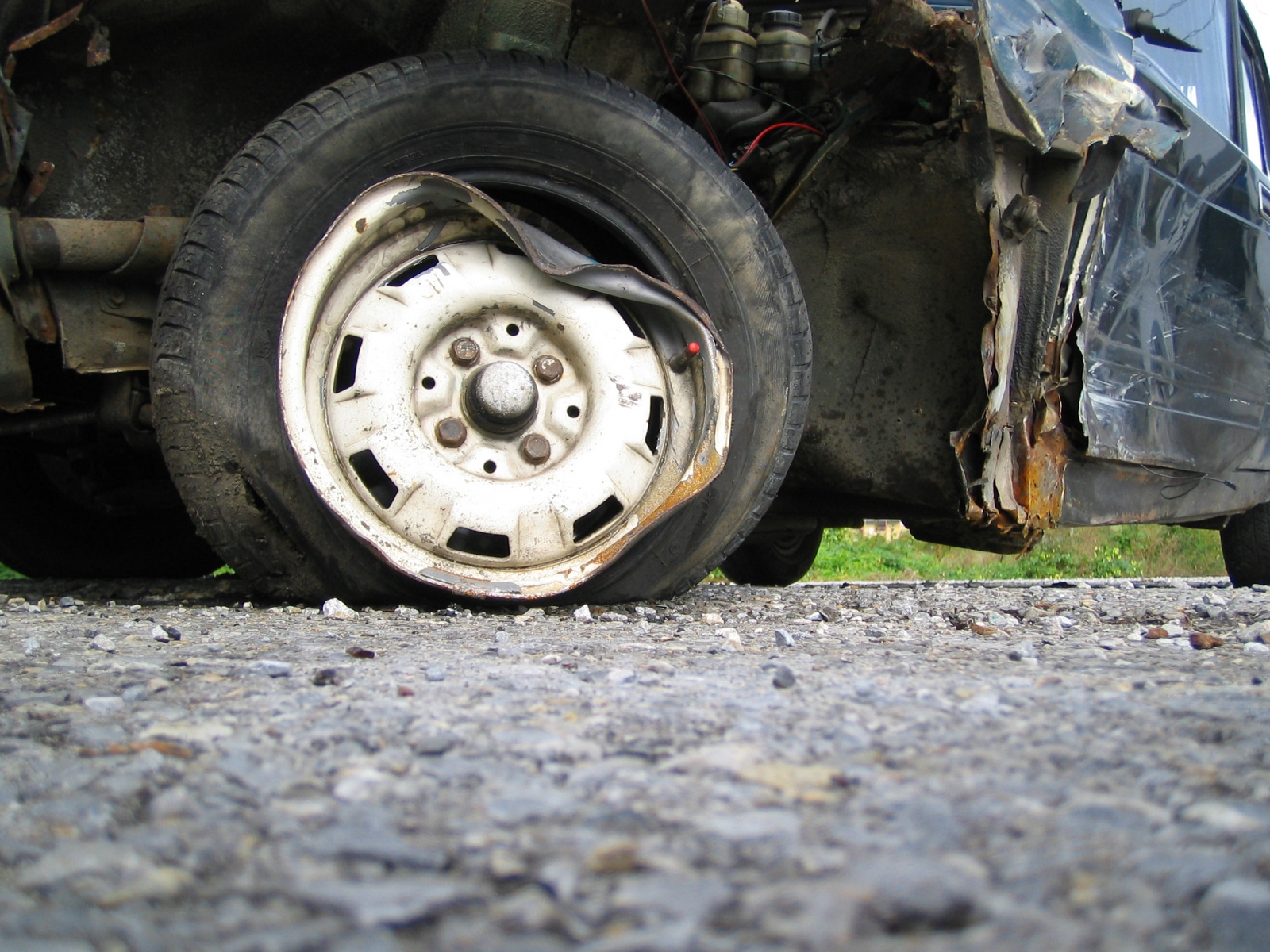
That was the night that the then 17-year-old Seattle high school senior nearly lost the rest of her life after slipping behind the wheel of her car and plowing at high speed into the gates at the Ballard Locks.
She doesn't remember the drive. She'd been drinking for about 7 hours.
"It was senior skip day, a tradition," Anna recalls. After missing her senior prom due to a sports competition, she volunteered to co-host a keg party for friends at a popular Seattle beach park.
"I hadn't been drinking as much senior year, and I let my guard down and I let loose," she says. Anna's best friend took her car keys away after admonishing others not to let Anna drive. But when her friend had to leave the party, she handed the keys to someone less aware of Anna's appearance when inebriated.
"The girl who was holding my keys didn't realize I was as drunk as I was, she didn't realize I'd been drinking all day," Anna says. "I talked her into giving the keys to me because I was just going to drive my car outside the park gates before they were locked. It was just bad decision upon bad decision."
Those decisions resulted in Anna undergoing four hours of surgery during which doctors inserted a metal rod to repair a broken femur and opened Anna's abdomen from belly button to rib cage to repair internal bleeding due to a liver laceration. They cost Anna and her parents 11 days in Harborview Medical Center, five of which were spent in the intensive care unit. They cost tens of thousands of dollars in medical bills, and months, possibly years, of physical therapy. During the crash, Anna suffered numerous internal injuries, including a damaged pancreas and spleen and a punctured lung. Her chin was split open; she broke a femur, a wrist and four ribs. Doctors had to repair her damaged spleen. Today, a year later, glass remains embedded in Anna's scars.
News of the accident traveled fast within Anna's school community, and it left many people scratching their heads. Anna was an "A" student, a member of the school's award-winning choir and a competitive athlete who spent upwards of 12 hours practicing each week.
"She's not the person you'd think would be in that situation," one mom of a student who attended school with Anna said. "We have these stereotypes that it's the kids with bad grades and bad homes that this happens to."
But Anna says that many of the students at her school were not surprised. Her partying habits were widely known – and shared – by her peers and even kids in lower grades.
"It's a public school, and drugs and alcohol are around. They are easily available. They are out there, and parents need to know that kids are using them," Anna says. "I think it's surprising to a lot of parents and it's unfortunate. The fact is, I'm from a good home, I'm a good students and I was introduced to drinking and smoking weed in seventh grade. I was only 12 or 13."
Now a college freshman, Anna hopes at least some good will come of her experience.
"My accident made a statement about drinking and driving to the whole school community. It caused a lot of my friends to cut down on or stop drinking. So many people knew about the accident, I can only hope it had an impact not only on the people in my grade but on younger kids."
Following are Anna's reflections on the night that changed her life, the history that led to it and what parents and schools need to know about teens and alcohol.
Availability of Drugs and Alcohol
I was introduced to alcohol and weed before I needed to be – I was a young seventh grader. My parents did the right things, they had talked to me about drugs and alcohol, but I don't think they or other parents took the issue seriously at that point. I don't think they expected the issue to be hitting them so early.
But at 12 or 13, my friend and I drank from her parent's stash, and the first time that I really got drunk was my 14th birthday.
I can remember as a ninth grader doing a project on weed, and it was amusing to my friend and me because we'd already smoked. We were looking up stuff and laughing, saying things like, "Wow, look what I found." It wasn't a deterrent. It was too late.
The thing about being exposed to it so young is that it makes it seem that once you get into high school, it's OK. It makes you think that you're more adult.
Parents may think that their kids don't have access to any of this, but they do. It's out there. A lot of the alcohol that's being consumed by kids comes from older siblings – kids see an older brother or sister drinking and they want to try it. Doing what older kids are doing feels like a positive thing no matter what they teach in class. It's a way to feel adult and, for me, rebelling against parents.
Teenage Alcoholism
I've had other friends who have faced serious situations around drinking, and they still drink. That's because it's a really strong drug. It takes a lot for someone to be like, wow, this is, you know, not good, this is serious.
I struggled with my drinking freshman and sophomore year, and so by my junior and senior year I felt like I'd learned and was more knowledgeable and definitely wasn't doing it as much. But I was still doing it. Even knowing what I went through after the accident, I have friends that to this day still go out drinking every weekend.
I can't point fingers – I'm not in a place to say you can't do that because they are where I used to be. But at the same time, I've been going to treatment classes and I've learned that alcohol is such a powerful drug. It alters your mood and your judgment, alters the chemistry in your body. Alcoholism is a disease, and I can see from my position now that a lot of my friends are dealing with alcoholism at 16, 17, 18 years old.
Stereotypes and Misconceptions about Teenage Drinkers
I am a rower. Rowing is a huge commitment. My senior year, I had 10 to 14 hours a week of practice. I was also a really studious person; I did really well in school. I had three priorities – school, rowing, and drinking and hanging out with my friends. Drinking wasn't my first priority, but it was up there. While I missed out on a lot of things senior year, I thought I managed to balance these three things pretty well.
So there is a misconception that you can't do both – be athletic or a good student and drink. Some kids can't. But the perception that the one that is drinking is the one that isn't doing well in school is just not true. Many of the friends I drank with are amazing athletes and students. They were just the same as me, doing both. We got good at getting around the hangovers at the wrong time. For example, we wouldn't go out drinking if we had to get up and practice at 5 a.m.
I think my parents may have missed a lot of stuff because I was a really good student and I was on track. I don't think it occurred to them that I might be putting myself in this situation. Parents like to think it's not going on, or my kid is above that. That is such a mistake.
Mixed Messages in Society Regarding Drinking and the Influence of Parents' Drinking (or Abstaining) on Kids
My parents were open about drinking. They didn't hide that they drank. It wasn't a taboo. I don't judge them at all because how parents present drinking can go two ways: Parents can be open with their own consumption, and kids see drinking as OK and may get desensitized. Or parents can push that drinking is bad and then the kid is interested because of that.
As soon as a kid is aware that what is in an adult's cup is different, it's alcohol, parents need to say something – like, "This is what I am drinking because I am 21 and you can drink it when you are 21 and this is why … " Spell it out, the law, the consequences.
I've thought about the mixed messages we get in our environment and in our families since the accident. You hear that a glass of red wine is not a bad thing – in fact it's good for your heart! There are big contradictions, and it's confusing to kids. And in everyday situations, too. Looking back, we'd go to a wedding; my parents might have a couple of glasses of champagne and then drive home. It does desensitize a child to see adults drink and drive, and everything turns out OK.
The other extreme is a problem, too. After the accident, my mom was, like, "We are not going to have any alcohol in the house," and we talked because that can desensitize in another way. Kids have to learn. And what's most important is that they learn about the consequences from their parents before they hear about the fun from other kids. Since you really can't know when that information will come from other kids, it's really a good idea to discuss it earlier, before middle school, and keep discussing it.
Drinking and Driving
A lot of the reasons kids end up driving after drinking is because they have curfews. I don't recommend throwing away curfews, but there has to be some dialogue about if a kid's been drinking. You can't just say, "Don't do it," and expect it will never happen. I think parents need to tell their kids: "I'll come get you, no questions asked, no punishment."
Or tell them to call you and you will call a cab if they ever drink. A cab ride is a lot cheaper than hundreds of thousands in hospital bills, you know what I mean? It's not worth it in the slightest. But most kids aren't going to make that call if they know they are going to get punished. Parents have to weigh their priorities.
The fact is, when teens are drinking, there's a tendency to be, like, "If someone else is driving, I'm not the one who's going to get in trouble," and so it's easier to get in someone else's car. And that is one of the scariest things. Wouldn't you rather have your kid get into a cab?
What Schools Should Know
There are health classes that teach kids about the risks of alcohol and drugs but the truth is, students can get out of health or special presentations when they have other activities or classes. I was in the choir and health class didn't fit in my schedule.
It would help for all schools to do an assembly at the beginning of every year where they say it straight: "Listen, we know this is something prevalent in our school, we know this happens." And then lay out the risks and consequences. I'd like to come back and talk to students so they can see some of those consequences on someone close to their own age.
(Our school) has done a good job with dances. Students know you don't go to them drunk because you will get caught. They warn kids even with announcements, but they go around the subject … they'd usually say, "Be safe … be smart" without saying, "Don't drink and drive."
One thing I've learned is that kids need to hear about DUI – how much it limits your future. If you have a DUI, you can't be a police officer, can't be a firefighter, your future employers can get the information, you can't even go to Canada. I'm going off to college and I have to fly back to deal with courts, and that's just not what I expected in the first quarter of college.
I have friends that have gotten DUIs, but people usually hide that kind of thing, and I really wish my friends would have told me, "Hey, I got a DUI and this really SUCKS so think about it."
Kids need to see the hospital bills.
Kids need to know if you drink and drive and crash, the insurance may not cover those bills.
They need to see scars. I have scars on my face now. I have scars on my knees. I'm going to California where the main dress is shorts and skirts and bathing suits and I've got these scars.
I hope I do get to talk to schools. I'd rather make this a positive, rather than hide. It's kind of hard to explain it to people – but I want people to know I put myself in this situation. I don't wear my scars shamefully. If someone asks, I tell them what happened. Although it is somewhat shameful, often times I'm talking to other kids whom I know have drunk and drove, so I know they can relate. I actually use (my scars) to my advantage in that regard – like look, I'm a statistic.
The Hardest Lessons Learned
I had just come home from the hospital when my mom found some old liquor bottles in my room. They were from a long time ago, and I didn't know what do with them, and I had totally forgotten they were there. But when my parents had to make the room accessible for me after the crash, they found them.
That's when I just broke down. My mom didn't know that those bottles were from long ago. It just looked so bad. When I saw that, the look on her face, that was really hard. I broke down because the hardest thing has been the pain I put my parents through.
Stuff was hard for me, but I know it was 10 times worse for them. The whole time I was in surgery, they didn't know if I was going to make it or not, and afterward it was still questionable – the internal injuries were serious and scary.
I didn't have to look at myself every day, my parents did. I can't imagine what they went through.
It's ironic that when I was younger my parents would kind of play out this same scenario. They had said: "This is why we don't want you drinking, because we don't want to get woken up in the middle of the night with a call from the police."
They had actually said this to me, and I didn't take it seriously. I am not a particularly religious person, but there's something to be said for the irony when you don't take a serious thing seriously, it's going to be proven to you in some way down the road. Unfortunately for me, it had to be proven in a very traumatic way.
I'm thankful
I am so thankful every day that I'm alive. I had to be cut out of my car. My face went through the windshield; I mean, I was half in, half out. When I went back to see my car, I found my hair and blood still in the shattered glass. That really shook me up.
I'm thankful that I didn't hit another car. I think about that every single morning when I wake up.
People look at me and say, "Oh, that's the worse thing that could have happened to you."
But it's just not, it's just not the worst thing. What I went through was traumatic, I'll still be dealing with it in a year, but it is NOT the worst thing that could have happened. I could have killed someone else.
People need to think about that.
Interview by Cheryl Murfin