I've sat through a lot of school productions. And, honestly, the end couldn't come soon enough for most of them, even when my own kid was the star of the show.
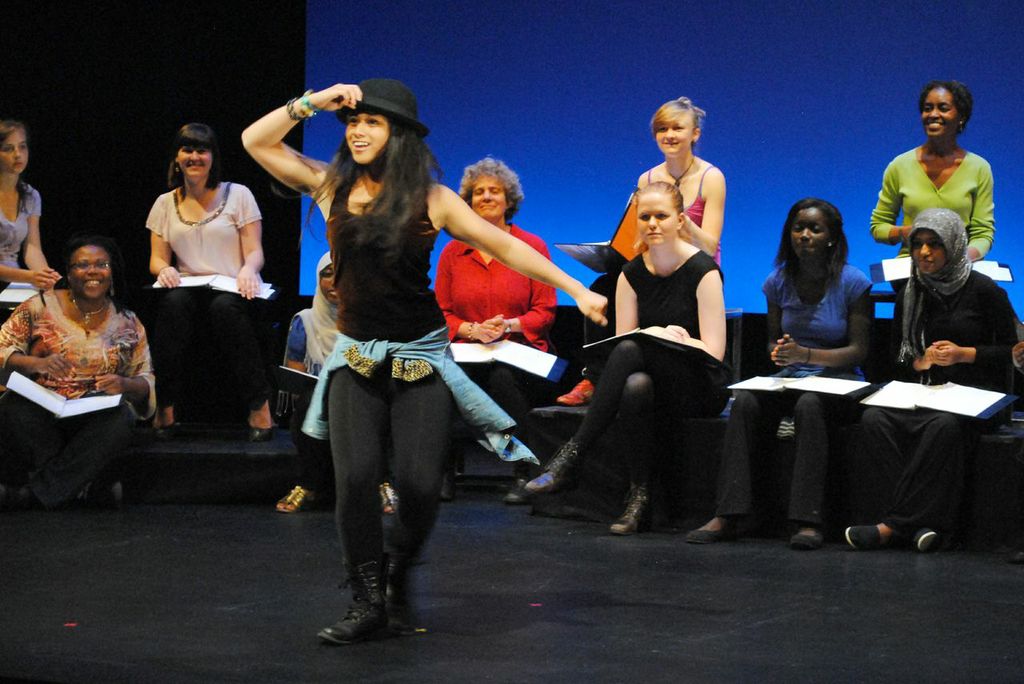
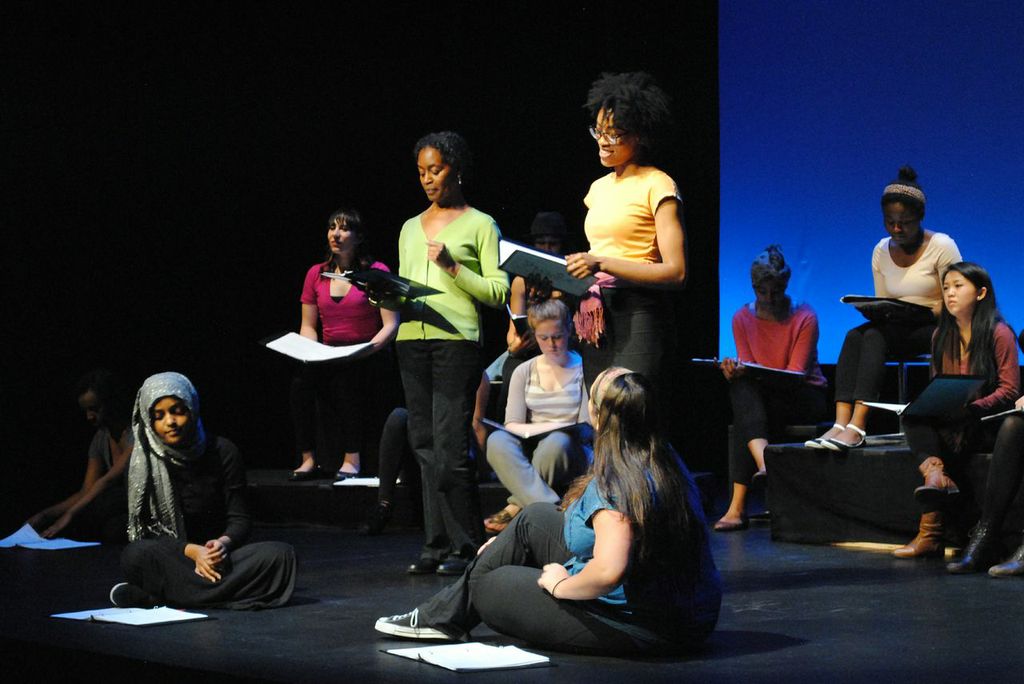
So, when 20 teenage girls and six women mentors recently took the stage at Seattle Repertory Theatre – all poised to "tell their stories" – I was sure I was in for a long night.
Instead, the hour-long, no-frills presentation left me humbled. I was mesmerized by the rich weaving of 26 unique stories, stunned by the issues that crossed the generations represented onstage, and caught up in the slow, sure unveiling of each girl and woman's self-defined identity, strengths and challenges.
I wasn't the only one. One audience member in the packed Leo K. Theatre was so moved by the program that he made a $7,000 donation to ensure the Y-WE Speak program, which created the show, continues.
"When it started, I thought, ‘I'll give a little,'" the Seattle resident, who wished not to be identified, said. "But as it went on, that number just kept going up. This is an amazing program and so necessary."
Exploring Their Stories
Y-WE Speak is a nine-month theater residency program and collaboration between the Seattle-based nonprofit Young Women Empowered and Seattle Repertory Theatre. The intergenerational program, whose inaugural session ended in May, is designed to help girls, ages 13 to 19, from a diversity of communities, and their adult mentors tackle some of the tough issues faced by teens today. They do it through storytelling, writing and shared theater experience. The residency program is free to the girls involved.
Participants meet regularly to attend and discuss Seattle Rep performances and participate in theater and writing workshops. Each girl and mentor keeps a journal and all are encouraged to write frankly about their lives and experiences. The program culminates with the performance of an original theater piece culled from participants' writings and discussions.
"We talked about honoring the stories in the room," Seattle Rep Administrative Director of Education Fran Kao says of the writing and workshop processes that lead to the program's first show. "I told them, ‘You tell your story, tell me a truth about you,' and at first they were like, ‘We can write anything? Really?'
"I remember the first time I read over all the journal writings, worksheets, brainstorm lists, interview notes and audio recordings we collected," says Kao of the pilot participants. "I kept saying to myself, it's as if these girls are themselves light, and wherever they choose to devote their attention, they bring their unique, much needed perspective. Racism, classism, they've see it, they've experienced it."
"It's important for us to tell our stories to stop cycles and begin to understand ourselves," says Anika Massmann, a 17-year-old Seattle student. "I think we're continuing to breed generations of girls that don't think their accomplishments or lives are important, and telling these types of stories affirm that we all have a voice, and we all have the right to use it."
|
Melissa Flower | Y-WE Speak |
Themes Emerge
Kao and her colleagues developed the script for the show directly from the girls' work. "The words are theirs, verbatim," she says.
Over the months, common themes began to emerge from the group's reflections on the shows they saw and from discussions and writings. Those themes became the canvas of the final show, and participants' own words the layering of colorful collage pieces that make art. Woven between the layers were the bright threads of wisdom that fell from girls experiencing difficulty and rising above it – from the clash that sometimes happens between girls and their parents to overcoming hurtful acts of racism and sexism.
"It's not shower time, I don't know why you have a towel on your head!" Kadija Hussein told the audience of the day she was singled out by a boy for her head covering. "I was in shock. I didn't even know what to say because that was the first time someone said something so offensive to me." Kadija, 15, lives in West Seattle.
As the show moved into the theme of racism, 13-year-old Shoreline student Ami Njadoe recalled her experience in fifth grade, when a boy taunted her.
"All black people are dumb," he said. The abuse escalated. The words stung, more unbearable. Blackie. Slut. Whore.
"It made me cry," Ami told the audience. "I tried telling my principal, but he didn't do anything, and I was angry. I thought it was the principal's job to solve problems."
60 Years, a World of Stories
In perhaps the show's most stunning section, the ensemble delivered their "timeline."
Starting with 1953, the year Seattle resident and Y-WE mentor Dr. Sally Goodwin was born (which was also the year Eleanor Roosevelt became a defender of the Equal Rights Amendment), the group listed historical highlights and women's achievements over the last 60 years. Among the dates presented were the birth years of every person on stage.
As the timeline proceeded, the audience was able to re-experience key moments through the eyes of the women and girls.
"1986!" the cast marked in unison.
"I have lived in the U.S. for eight years. I am 21 years old and I am naturalized as a citizen of the United States of America," reveals mentor Victoria Santos, who was born in the Dominican Republic. As Santos and two teen immigrants recite the oath of allegiance they each had to take, a woman beside me in the audience admitted:
"I can't believe I'm a citizen, and it's the first time I've ever heard what we ask immigrants to swear," she said.
"2001!" the cast exclaims.
"We are living in Indiana when 9/11 happens," says Redmond student Jocelyn Waite, 16. "I vaguely recall it happening. My mom told me I was aware of it. She also tells me, ‘Jocelyn, you had dreams about Big Bird from Sesame Street around that time, too.'"
As the timeline marches on between 1953 and 2013, we learn of births and deaths, martial arts championships and divorce, historical firsts and family failures – the highs and lows and four generations of women's lives unfurling.
"I didn't think that I had a story to tell," Seattle student Rabiya Robele, 15, says of her experience in Y-WE Speak. "I didn't think my goals or Tae Kwon Do career was worth being in the script. I didn't think I had experienced enough in my life to be able to tell any story, but after the performance, the feedback told me different. It made me feel really good."
Young Women Empowered
Y-WE Speak is one of two programs of Young Women Empowered, which started as a seven-month leadership program in 2010. Y-WE Lead, the organization's flagship program, connects girls with women mentors from diverse career fields, life experiences and cultural backgrounds, who commit to helping girls connect to people and ideas that will help them create the future they want for themselves.
More than 60 percent of the youth served by the organization are immigrants. The majority of girls and half of the women mentors involved in Y-WE programs are women of color. Youth and mentors represent myriad family, sexual orientation, religious, political and educational backgrounds. Both programs are provided free of charge.
The programs teach girls to use direct communication, to give and take constructive criticism, to take risks in sharing their experiences and opinions, to respect diversity. For some, taking risks has already led to deep personal growth.
"It's very different reading your own words, and it puts you in a more vulnerable, scary position," says Anika of the final Y-WE Speak script. "It's like, if you're in a play and the writing is bad, you can blame it on the writer. But if you're reading your own words and your own thoughts, you must take ownership for those thoughts, and that idea is very scary to me. I just had to breathe and let those thoughts go."
Taking the risk ignited a new passion in Anika.
"This was my first experience in an all-female environment, and it definitely helped me think more about what it means to be a woman and what feminism is, as well as my personal limitations and advantages," she says. "Largely, in part, because of this experience, I know I want to help make the global situation for women better, and my plan for college is to study Psychology and Women's Studies. I am so intrigued with why it seems we're constantly putting ourselves into categories and then letting those categories define us instead of the other way around."