Carrots come wrapped in plastic, and anything grown in the ground tastes like dirt, right? Don’t laugh – these are actual misconceptions of students before participation in Green Plate Special’s classes in gardening and cooking with fresh produce.
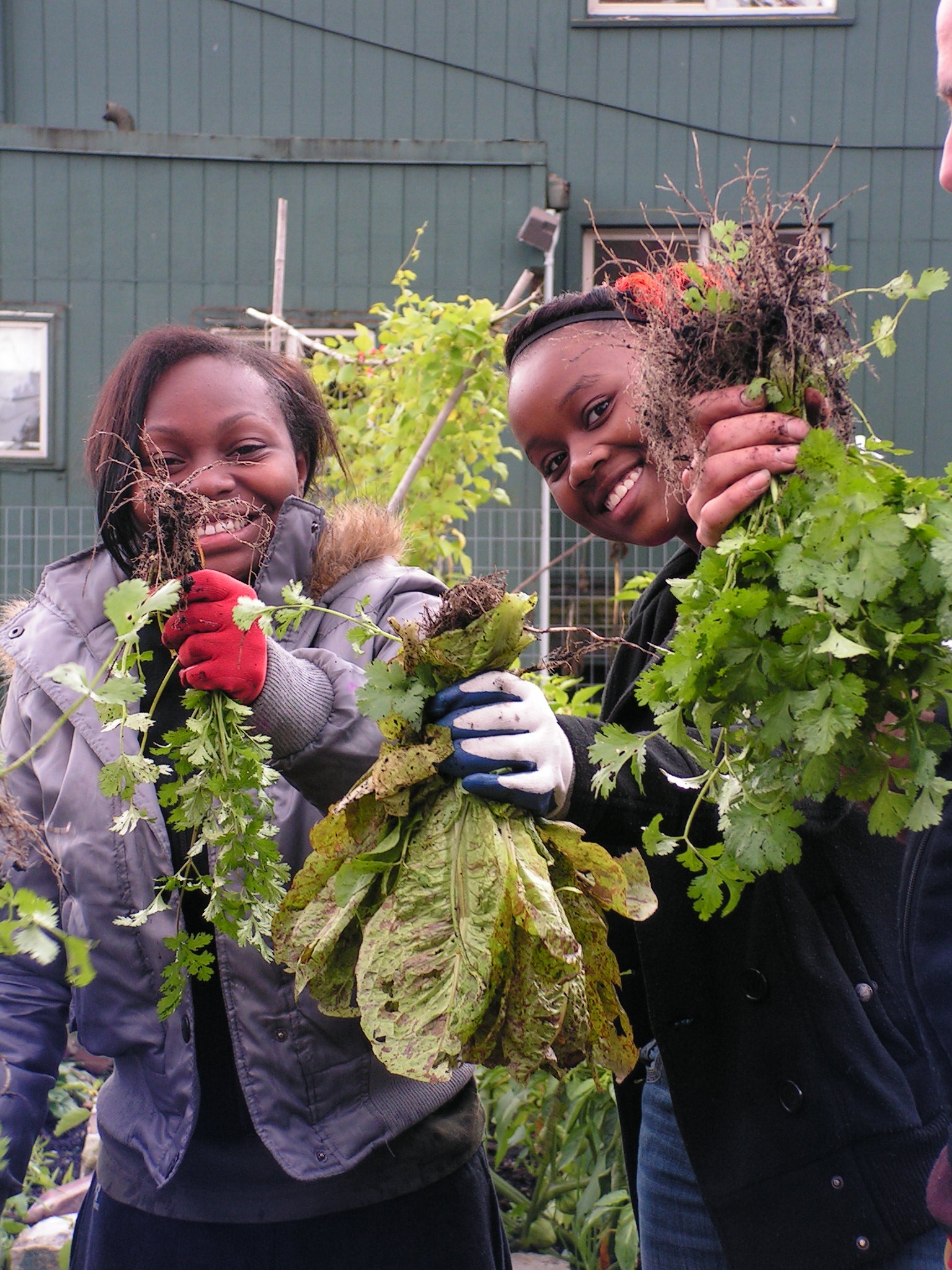 The Seattle nonprofit teaches about 100 students a year, most in grades 6 through 8, about where food comes from, healthy eating and grocery-shopping habits, and how to create tasty dishes with those good ingredients. And all while getting their hands literally dirty.
“They can take food directly from the garden, make a salad, and eat it right there,” said Laura Waltner, communications director for Green Plate Special.
For the past three years, since being founded by former chef Laura Dewell, the organization has gardened in a formerly derelict lot at the corner of Martin Luther King, Jr. Way and East Union Street, across from Grocery Outlet (where students take field trips to learn how to find whole foods in grocery store aisles). The cooking is done at nearby Madrona Presbyterian Church. But this fall, all of the operations will be moving to a permanent home in the Rainier Valley.
The new location is slightly smaller than the current one, but because it will be designed rather than having garden beds and structures added piecemeal, organizers expect it to be able to grow more produce. Additionally, a wood-fired oven, beehive, chicken coop and on-site kitchen are in the works, providing more convenient opportunities for students to learn about healthy food.
Green Plate Special’s mission is to break the cycle of obesity related to poor food choices, and to empower urban middle-schoolers by showing them what they can grow. Though the gardens feature common fruits and vegetables like strawberries and tomatoes, organizers also expand students’ palates by growing produce they may never have tried before, like scarlet runner beans and kale.
“They get the whole dirt-to-table experience,” Waltner said. “They always pick up something, some vegetable that they’ll enjoy for the rest of their lives.”
The program seeks to make long-term changes in students’ lives, but Waltner said she’s seen short-term improvements too. Students told her that before participating, they often would skip lunch at school – but now, after growing their own food and learning how to prepare it, they’re bringing homemade brown-bag lunches.
Green Plate Special focuses on grades 6 through 8 because the students are old enough to work safely in gardens and kitchens, but young enough to develop an interest in and passion for something new, Waltner said. Most participants are found through organizations like Treehouse for Kids and YMCA. However, students of all ages are welcome, and as Green Plate Special grows, organizers hope to provide specialized programming for any child who is interested.
Photo courtesy of Green Plate Special.