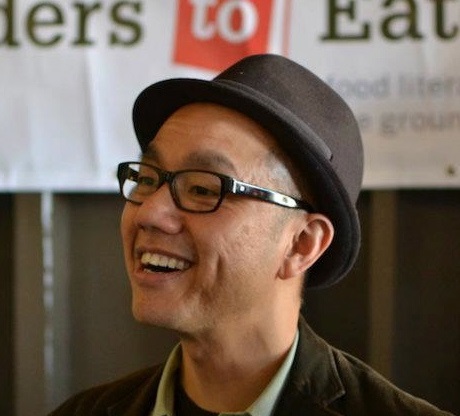
 As a child in Hong Kong, READERS to EATERS founder Philip Lee ate a lot of fresh food. His family’s kitchen didn’t offer much space for refrigeration, which meant frequent trips to the market. “I also remember when my grandparents, who were living in the Philippines, would come to visit and we would keep a fresh eel in the bathtub in preparation for their favorite meal,” Lee says.
Steeped in a culture where eating fresh came easy and now living in a region with farmers markets occurring in just about every neighborhood, Lee started READERS to EATERS in 2009. He launched the independent children’s book publisher and bookseller with wife June Jo Lee. READERS to EATERS promotes food literacy to youth using inventive methods, including selling at pop-up book stores, hosting farm tours and visiting schools.
Lee worked in publishing in New York for 14 years before relocating to Bellevue about 15 years ago. The father of three mostly cooks at home (his favorite restaurants include Ba Bar and Ma’ono Fried Chicken & Whisky.) We asked Lee more about his work and why healthy eating matters for kids.
SC: How does the Pacific Northwest shape the work you’re doing at READERS to EATERS?
PL: The Pacific Northwest is at the forefront of the sustainable food movement! People are growing food at home, school, and community gardens. We have local farmers and fishermen who bring us delicious food in a sustainable way. So we have awareness and access. Even better, the Seattle area is a highly literate, book-reading community. The public wants to be informed about our food not just in terms of cooking and nutrition, but also the history and culture of our food. We can’t imagine having our business in a better place.
SC: What motivates you to spread the word about food literacy?
PL: Right now we have a food culture where over 50% of our meals are eaten alone, 20% are eaten in the car, and children have about seven to eight minutes to eat their lunch at school. Through good books about good food, we can promote sharing meals and stories at the dinner table and building communities through our diverse food cultures.
SC: How do you translate “big ideas” about why eating well matters to young readers?
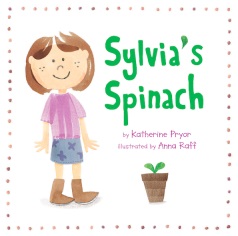 PL: Children don’t want to be preached to about what to eat. Yet eating is something they do everyday and there’s a fascination with seeing something grow. This is why we published Our School Garden!, a book about a child’s experiences outdoors in the garden as well as the classroom; Sylvia’s Spinach, a story about a picky eater tasting a new food from the school garden; and Feeding the Young Athlete, a sports nutrition guide on how whole foods can improve the body’s performance for the next game and for a lifetime. This fall, we’re publishing Farmer Will Allen and the Growing Table (releases September 10) about the athlete, urban farmer, and MacArthur “Genius” in Milwaukee who grows good food and transforms entire communities.
SC: What if parents don’t have the resources to buy or access to obtain fresh, healthy food? How can families eat local on a budget?
PL: Eating well doesn’t have to be expensive. The first step to eating healthy is to cook more. There’s so much that can be done just with rice and beans! In order to support the higher cost of sustainable meats, we’ve cut back on how much meat we eat within a meal and over a week. Also, we don’t take many family vacations.
SC: What’s next for READERS to EATERS?
PL: We have more books planned for 2014. We want to expand our list to include books for older readers as well as board books for the very young. We’re working on expanding our partnerships beyond the food and farming community to include sports and health care organizations.
READERS to EATERS is presenting a food literacy program in conjunction with the King County Library System’s food initiative “A Place at the Table.” Look for them at the Sammamish Library on Sept. 25 and Issaquah Library on Oct. 19. To learn more, visit www.readerstoeaters.com or visit the READERS to EATERS Facebook page.