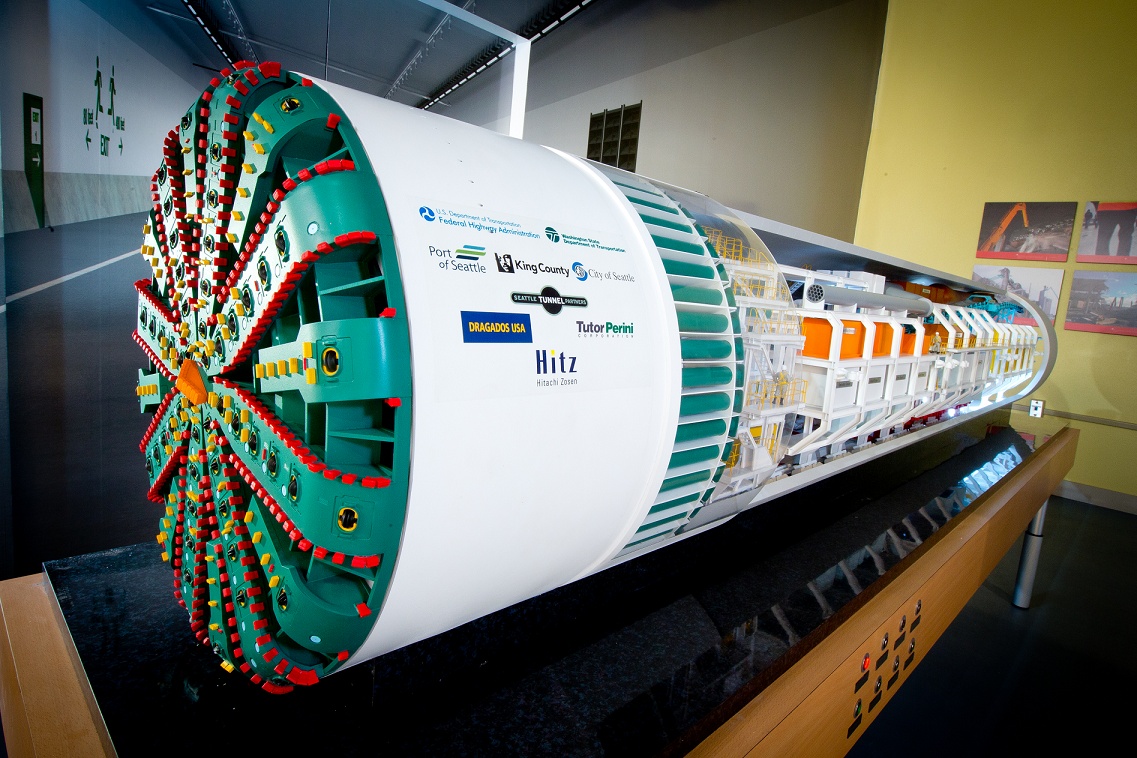
In the heart of Pioneer Square is Seattle’s most boring exhibit. Or so the sign reads. But don’t be fooled. There is nothing boring about the Milepost 31 Information Center, at least not in the “dull” sense of the word. There is, however, much ado about the world’s largest tunneling device, Bertha.
Perhaps you’ve heard of the 7,000-ton machine that took residence in our city in 2013 to create a 9,000-foot-long underground tunnel to replace the Alaskan Way Viaduct? Sound familiar? Whatever your opinion about the SR 99 Tunnel Project, Milepost 31 is a must-see destination for Seattleites and tourists alike. Not only will you and your family learn more about the rich history of one of Seattle’s earliest neighborhoods, you will witness history in the making.
Created in response to the National Historic Preservation Act, which requires agencies to take into account the effects of their projects on historic properties, the information center was deemed a good way to keep the Pioneer Square Historic District viable during construction. Since opening in December 2011, Milepost 31 has attracted nearly 38,000 visitors, inviting them to gain both a better understanding of the project and of the neighborhood’s history.
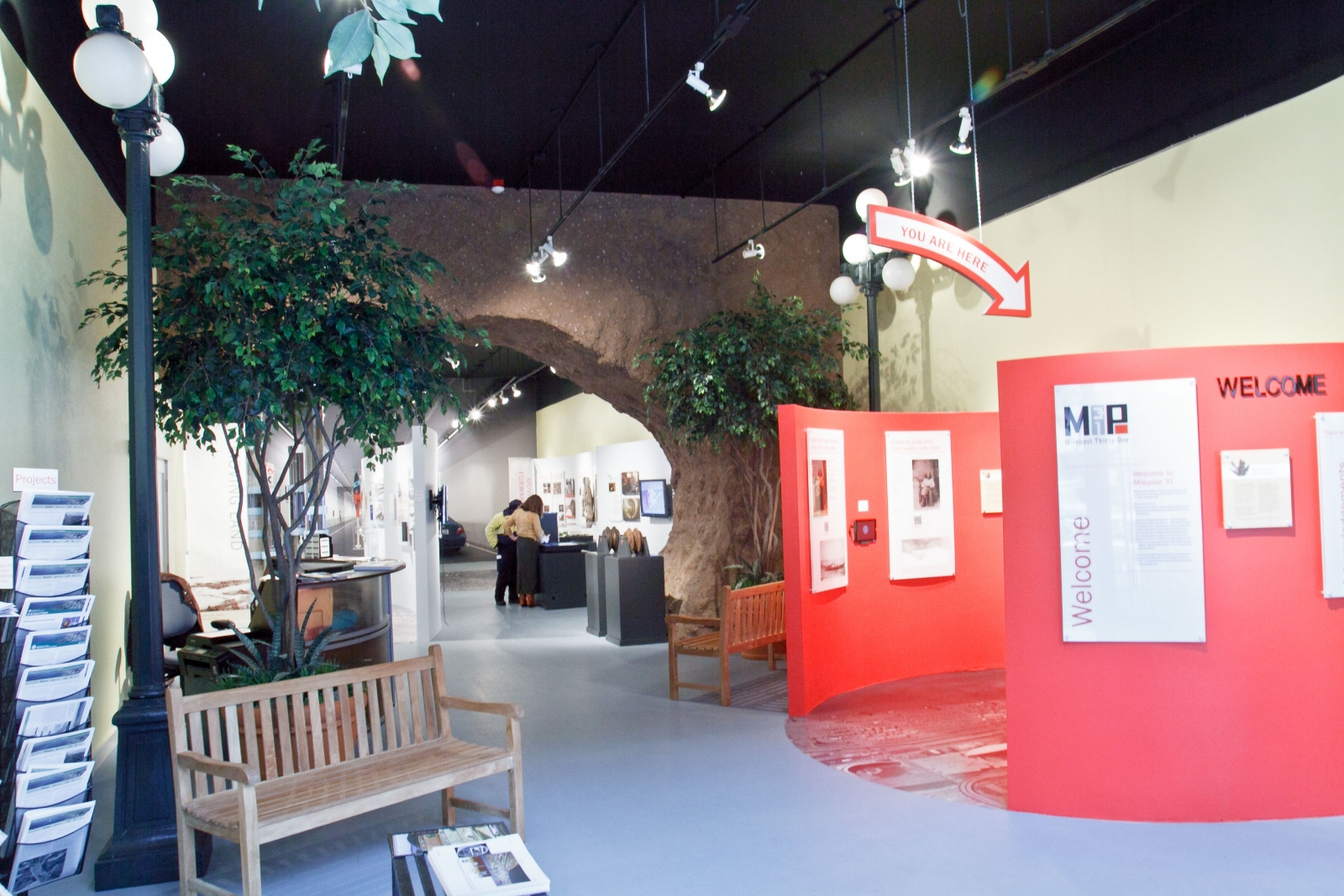
The information center boasts several awards, and deservedly so. History buffs, engineers, geologists and ordinary folks such as myself are sure to find something of interest in its four comprehensive and interactive exhibits (check out this 360-degree view of the center).
|
Photo: Meg Butterworth |
“You Are Here” provides a history of Pioneer Square starting with a speech by Chief Seattle, which you can listen to in his native Lushootsheed. Perspectives from explorer Lt. Charles Wilkes and early Seattleite Sarah Yesler depict the city’s emergence and growth, followed by accounts of its decline during the mid-20th century and more recent efforts of revitalization.
“Moving Land” tracks how glaciers, earthquakes, tsunamis and volcanoes have had a role in shaping Seattle over thousands of years. Video monitors display the natural forces at play, while a “then and now” floor map depicts how Seattle’s shoreline has changed with its growth. Your kids will marvel over the freestanding clear tubes that stand 12-feet high revealing different soil layers Bertha has dug up so far. It’s an up-close-and-personal look at Seattle’s geological history and what literally lies beneath us.
“Moving People” displays the evolution of transportation in the city: moving from trails to rails to roads, and from canoes to boats, ports and ferries. Archaeological artifacts that were uncovered as part of the project’s environmental compliance are also on display.
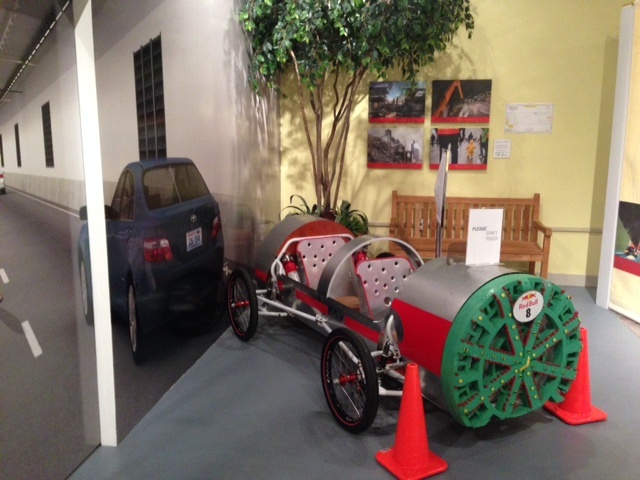
“Moving Forward” highlights tunneling technology, the history of tunneling in Seattle and the events that lead to the SR 99 Tunnel Project and Seawall Replacement Project. A 3-D model of Bertha is central to the exhibit along with a hands-on display of the cutting wheels. You and your kids will chuckle when reading about how Bertha was named along with a short bio noting her occupation (tunneling specialist), her likes (dirt, small boulders and perfectly-formed concrete rings) and her dislikes (sunlight). Overall, the exhibit helps you see the potential for transforming Seattle’s waterfront.
Take note, there is a lot of reading involved, which may test the stamina and abilities of anyone younger than 9. That said, the video monitors help to make things more visually engaging and interactive. Near the entrance is a large touch screen monitor where kids get a virtual tour inside Bertha and see how all of her intricate parts work. Should your children start to fade, you can direct them to the coloring station to buy yourself more time in the exhibits.
After spending time indoors, a real treat awaits your family when you get to tour the tunnel site and see firsthand just how massive this project is. Lead by WSDOT guides, the tour takes you to a viewing platform (once a section of the Alaskan Way Viaduct, now closed to traffic) where you can look down into the launch pit where Bertha first made her descent, and into the access pit where she will emerge for her upcoming repairs. It’s a truly unique opportunity to witness incredible engineering, not to mention a great view of the city.
|
Photo: Meg Butterworth |
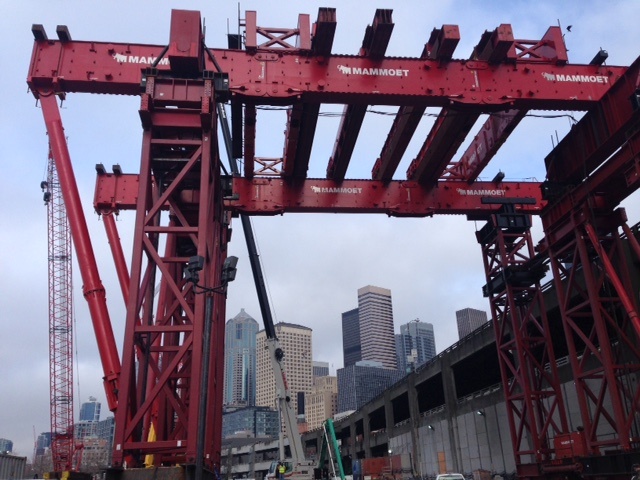
The minimum age requirement for the tour is 13 years, due to uneven terrain and five flights of stairs that lead to the viewing platform. Younger children can walk parallel to the site in a separate tour that includes more fun history facts. Keep in mind, tours are held rain or shine, so be sure to dress appropriately. Good walking shoes are also recommended. The total distance of the tour is a half-mile round trip.
Admission to both the information center and the tunnel tour are free, which is all the more reason to visit. But don’t go rushing out the door just yet – preregistration for the tour is required. Sign up online or in person at the information center.
Once back at Milepost 31, linger some more in the exhibits. The WSDOT guides are happy to chat and answer further questions. Most importantly, don’t forget to take home a piece of the viaduct – it’s your own piece of Seattle history.
IF YOU GO
Where: Milepost 31 Information Center, 211 1st Ave. S, Seattle.
When: Tuesday through Saturday, 11 a.m. to 5 p.m. The center is open until 8 p.m. on the first Thursday of each month for the Pioneer Square Art Walk. Tours of the construction site are offered Tuesday through Friday from noon to 1 p.m. Saturdays tours are from noon to 1 p.m. and 3 to 4 p.m.
Cost: The exhibits and tours are free. There are several parking garages within a few blocks of Milepost 31. However, do your research ahead of time to find garages that charge only $3 per hour on Saturdays and Sundays, like the Butler Parking Garage on James Street. Street parking is also available.
Contact: 1-888-AWV-LINE (298-5463); wsdot.wa.gov/Projects/Viaduct/Milepost31.
Meg Butterworth is a freelance writer who lives in Seattle with her husband and two children.