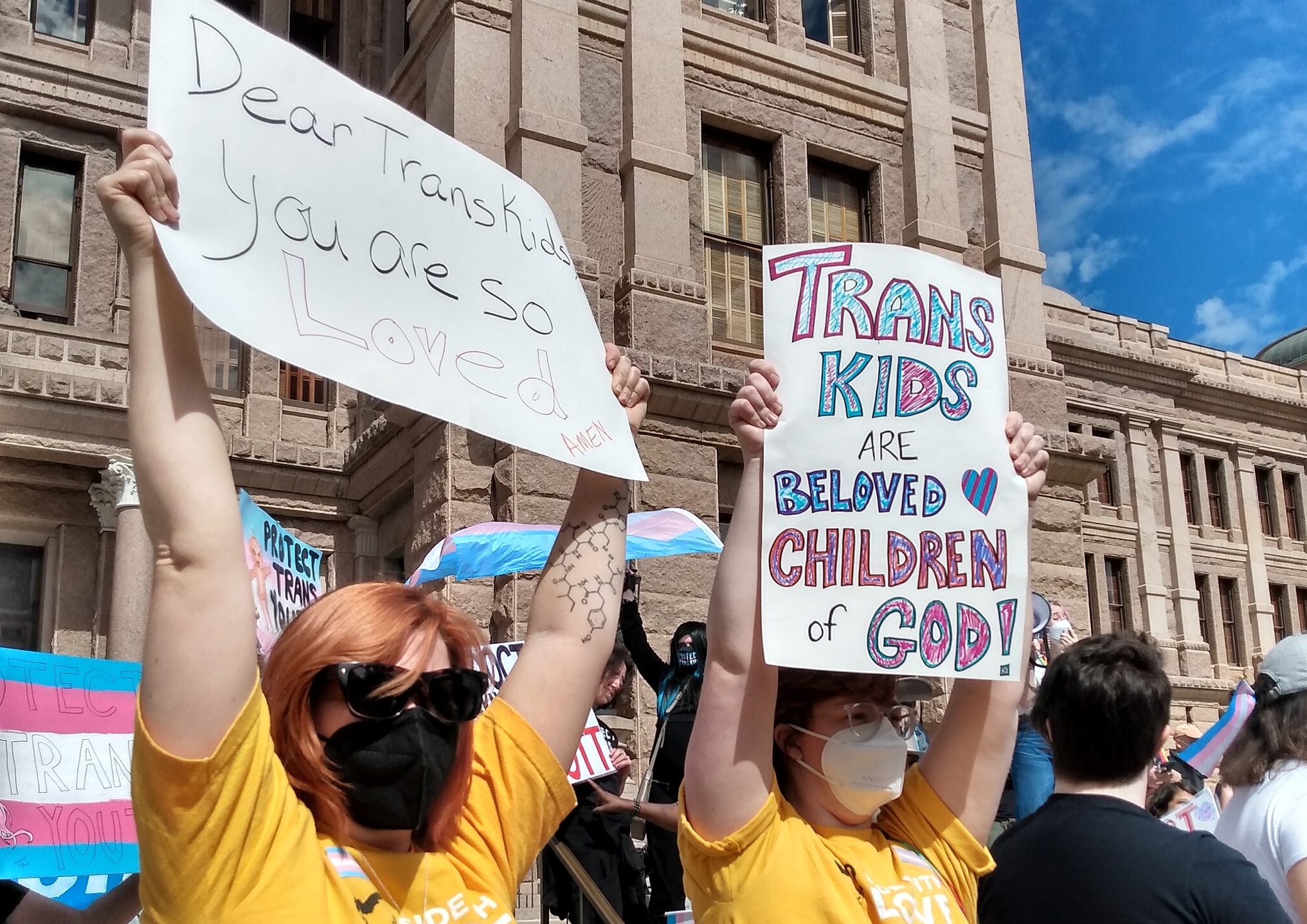
This week, the administration of President Donald Trump acted to erase what he once called “a stain on our Nation’s history” by establishing new rules that effectively ban gender-affirming care for minors in the United States. To ensure doctors comply, the administration says it will refuse or pull back federal funding from hospitals that offer such treatment. At a time when hospitals are trying to figure out how to keep doors open in the face of current Medicaid cuts (and those coming down the pike) few are likely to challenge Trump’s no-funding hammer.
The proposed new U.S. Department of Health and Human Serviecs rules were announced a day after Republicans in the House of Representatives approved legislation making it a crime (punishable by a find or up to 10 years in prison) to provide transgender minors with gender-affirming care. That pproposal needs Senate approval.
Both of my children identify and align with the sex assigned to them at birth. I have not had to grapple with the pain of a child in a body that does not fit how they identify themselves. Still, as a parent and as a former birth profession—as a human—I am angered by this administration’s all-out attack on trans youth As Azeen Ghorayshi, Amy Harmon, and Reed Abelson wrote in The New York Times last week: “The administration’s action is not just a regulatory shift but the latest signal that the federal government does not recognize even the existence of people whose gender identity does not align with their sex at birth.”
You can’t deny a community their identity
But they do. They exist in every state, every county, every city, every school in the country. They exist in my neighborhood, in my circles of family friends and in my kids’ friend circles.
One of my former clients has a 14-year-old son who was labeled female at birth. By age five he identified definitively as male. His parents were careful, questioned, conferred with experts, and listened carefully to him as he grew. He never wavered. He is currently taking hormone blockers and, with a whole lot of counseling and support from his community, family, therapists and medical providers, wants to make a full transition by age 18. I don’t know where the blockers are coming from or what the process might have been before this new move by the administration.
Yes, thoughtful discernment is critical
Clearly, there is another side. Some kids really suffer from body dysphoria, which is not the same as having a gender identity different from that assigned at birth, and could be harmed by body-altering care. Some have undiagnosed mental health conditions that would not be served by such care and, for some, gender identity distress may stem from something else that hasn’t been addressed. For other’s medical contraindications exist that must override body-altering care.
I do know the right care depends on readiness, safety, understanding, and timing — just like any other serious medical treatment for young people. And I know that a wealth of therapeutic thinking on the subject agrees that body-altering care should not be provided to a child before puberty. And that before any gender-affirming care is provided, a young person must fully understand the risks, limits, or permanence of care and feel no external pressure driving the decision. Gender-affirming medical care should not be automatic.
‘A target’
That said, my client’s child and their family has gone through every step of decision-making carefully, with provider input. And rather than uplifted by that support, this teen feels like the government has put a target on his back. His mom has been watching for signs of suicidal ideation since Trump’s January executive order attempt to stop gender-affirming care. Minors’ suicide risks increase by as much as 72% in the years following anti-trans laws and rules, according to The Trevor Project.
You can’t rule and order trans youth out of existence.
They should have the right to seek the medical care they need to align their inner and outer selves. The care-banning acts are made under the banner of protecting kids. Yet they will surely harm or kill some. As my client shares her experience, I worry her son will be one of those.
We allow
The proposed ban on care is carried on thin legs, especially when we look at care what care is allowed (and covered by federal dollars) to help kids reach a similar end: to feel safe, accepted, comfortable in their bodies in this world:
We allow, and Medicaid pays for, plastic surgery on severely burned children to help their outsides reflect who they are inside.
We allow, and Medicaid pays for, growth hormone treatment for children with certain conditions, not to save their lives, but to spare them social stigma, bullying, and lifelong barriers.
We allow, and Medicaid pays for, reconstructive surgery for children born with cleft lips or palates — not because it’s medically urgent in every case, but because how you move through the world, speak, and are seen matters and it may reduce isolation and suffering.
We allow, and Medicaid pays for, mental health care for children experiencing depression or anxiety— because internal pain is real pain.
We allow, and Medicaid pays for, intervention therapies for autistic children, not to “change who they are,” but to help them communicate, feel safer, and thrive. And, because quality of life matters, not just survival.
Nobody — no child, no parent, no medical provider — approaches the difficult work of a young person becoming the gender they know they are in spite of the body they were born into. All medical providers and hospitals should be allowed to provide treatment that helps children live safely, comfortably, and authentically in their bodies. Gender-affirming care fits squarely within that tradition.