The King County Board of Health voted June 20 to require drug manufacturers to provide a Secure Medicine Return Program.
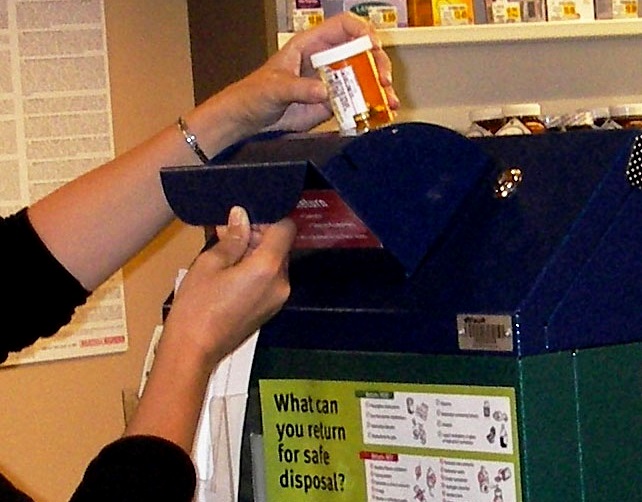 Under the new Rule & Regulation:
- King County residents will be encouraged to drop their leftover and expired medicines, free of charge, in secure boxes located in most retail pharmacies or law enforcement offices throughout King County;
- Collected medicines will then be destroyed by incineration at properly permitted facilities;
- Drug manufacturers selling medicines for residential use in King County will be required to run and pay for the program; and
- Public Health – Seattle & King County will oversee the program to ensure its effectiveness and safety.
Implementation is expected to take 12 to 18 months.
“Today’s vote makes us the second jurisdiction in the nation to provide a safe and convenient way for residents to get rid of their unneeded medicines. I am proud of my fellow board members for passing this historic Rule & Regulation,” said Board of Health Chair Joe McDermott. “The Board took strong action today to close a gap in the comprehensive response to misuse and abuse of medicines.”
Scott DePuy, a longtime advocate for drug take-back programs, lost his son Ryan to a prescription drug overdose, and applauded the new rule. “We are very proud of the courageous members at the Board of Health. We hope that that this type of bill will be passed in neighboring counties in the near future,” says DePuy, speaking for himself and his wife Charlene. “This is a very big piece in the puzzle to help get control of an epidemic problem.”
Since only one other jurisdiction in the United States – Alameda County in California – has passed similar legislation, there is not enough data to know how well drug take-back programs work, according to McDermott. Pharmaceutical Research and Manufacturers of America has sued to block implementation of the California regulation, and has also threatened to sue King County if it passes the rule. Efforts to pass a statewide law in Washington have failed repeatedly.
Why the Law is Needed
The impetus for the new rule is to reduce the number of prescription medicines in homes and, hopefully, decrease the number of deaths from drug overdoses, particularly among young people.
McDermott says it’s necessary because drug overdose deaths have surpassed car crashes as the leading cause of preventable death in King County. Prescription and over-the-counter drugs cause more of those deaths than heroin and cocaine combined, he says. In fact, 32 percent of child poisoning deaths in Washington were caused by someone else’s prescription medication and 26 percent were caused by over-the-counter medications. A lot of the drugs in our homes are “surplus” – they are not used for the purpose for which they were prescribed and are sitting around in drawers and medicine cabinets https://nygoodhealth.com/product/tramadol/.
Kids find those drugs and can be poisoned by them. In the 1950s, poisoning by household cleansers was the main reason for calls to poison centers, according to Jim Williams, executive director of the Washington Poison Center. Now 70 percent of the calls his organization receives relate to prescription medicines. Children younger than 6 are usually poisoned by getting into one particular medicine; older children and teens have a combination of drugs in their systems. “People don’t think of prescription drugs as a poison, but they are,” Williams says.
It’s not difficult for young people to find the drugs, according to Inga Manskopf, adolescent drug abuse expert at Prevention WINS, a program of Seattle Children’s Hospital. She works with youth in Northeast Seattle, and has seen an increase in students reporting abuse over the past three years. In 2012, 8.3 percent of Roosevelt High School 10th graders, 6.6 percent of Nathan Hale 10th graders and 5.6 percent of Eckstein Middle School eighth graders reported using prescription pain killers, but not for actual pain. The percentage rises to about 12 percent for seniors.
When 10th graders are asked where they get the drugs, they mention three sources, in this order: from friends; from their own home or other people’s homes, taken without permission; or from their own prescription.
This was the case with Ryan DePuy, who obtained Xanax and other drugs from his own home and from friends’ houses. “The biggest factor in his death was that Ryan was a drug addict,” DePuy says, recognizing that a drug take-back requirement probably would not have saved his life. “Still, the total number of drugs will be fewer if people clean out their medicine cabinets more often. There will be less availability. It gets the discussion about prescription drug abuse more into the mainstream.”