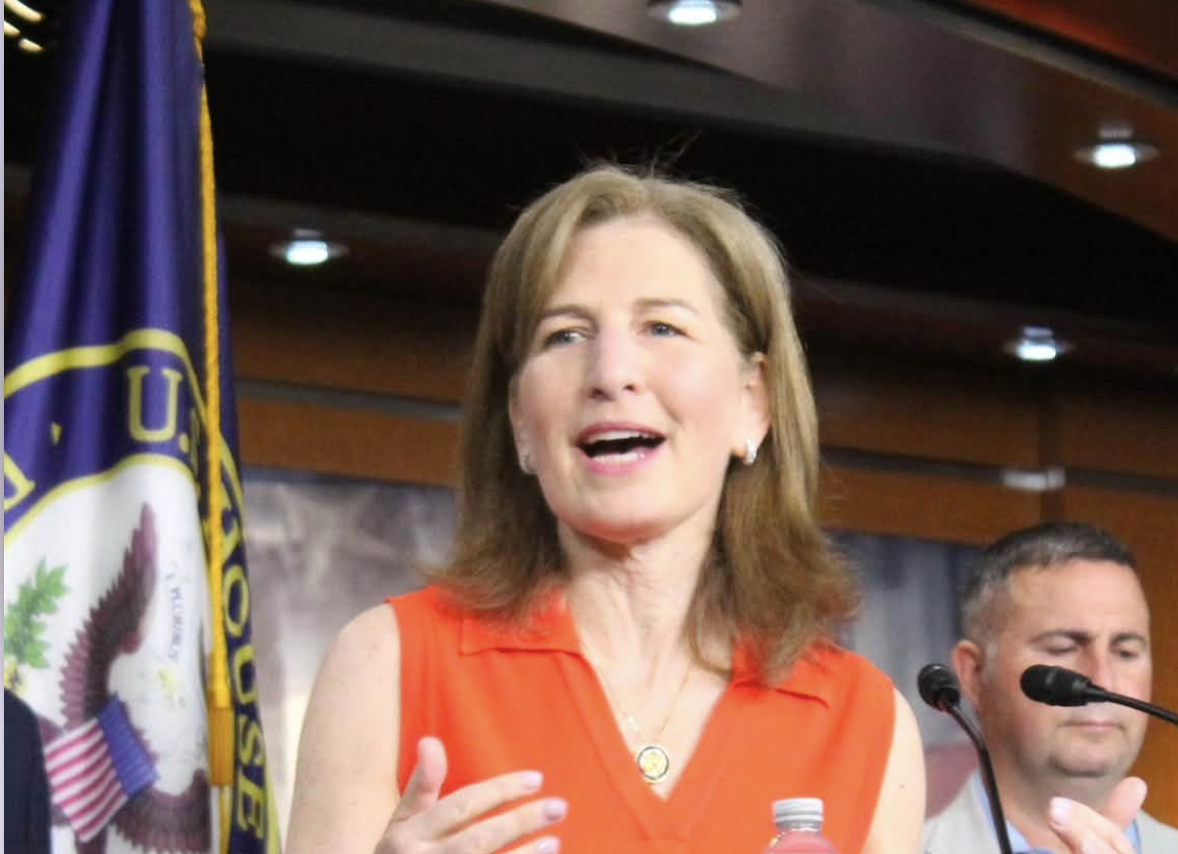
Washington State Rep. Kim Schrier (D-Sammamish) is pushing the federal government to start tracking a problem doctors say is quietly worsening: vitamin K deficiency bleeding (VKDB) among newborns because their parents said no to a vitamin K shot at birth.
On June 29, Schrier and Sen. Angela Alsobrooks of Maryland sent a letter to CDC leader Dr. Jay Bhattacharya asking the agency to publicly track how often parents decline the shot and how often babies end up with VKDB, including brain bleeding, as a result.
“Vitamin K is an essential nutrient which helps blood clot,” the lawmakers wrote. “Because infants are born with very low levels of vitamin K, they are at high risk for developing dangerous bleeding disorders, including internal bleeding. A single vitamin K shot is a highly effective newborn intervention to help prevent bleeding until babies can absorb sufficient vitamin K, typically when they begin eating solid foods containing the nutrient and their gut microbiomes develop.
To learn more about the devastating impacts of vitamin K deficiency bleeding, don miss “As Parents Reject Vitamin K Shots, Some Babies Develop Devastating Bleeding” from The New York Times.
“We urge the Centers for Disease Control and Prevention (CDC) to take immediate action to address a growing and preventable public health crisis: the rising rate of vitamin K refusal at birth and resulting vitamin K deficiency bleeding (VKDB) among newborns,” the letter says. “Specifically, we call on the CDC to establish ways to monitor and understand the burden of vitamin K refusal rates, VKDB and VKDB-related deaths, and to make that information publicly available.”
Schrier, a pediatrician, said in a release: “The vaccine misinformation and confusion that RFK Jr. [[Robert F Kennedy, Jr.] has championed for years has now created a ‘spillover effect’ that is causing parents to refuse the vitamin K shot and other routine care, putting their babies at risk of life-threatening hemorrhage.
“As a pediatrician and member of Congress, I am focused on doing all I can to hold RFK Jr. accountable for every preventable death and illness of our nation’s children,” she added.
Schrier believes that having national numbers would change the conversation parents have with their doctors before birth. In the letter to Bhattacharya, she and Alsobrooks point out that:
- Babies are 81 times more likely to develop late VKDB without the vitamin K
- 1 in every 5 babies who develop VKDB will die.
- “There are no warning signs in most cases of VKDB: a baby can be bleeding into their intestines or brain before their parents know anything is wrong.”
- Some parents are requesting oral vitamin K instead, which is not recommended by the American Academy of Pediatrics (AAP) or CDC.
- Babies don’t absorb oral vitamin K consistently, and research shows oral drops are ineffective.
Schrier and Alsobrooks stressed that the CDC already has the tools to track and to better understand the impact of newborn vitamin K refusal.
“We urge you to use them, and to share that data with the public, so that we can prevent tragic illness and death in infants,” they wrote.
The American Academy of Pediatrics (AAP) President Andrew D. Racine, MD, PhD, FAAP,, thanked the lawmakers for their efforts to advance vitamin K tracking and encouraged parents to talk to a pediatrician about vitamin K before birth. Read the AAP recommendations on vitamin K.
TAKE ACTION: Do you have an opinion, experience or other input on the request to track vitamin K shot refusal? Contact Rep. Kim Schrier (D-WA) via the Schrier House Portal or by phone at 202-225-7761. To share your opinion with the CDC, call the CDC-INFO help desk at 1-800-CDC-INFO (800-232-4636) or submit a message via the CDC-INFO Web Portal.