I’m standing in my kitchen with my son asleep against my chest, his weight warm and insistent, his breath syncing with mine. The house is quiet in that fragile way that only exists when a baby is finally down. My phone lights up on the counter with emails, texts, the familiar hum of urgency.
I don’t reach for it. That pause still surprises me.
Before he was born, this was the hour I would have optimized. I would have answered messages. Cleared my inbox. Felt the small, sharp satisfaction of being useful. I measured my days by what I produced, how quickly I moved, how much I could hold. Productivity was how I steadied myself. How I proved I was capable when stopping felt dangerous.
Producing felt like safety.
I was trained for it. To be reliable. To keep things moving, even when I was tired. I learned early that being good meant being useful, and being useful meant output. I thought of it as adulthood. I had never been asked to slow down this completely.
Then my body did something I couldn’t rush. It made a child. It made milk. It generated warmth and nourishment without asking what I intended to do next. My nervous system reorganized around a small person with no interest in my calendar. Time collapsed into feeding cycles and naps that might last 12 minutes or two hours if I was lucky.
This was generation, warm and bodily and ongoing.
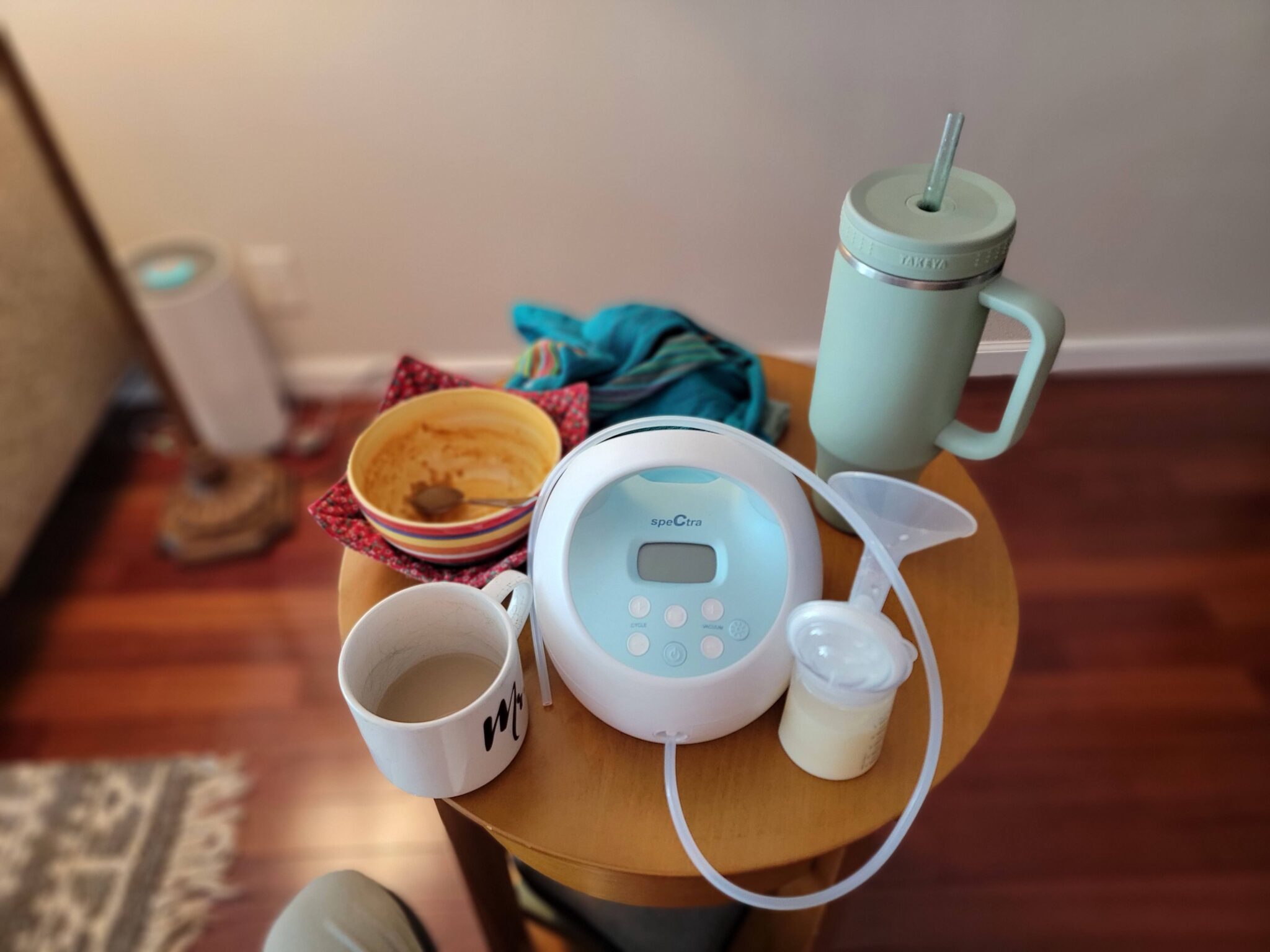
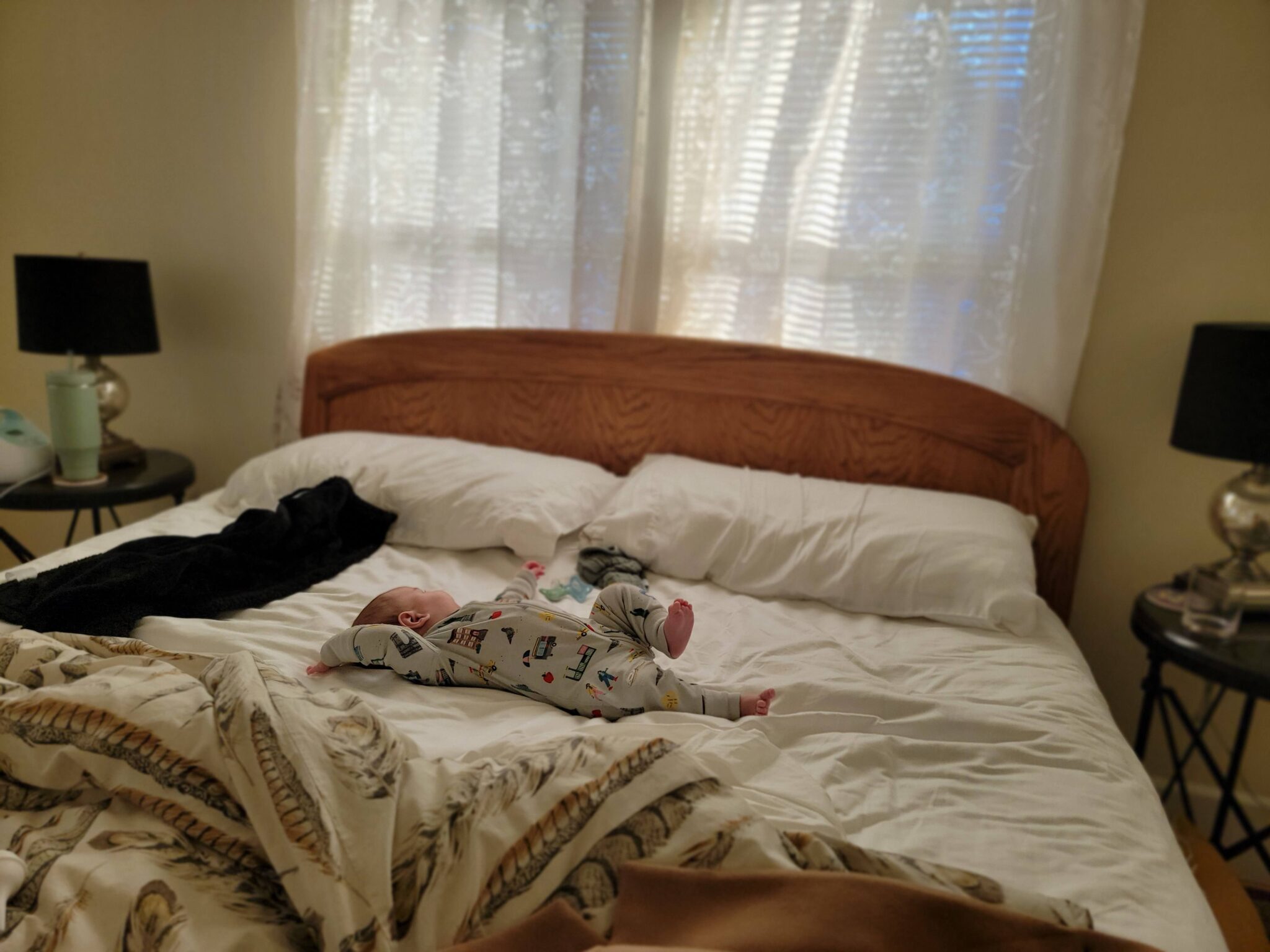
Early postpartum life at home. (Image: Paula Davis / Seattle’s Child)
My son is not an outcome. He is not something I can finish. He is a being, alive and responsive, unfinished. Being with him dismantled the structures I had lived inside for years. The timelines. The expectation that effort should always lead to results.
Babies do not move like that. They do not resolve. They do not complete. They pull you into a kind of time that resists progress altogether. I tried to keep my old pace anyway.
I felt it when my to-do list stayed untouched. When whole days passed, and I could not name a single finished thing. Beneath the frustration was a quieter fear. That without evidence of productivity, I might disappear. That nothing visible might mean nothing held.
Postpartum, my body refused to cooperate with that fear.
When my son cried, my chest tightened before I could think. Milk let down. My whole system shifted toward him without consultation. I could not override that response. I could not make it efficient. I could not turn it into a task without losing something essential.
Care pulled me out of urgency. Attention took the place of speed.
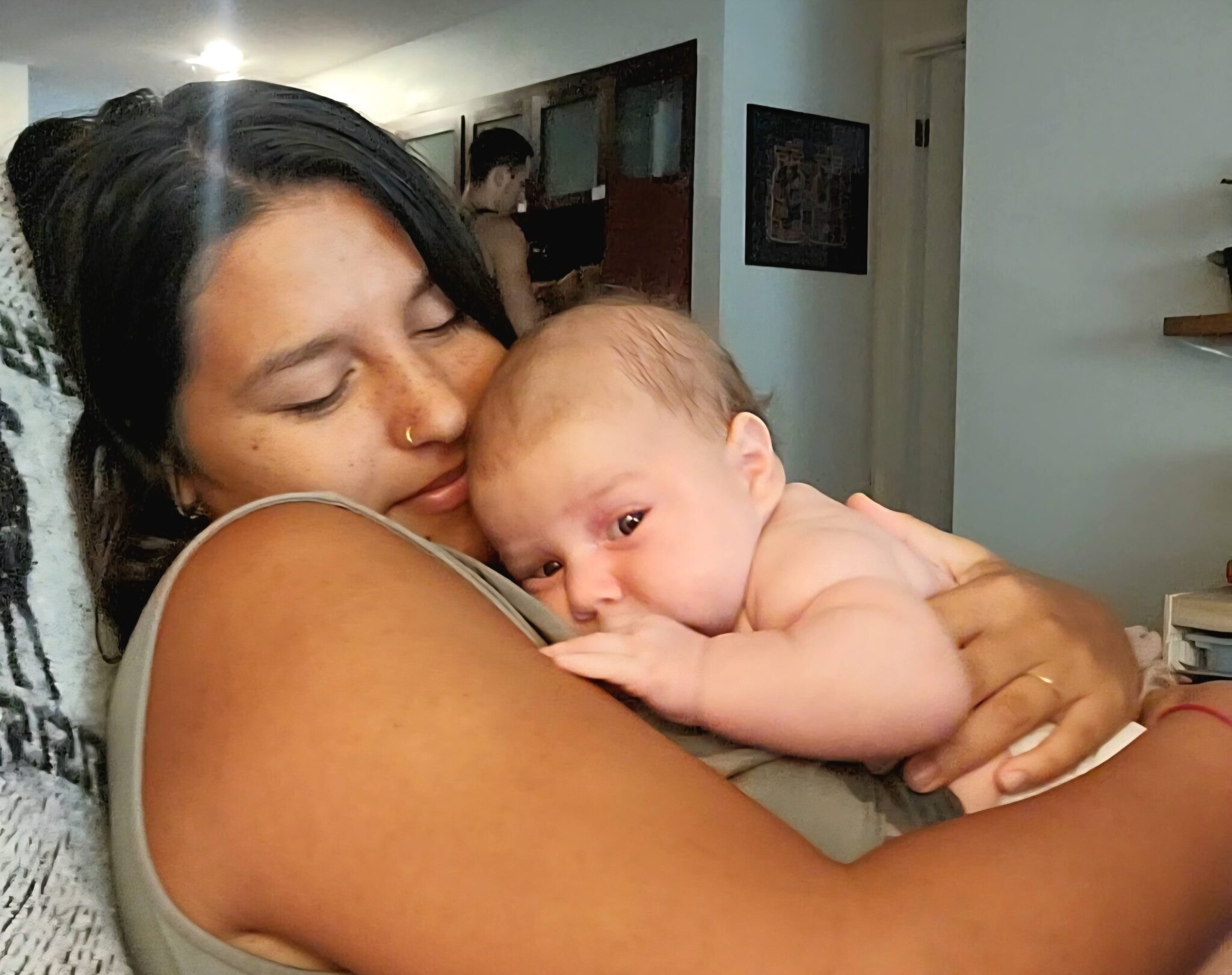
My son is not an outcome. (Image: Paula Davis / Seattle’s Child)
This kind of labor leaves little behind. It asks for presence without promising recognition. Letting go was not gentle. I could not perform competence here. I could not outrun uncertainty. I stayed inside the repetition, the holding, the unfinishedness. The work was constant, and most of it disappeared as soon as it was done.
And slowly, without my permission, something loosened.
I stopped asking what the day amounted to. I stopped searching for confirmation that I was doing enough. My body no longer agreed to that exchange.
This is where I am now. Here. In a life that does not ask me to justify itself. In a body that knows how to respond without needing to be seen. In a relationship held together by response, over and over.
Work is still part of me. The desire to make and contribute didn’t disappear. Motherhood ended my belief that worth has to be earned through constant motion.
And in the quiet that followed, I’m learning how to stay without tallying what I’ve given.