It was three days before Father’s Day when I talked with Scott DePuy about his son Ryan’s death from a prescription drug overdose. It’s one of a series of bad days, beginning with the Thanksgiving and Christmas holiday season, Ryan’s birthday on January 19, the anniversary of his going into rehab, his death on April 10, 2008 when he was 17, Mother’s Day, Father’s Day – day after day that Scott and his wife Charlene face without their boy.
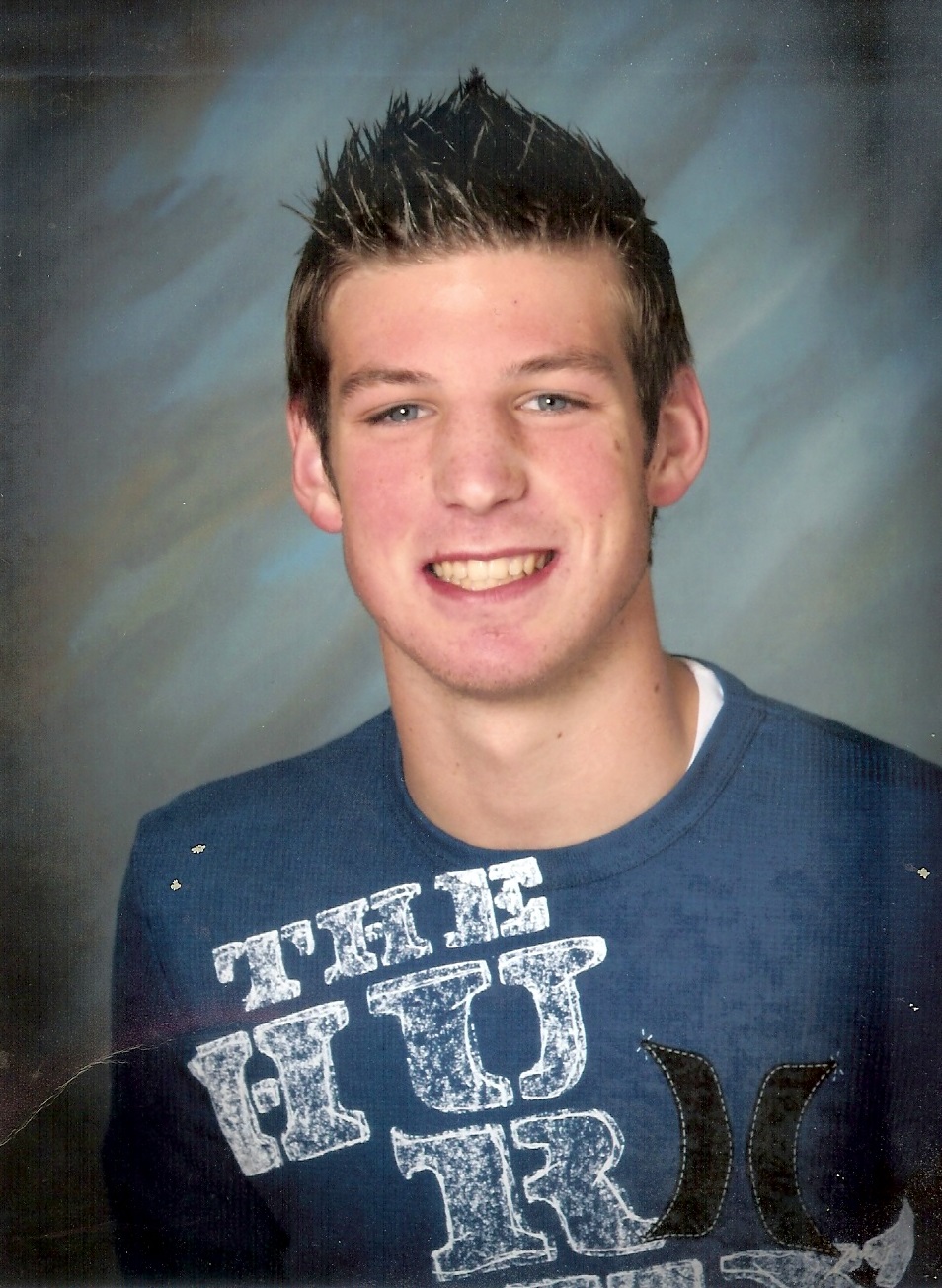 Five years later, Scott cannot get through the interview without crying, without regretting the mistakes he may have made. And yet he and Charlene open the wound over and over to talk to students and parents about the dangers of prescription and over-the-counter drug abuse through their small nonprofit foundation, Ryan’s Solution. “We don’t want people to go through what we had to go through,” Scott says.
And so they tell their story in hopes that it will save someone else.
“We were the perfect family,” Scott says, describing two “involved, concerned and, most of all, loving parents” with two children, Ryan and older sister Tanya. Athletics was a big part of family life as Scott coached baseball, softball and basketball and both parents spent countless hours in the stands watching and cheering. When Ryan developed a passion for soccer, his parents supported that. They also watched him try all kinds of boarding – skateboarding, snowboarding, wakeboarding, skim boarding and surfing – determined to conquer each new challenge and have fun.
In the background of this perfect family was a possible predisposition to addiction. The thought did not occur to Scott and Charlene since they had never struggled with alcohol or drug abuse. Perhaps from Scott’s unknown birth family (he was adopted) or a relative of Charlene’s? Whatever the source or sources, Tanya became an alcoholic and spent her 16th birthday in treatment.
His parents never knew when Ryan first tried drugs. After his death, reading his rehab journal, they found out that it was in the second grade when older kids offered marijuana to him and a friend. Scott was shocked: “How can you offer a second grader drugs?” The first time Ryan tried alcohol, he told his parents. Still, in middle school he got into trouble for smoking marijuana. Scott doesn’t think he continued smoking it. “He was popular, and got labeled as a pothead, and he didn’t like that image.”
There were nights when Scott was working as a firefighter and first responder for Eastside Fire and Rescue that Charlene and Ryan had to go looking for Tanya when she didn’t come home. “I can’t believe she does this,” Ryan would say vehemently. “I’m never going to take drugs!”
Nevertheless, in 2006, when Ryan was 15, his parents began to suspect that he was getting into the prescription drugs Scott was taking for back pain. “We kept them in a pretty secure location, in one drawer in our own bathroom. I was kind of resistant to locking things up,” Scott remembers. “I thought, ‘Ryan is better than this.'”
Ryan had older friends, and his parents thought they might be leading him astray. “We moved out of Lake Stevens – changed his school, community and friends – and moved to Bothell. But the problem was still there.
“I came home from work one evening and asked Ryan how his day was. He gave me a 90-miles-per-hour recitation of all of his day. We took him to the hospital and he had lots of Xanax (an anti-anxiety drug) on board https://ryderclinic.com/xanax-alprazolam/. He had no prescription for Xanax.”
Scott and Charlene put Ryan in treatment in early 2007, just after his 16th birthday, wanting to wait until the holidays were over. He was in rehab for 35 days.
“He did wonderfully. I saw him walk down the hall with a big smile and a gleam in his eye, ready to take on the world again. He looked healthy; he looked like my son again.”
That spring, Ryan was going to school, doing his homework and going to soccer practice. During the summer, he got a job and spent a lot of time with his father fixing a second-hand car.
Scott and Charlene don’t know when he began to relapse, and this is where Scott chokes up. He thinks he wasn’t vigilant enough. “We made bad mistakes. I wanted to change the behavior, but the underlying problem was still there. We wanted to be able to trust our kids at home.
“As Ryan used more, he tried to protect us from his use and the poor decisions he was making that would reflect poorly on all of us,” Scott wrote on the Ryan’s Solution website. “I was angry because Ryan wasn’t home. I need my family around me. I needed him around us. Ryan could not explain why he used. One thing he said was he had seen and been a part of some bad things, and he became very paranoid.”
Once his parents realized he’d relapsed, they tried to talk Ryan into going back into treatment, but he refused.
Ryan died in the apartment of a mother and two kids who used drugs so extensively that they normally did not wake up until the afternoon. They found Ryan at 3 p.m. April 10, 2008. The official cause of death was an accidental overdose of four different medications and, possibly, inhaled nitrous oxide.
Grief paralyzed the couple. “I was in Top Foods three to four months after Ryan died, talking with a lady, and I asked her, ‘Why did he love drugs more than he loved us?’ She said, ‘He didn’t love the drugs more than he loved you, it was an addiction,'” Scott remembers.
They channeled their grief into starting the foundation to fight the power of addiction one teen and parent at a time, mostly through local schools. “We want to arm students with the facts when a kid says to them, ‘Try this; it’s really great stuff.’ We want them to know that addiction is a disease.”
Scott tells kids that none of Ryan’s friends told him or Charlene when he was using or when he relapsed. “Say something if you see a friend using,” he begs the students. He asks them not to ostracize a friend who’s been through treatment. He invites them to take a pledge to stay drug and alcohol free.
Educating parents is also important, Scott says, because prescription medication is more readily available than any illegal drug or alcohol. “We have become the dealer of drugs to our children. Parents need to understand that their prescription medications need to be locked up.” This conviction has led him to advocate for drug take-back programs for surplus prescriptions and over-the-counter medications year after year in Olympia and King County.
The outreach goes beyond the couple’s work through the foundation to Scott’s day-to-day job as a firefighter and first responder, where he frequently sees drug overdoses. His commander lets him spend two to three minutes talking to the parents of young people who overdose. “Don’t think you can handle this on your own,” he tells them. “Take this really, really seriously.” The death of his child gives him the sad credibility to make his words stick.
“We couldn’t have his death be just for nothing. We hope we can make some difference.”
For more information, visit www.ryanssolution.com or the Partnership for a Drug-Free America at www.DrugFree.org.