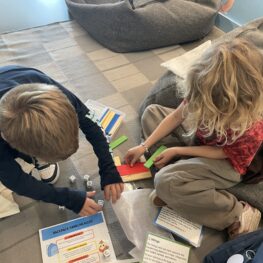
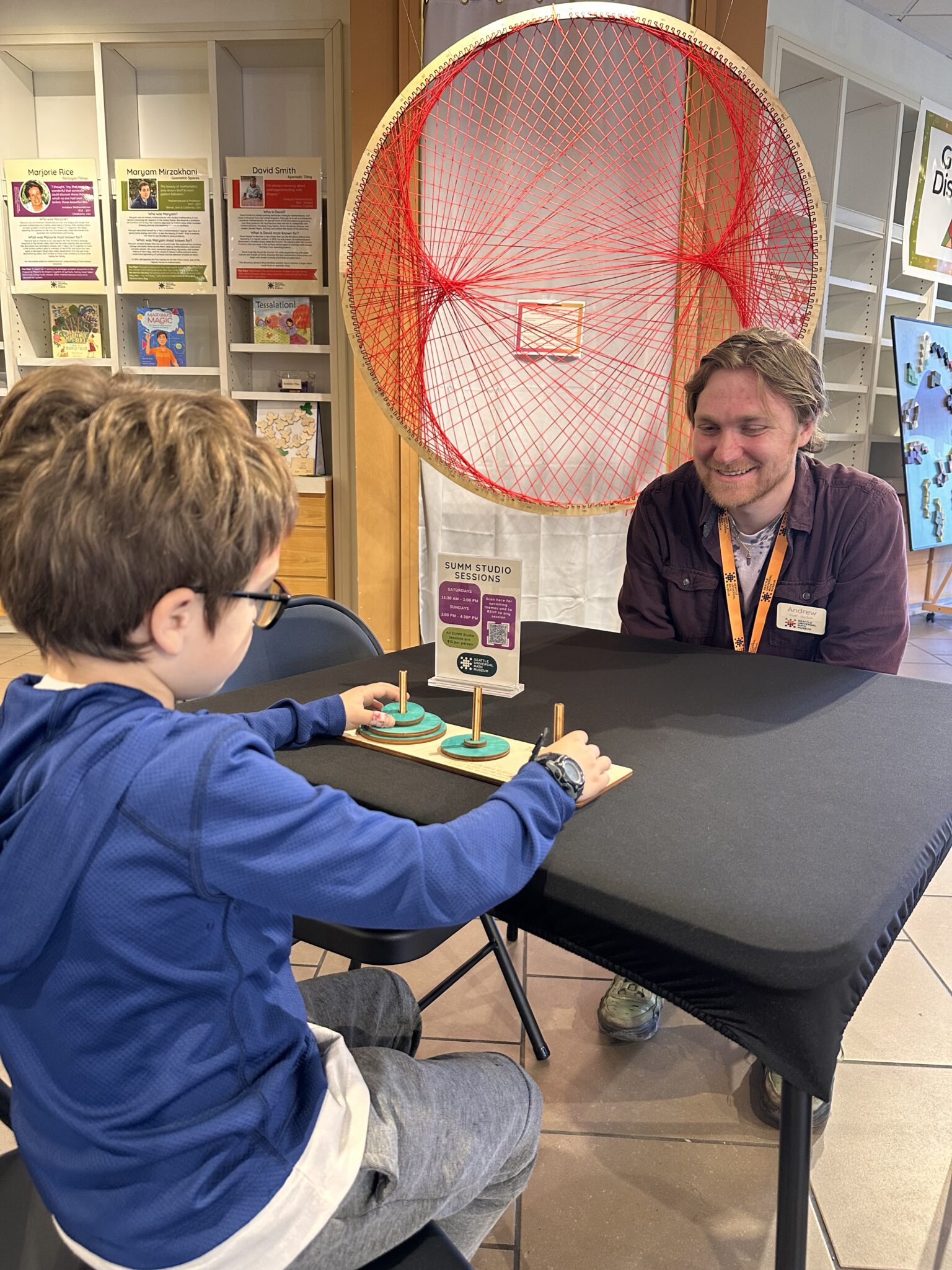
Tucked into a storefront at Kent Station, the new Seattle Universal Math Museum (SUMM) doesn’t look like a traditional museum, and it certainly doesn’t feel like a classroom. There are no timed tests or worksheets. Instead, families fold paper into geometric shapes, experiment with patterns, and puzzle their way through problems that feel more like games than lessons.
(Image: Leighton Thomas / Seattle’s Child)
A Different Kind of Math Space
SUMM is the second dedicated math museum in the U.S., and part of a growing movement to rethink how math shows up in everyday life. Its mission is straightforward: spark a love for math. Through the museum and community programs, SUMM helps people experience math as something creative, accessible, and relevant.
The need for spaces like SUMM is grounded in a broader challenge. Local math scores have yet to fully rebound from pandemic-era declines, and internationally, U.S. students continue to lag behind many of their peers. Just as significant is the drop in confidence that often occurs between third and eighth grade. When students decide they’re “not good at math,” they tend to participate less, take fewer risks, and gradually disengage. Over time, that mindset can shape both academic choices and everyday confidence, from managing money to interpreting information and solving problems.
SUMM believes they can help, and their approach is deliberately simple. Everything is hands-on. Everything is designed to invite participation, regardless of age or background. And most importantly, there’s no pressure to perform.
The space follows a “low floor, high ceiling” philosophy: materials are easy to begin with but open-ended enough to support deeper, more complex exploration. A young child can experiment alongside a mathematically inclined adult, each engaging at their own level without needing separate instruction.
(Image: Leighton Thomas / Seattle’s Child)
The Experience
My family spent more than three hours at SUMM; longer than expected, and without any real sense of time passing.
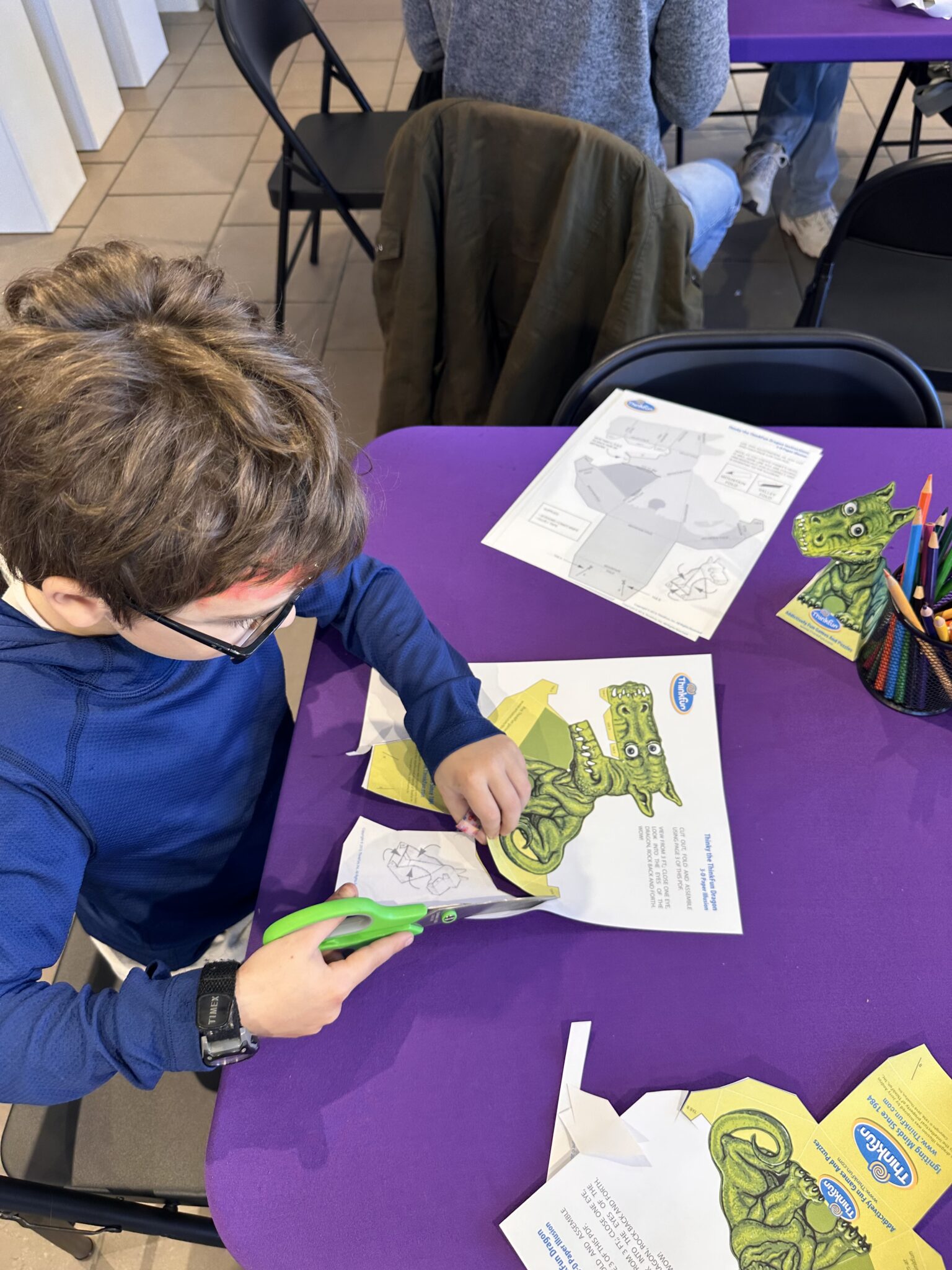
We began with a SUMM Studio Session on monocular illusions. After a short introductory lesson punctuated by audible “wow” moments across the room, we moved quickly into building our own models. Facilitators circulated easily, offering guidance when needed while allowing participants to work at their own pace. The session held the attention of both the youngest participant in our group (age eight) and a table of fully engaged adults nearby.
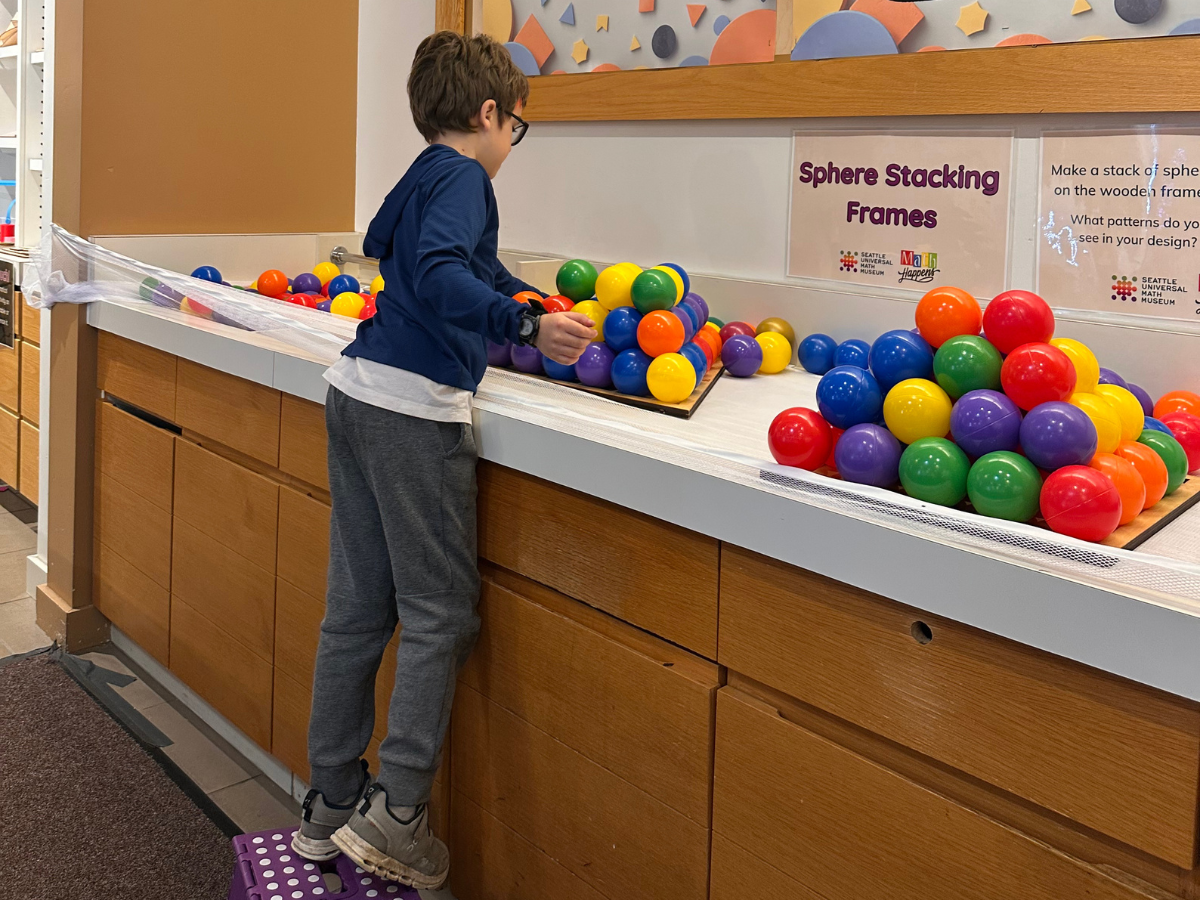
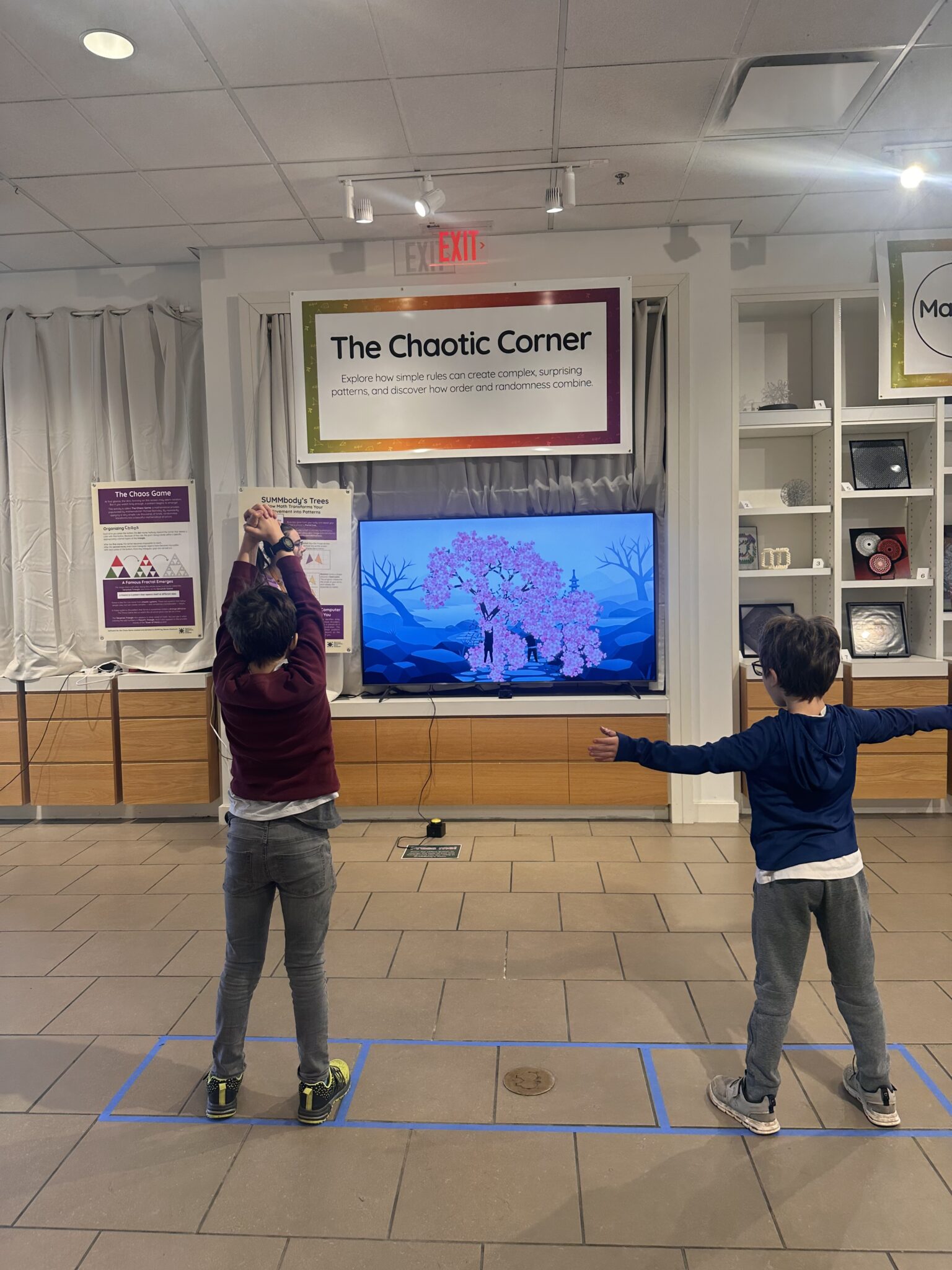
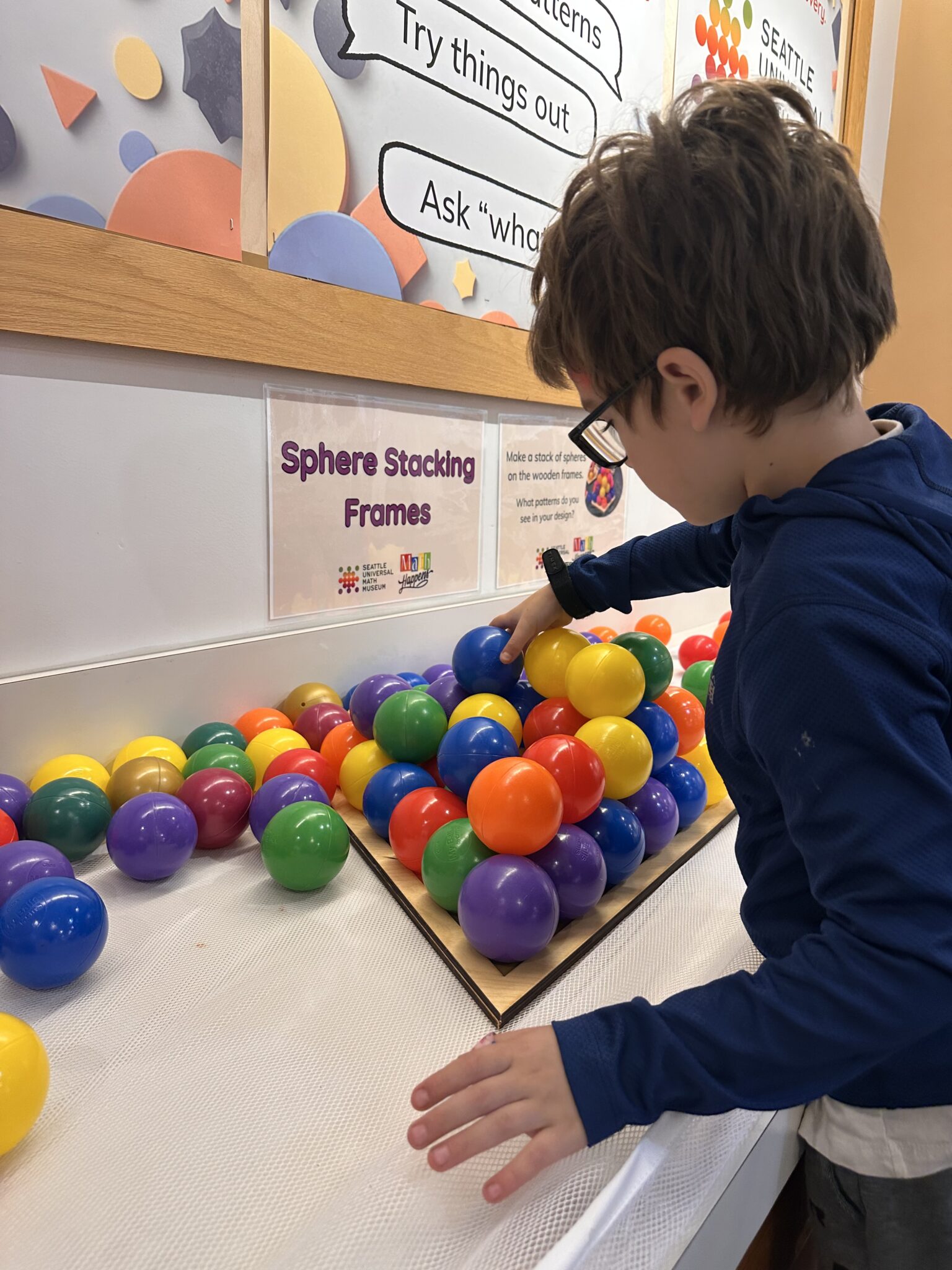
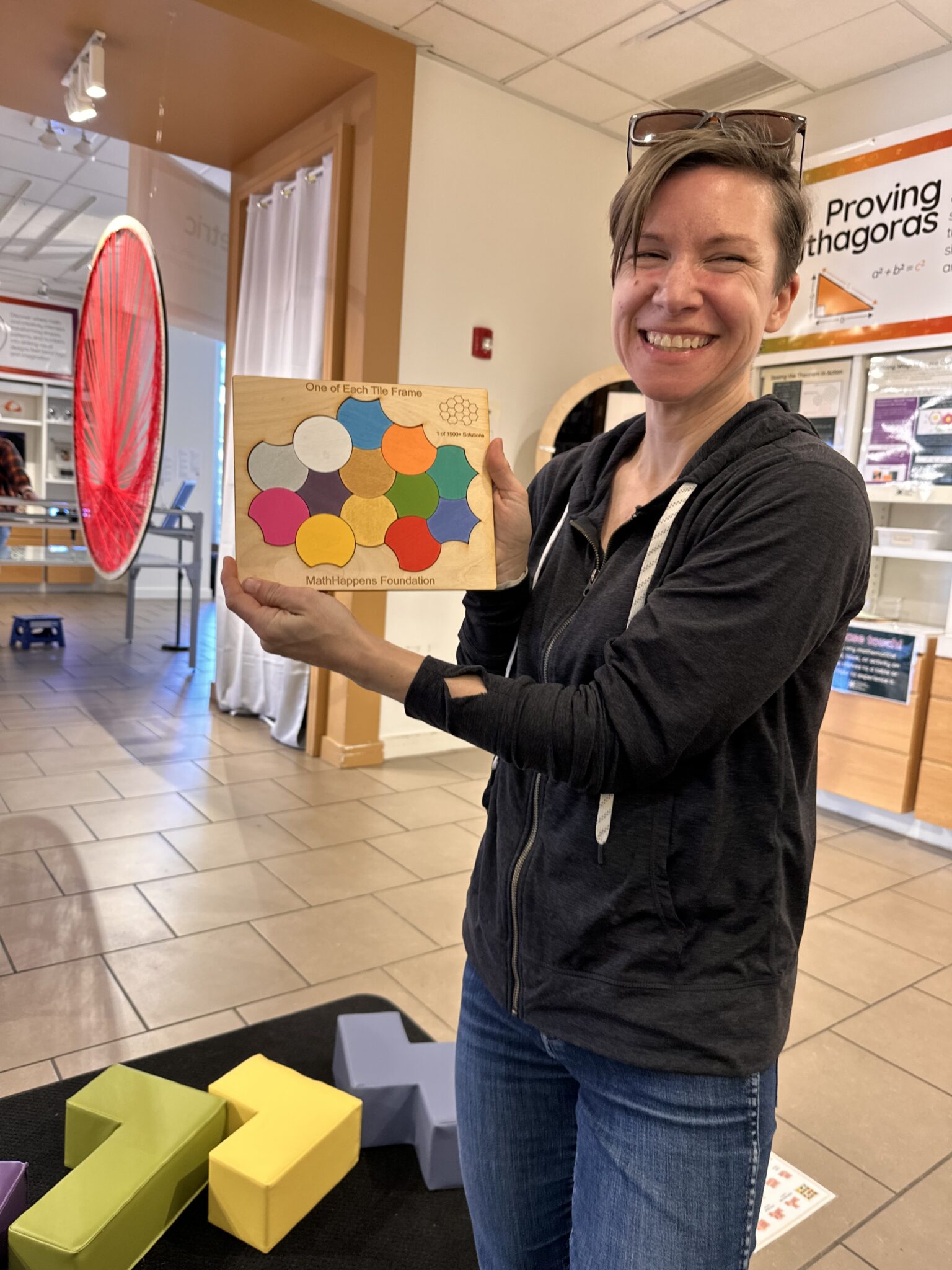
After the 90-minute session, we spent the rest of our time exploring the main space. At first glance, the museum appears compact, but it rewards attention. Shelves are filled with puzzles, illusions, and building materials. Rotating exhibits introduce ideas like coordinate planes, tessellations, and symmetry in ways that feel exploratory rather than instructional. A thoughtfully curated wall of books highlights mathematicians from across cultures and time periods, offering a quieter place to pause.
The overall effect is unhurried. Visitors move between activities as their interests dictate, often circling back to something that didn’t quite click the first time. Periodically, an excited “I got it!” will pierce the air, and you can’t help but celebrate with the person who just solved a tricky puzzle.
(Image: Leighton Thomas / Seattle’s Child)
Plan Your Visit
SUMM operates with a drop-in model, making it an easy addition to a weekend outing. Families can stay briefly or settle in for a longer visit. The experience is best suited for elementary-aged children and up, though younger visitors will also find entry points. The flexible, self-paced format works especially well for mixed-age groups.
For a more structured experience, SUMM Studio offers 90-minute guided sessions on weekends, with rotating themes like the monocular illusions we did, or Platonic solids origami. These sessions are low-pressure but thoughtfully facilitated, offering a deeper dive into specific concepts. Tickets are $8 per person and include access to the museum space.
SUMM is also designed with accessibility in mind. Varied table heights, step stools, and wide pathways accommodate a range of needs. Visitors can borrow headphones, and despite steady activity and a vibrant space, the overall atmosphere remains notably calm and low-sensory.
(Image: Leighton Thomas / Seattle’s Child)
Visitor Details
- Location: SUMM @ Kent Station, 437 Ramsay Way, Suite 102, Kent, WA
- Hours: Friday 4-7 p.m.; Saturday 1-7 p.m.; Sunday 1-4 p.m.
- Cost: Free, with a suggested $5 donation. Studio Sessions are $10 per person
- Getting There: Accessible by car, bus, and Sounder train (weekday service only)
- Parking: Free street and lot parking at Kent Station
- Restrooms: Located within Kent Station (short walk)
(Image: Leighton Thomas / Seattle’s Child)
Beyond the Museum Walls
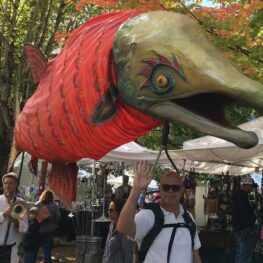
Access is central to SUMM’s mission. Through partnerships with schools, libraries, and community organizations, the museum extends its hands-on approach beyond its physical location.
- School Programs: SUMM offers two school-based programs, including AweSUMM Math at Schools and Matherschool. Share this brochure with your child’s school to bring SUMM to the classroom.
- Library Programs: Enjoy drop-in stations and math festivals at local libraries. You’ll find SUMM at Kent Library twice a month and elsewhere around the greater Seattle area. Check with your local librarian to find out if SUMM is headed your way or to request your library’s involvement.
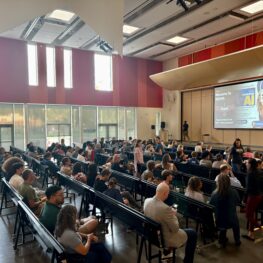
- Math Out Loud Lecture Series: This once-monthly lecture series encourages the “curious and creative” to come hear from some of the brightest mathematical minds, who share how math may surprise you.
Click here for SUMM’s full calendar of events. SUMM aims to make math joyful and hands-on, and their new space does just that. Happy puzzling!
Some of the products, services, or experiences mentioned in this article may have been provided at no cost or at a discount. However, all opinions expressed are solely those of the author and/or the Seattle’s Child editorial team. Our coverage remains independent, and we only feature things we genuinely believe will be of interest to our readers.