With its long days and slower rhythms, summertime is a wonderful time to encourage kids to pick up books of their own choosing. Why? Because just about everyone we interviewed for our summer issue of Seattle’s Child Magazine — from book authors to librarians to kids themselves — agreed picking books yourself is the best way to spark a love of reading.
As part of that issue, we asked local book authors how and why they write for kids, what books they love today, and what books inspired them as kids. Here’s what we learned:
Donna Barba Higuera
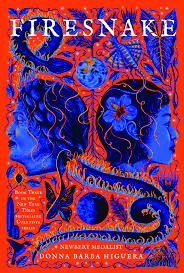
Author of “Firesnake” 2026, Levine Querido, ages 10-14
 Why do you write for kids?
I simply have the most fun writing for children. Kids have a way of being able to wonder and imagine in a way most adults no longer do. I laugh the most when writing for kids. I cry the most. I imagine the most.
Writing for children involves a voice and style that children can connect with. I’m not here to teach children a lesson with my writing. My hope is that my books will let them escape to another world for just a little while.
How do you appeal to a child’s understanding of the world?
I don’t think I ever left that way of thinking. Kids have this ability to wonder that we often lose when we transition to adulthood. I use this wandering-mind way of thinking in my story and world-building. I let my imagination go wherever it wants. It turns out, the weirder and stranger, the better.
What advice do you have for the reluctant reader?
Not every book is for every reader. Finding the right book for a child has to start with a question specific to that child. “What things are you interested in? What kinds of topics are exciting to you?” We are often tempted to hand kids the books that we hope they will love, or the ones we loved ourselves. But, to entice a reluctant reader and allow them to get lost in a book involves putting ourselves aside. Only the child can discover what those magical books will be.
Recommended summer reads:
- “The Undead Fox of Deadwood Forest” by Aubrey Hartman
- “The Many Assassinations of Samir, the Seller of Dreams” by Daniel Nayeri
- “The Girl Who Drank the Moon” by Kelly Barnhill
- “The Last Mapmaker” by Christina Soontornvat
- “Last Day on Mars” by Kevin Emerson
Belen Medina
“Emilia Wishing,” 2026, illustrated by Magdalena Mora, Random House Studio, ages 4-8
Why do you write for kids?
I love picture books. I loved reading them to my kids when they were young, and being able to tell a story with my words and someone else’s pictures is a magical collaboration.
How did you feel when your first book was published?
I couldn’t believe it was real. It felt like a dream that happens to someone else. Growing up, I hadn’t known anyone who had ever published a book, so it was incredible.
Recommended summer reads:
- “Ramona the Pest” by Beverly Cleary and all the Judy Blume books
- Raina Telgemeier graphic novels
Scott Kurtz
“Table Titans Club Sneak Attack,” 2026, Holiday House, ages 8-12
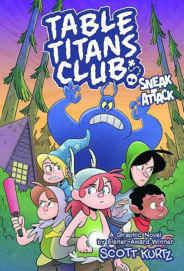 When did you begin to love to read?
My love of reading started with comic books. I stood up and declared publicly in front of my fourth-grade class that I had decided to become a cartoonist.
My dad was really into James Bond and gave me the first Ian Fleming book to read, “Dr. No.” I was hooked. It was easy to read and exciting and I loved the character named Quarrel, who was a young guy helping Bond. “Dr. No.” was the first book to really affect me emotionally.
How do you get into the psyche of a child?
This one is easy. I never grew up. That’s been problematic in other areas of my life, but incredibly helpful when it comes to writing for kids. I remember when my editor first read my script for “Table Titans Club: Book One,” she said, “You have a great voice for middle grade,” and I laughed. I didn’t try to write for middle grade. I just wrote like I normally wrote.
You also illustrate your own books. Which came first?
If I had to choose, I would say the art, but I never drew just to draw. I always wanted to make up characters and tell jokes or stories, and comics are a combination of words and pictures.
I only recently decided I wanted to try to write a prose book. I’m already finding it limiting that I don’t have pictures to help me with the story. It might end up being a combination of both in the end.
Any advice for encouraging reluctant summer readers?
Reading comics is reading. Listening to audiobooks is reading. Telling stories with your friends over a table with dice and character sheets is reading. Find a book that means something to YOU.
Recommended summer reads:
- “The Hobbit,” by J.R.R. Tolkien. Then move on to The Lord of the Rings and the Narnia series.
- Dungeons & Dragons game play for young readers and writers
Vikram Madan
“Beware the Dragon and the Nozzlewock,” 2024, Wordsong, ages 8-12
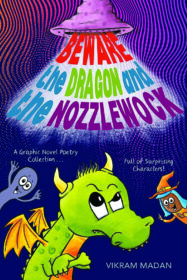 Tell us about your early reading experiences?
By age 8 I was reading everything I could get my hands on. I grew up in India and the most commonly available kids’ books were by British author Enid Blyton, who wrote over 900 books in her lifetime. I also loved reading comics like “Tintin” and “Asterix.”
Why do you write for children?
I believe reading books opens doorways and helps kids develop skills for navigating the world, processing information, analyzing situations, and solving problems.
What advice do you have to help reluctant readers?
Spend time at the library and let them browse and borrow anything they want.
Recommended summer reads:
- Any books by Kaz Windness, Corey Tabor, Douglas Florian or Karla Kuskin
- “The Unlikely Aventuras of Ramón and El Cucuy” series by Donna Barba Higuera
- “Super Boba Café” series by Nidhi Chanani
Jewell Parker Rhodes
“Will’s Race for Home,’ 2025, Little, Brown Books for Young Readers, ages 8-12
“Ghost Boys: The Graphic Novel,” 2025, Little Brown Ink, ages 7 and up
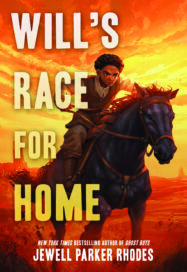 How did you feel when your first book was published?
When my first children’s book, “Ninth Ward,” was published, I felt energized and deeply honored. Growing up, I didn’t see myself reflected in books. Knowing that young readers can now pick up a story and feel seen, valued, and connected means everything to me.
How do you create a world kids relate to so successfully?
I never underestimate children. They don’t need stories that talk down to them; they need stories that honor their intelligence and strength. I write character-driven stories that inspire children to see the world through someone else’s eyes.
What advice do you have for the reluctant reader?
Offer a variety of books that might speak to them. Sometimes a child simply needs to find the right story to find the joy of reading.
Recommended summer reads:
“Hatchet” by Gary Paulsen
Deb Caletti
“You, Me, and Infinity,” 2026, Labyrinth Road, ages 14+
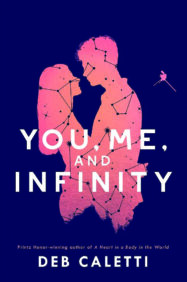 When did you begin to love to read?
Around the age of five. Instantly, books were magic, escape, and a clear, uncomplicated joy. I’m a writer, but I’ll always be a reader first.
How did you feel when your first book was published?
I had a sense of astonished surprise. Awe. And utter gratitude to be in print. My books were in the library. I still can hardly believe it.
What is your advice for reluctant readers?
Share your own love of reading. Marvel over the wonder of the library and the world in general. Spill curiosity. Be rightly awestruck. Tell them that the most real and powerful magic is quietly waiting for them, right on those shelves.
Recommended summer reads:
- “The Fight of Our Lives: AIDS in America,” by David Levithan with Gabriel Duckels
- “Girl Reflected in Knife,” by Anica Mrose Rissi
- “This One Summer,” by Mariko Tamaki and illustrated by Jillian Tamaki
- “I Wish I Didn’t Have to Tell You This: A Graphic Memoir,” by Eugene Yelchin
Monica Brown
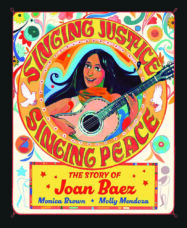
“Singing Justice, Singing Peace: The Story of Joan Baez,” 2026, illustrated by Molly Mendoza, Beach Lane Books, ages 4-8
 How did you feel when your first book was published?
It was a joyful dream realized and shared with my family and community! My first published picture book was “My Name is Celia: The Life of Celia Cruz/ Me Llamo Celia: La Vida de Celia Cruz,” illustrated by Rafael Lopez. When it won the Américas Award, Rafa and I brought our mothers and young children.
How do you appeal to a child’s understanding of the world?
Their imagination is as big as the sky. They have access to wonder, and we don’t need to talk or write down to them. They are drawn to the musicality of language, the magic of a good story, and fun. Our children deserve books that respect their hearts and minds.
Recommended summer reads:
- The “Junie B. Jones” series by Barbara Park. I can still hear my children’s laughter at the indomitable Junie’s antics.
- “We are Definitely Human,” written and illustrated by X. Fang
- “A Sky That Sings,” written by Anita Sanchez and George Steele, illustrated
by Emily Mendoza
Amy Hevron
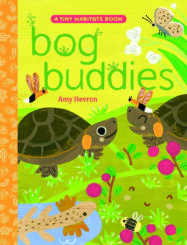
“Bog Buddies,” 2026, Beach Lane Books, ages 4-8
 Why do you write for children?
I love picture books as an art form. To me, it’s the perfect combination of art, storytelling and design all packaged into one.
How do you get into the psyche of a child?
I was highly imaginative as a child and still am as an adult. So I can easily take myself back to my childhood world, growing up with my brother and my cousins. Playing in the woods or the backyard. Always imagining and adventuring. With my books, I focus on the kinds of things we were fascinated by as children.
What book or series made you into a reader, and what is your advice for the reluctant reader?
I was one of those reluctant readers. I was in about the 5th or 6th grade when I found the “Sweet Valley High” books. I was obsessed. I also loved reading my brother’s “Garfield” and “Calvin and Hobbes” comic books.
But as a younger kid, I did love looking at the illustrations in picture books. I started by “reading” the pictures. And now with all of the wonderful graphic novels being published for kids of all ages, there are so many choices for kids who are visual learners and readers.
What was your first love, writing or illustrating?
I initially got into picture books as a fine artist.
Recommended summer reads:
- “Fireworks” by Matthew Burgess, illustrated by Cátia Chien
- “Don’t Trust Fish” by Neil Sharpson, illustrated by Dan Santat
- “Grand Canyon” by Jason Chin
- “Little Witch Hazel” by Phoebe Wahl
Nina Laden
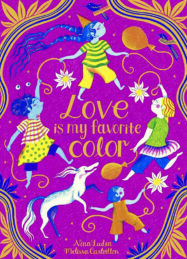
“Love Is My Favorite Color,” 2024, illustrated by Melissa Castrillon, A Paula Wiseman Book/ Beach Lane Books, ages 4-8
 How do you discover a child’s understanding of the world?
I see the world with a huge sense of curiosity and wonder. I believe in the question, “what if?” I live in my imagination. All of this keeps me inspired.
You are an author and illustrator; which was your first love?
Story matters the most. I’ve always seen drawing and writing as connected. When I start my books, sometimes they start with a character that I’ve named and drawn. Sometimes they start with an idea or a title.
Recommended summer reads:
- “The Camping Trip” by Jennifer Mann
- “Swim, Jim!” by Kaz Windness
- “The Gardener” by Sarah Stewart, illustrated by David Small
Kaitlyn Wells
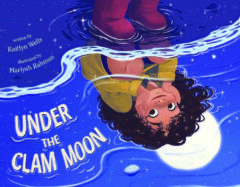
“Under the Clam Moon,” 2026, Roaring Brook Press, ages 2-6
 How do you come to understand your audience of young readers?
I believe the best way to understand young readers is to talk to them, play with them, be with them. Too often, adults feel they know kids better than the kids know themselves because society has conditioned us to believe there’s a right way to do something — and adults decide what that means. But children are incredibly complex, just like anyone else.
Recommended summer reads (for parents):
- “The Brown Bookshelf”
- KidLit in Color
- Kweli Journal
- STEAMTeam Books
- We Need Diverse Books