Childhood has changed, and Pixar, a studio notorious for having its finger on the pulse of juvenile interests and issues, has grown with the times. What was once a simple tale of toys that come to life and run amok has entered the chatroom with the introduction of digital technology. Told with its trademark wit, humor, and character development, “Toy Story 5” is a heartwarming and entertaining adventure at face value. Under its girl power rodeo, the film offers a surprisingly nuanced cautionary tale about tech use in adolescence.
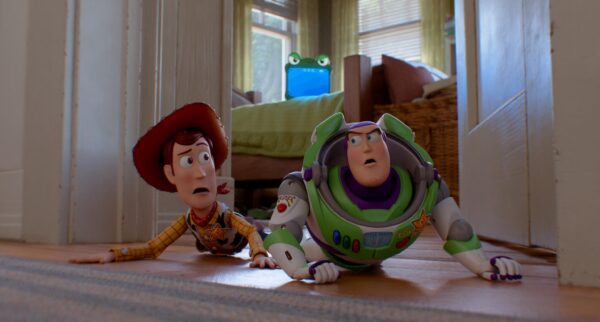
Woody and Buzz Lightyear in Disney and Pixar’s TOY STORY 5. (Photo courtesy of Pixar. © 2026 Disney/Pixar)
A Fun-Size Synopsis
The whole toy gang may be back, but “Toy Story 5” offers audiences a new leading heroine: Jessie (Joan Cusack), the red-haired cowgirl who, along with her trusty steed Bullseye, has been generally pushed to sidekick territory. Jessie and Buzz (Tim Allen) commandeer the other toys like Rex (Wallace Shawn), Forky (Tony Hale), Hamm and Mr. Potato Head under the effusive play of Bonnie (Scarlett Spears), their precocious, creative child who still partakes in good “old-fashioned” imaginative make-believe.
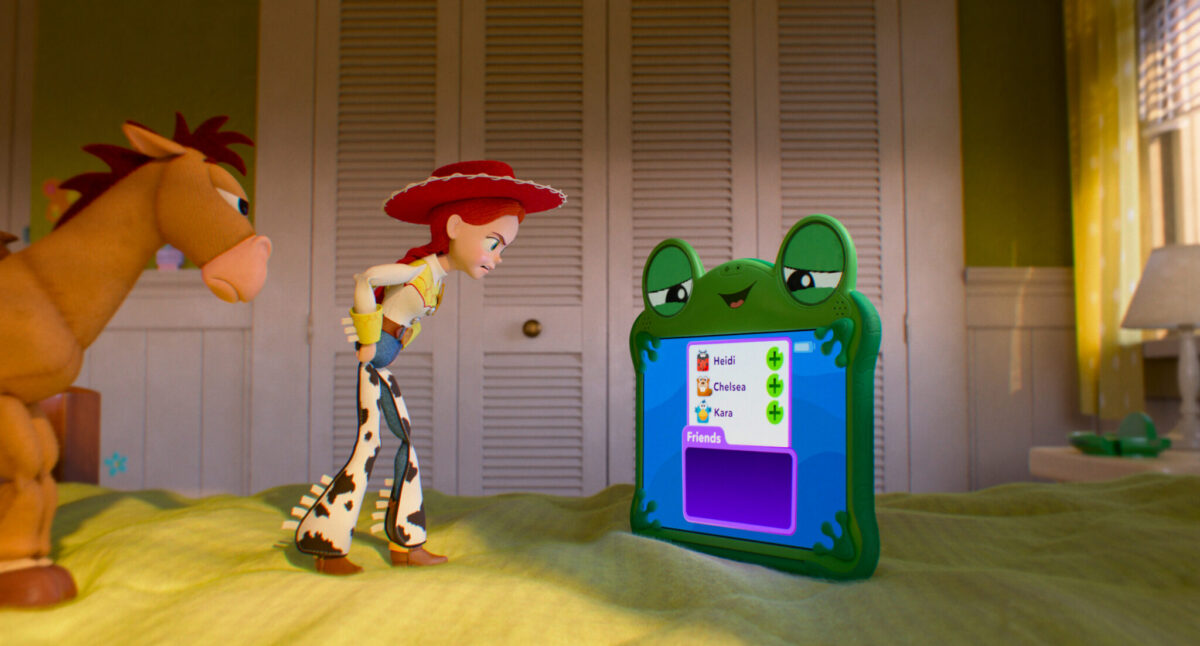
But Bonnie yearns for other human friends, and there appears to be a developing obstacle in making connections: screens. The majority of children around her socialize on their tablets, playing games, chatting, and forming inside jokes. Desperate for their daughter to meet kids her age, her parents buy Bonnie Lilypad (Greta Lee), a frog-shaped tablet that connects her to other kids, at a cost. Bonnie becomes tied to the screen to maintain these relationships, causing distressing physical and emotional changes in the otherwise happy girl. She neglects her toys, who, behind the scenes, are battling against Lilypad for Bonnie’s best interests.
Woody (Tom Hanks), who became a free-range toy in the last film, lives on the lam with his beau Bo Peep, but returns when Jessie calls for backup. She has been accidentally returned to the house of her very first child, where she serendipitously meets Blaze (Mykal-Michelle Harris), a horse-loving, toy-playing young girl who balances online and IRL fun with surprising equilibrium. Determined to bring Blaze and Bonnie together, Jessie employs the help of her friends and a troop of lost Buzz Lightyears to remind Bonnie about the joy of playing like a kid once more.
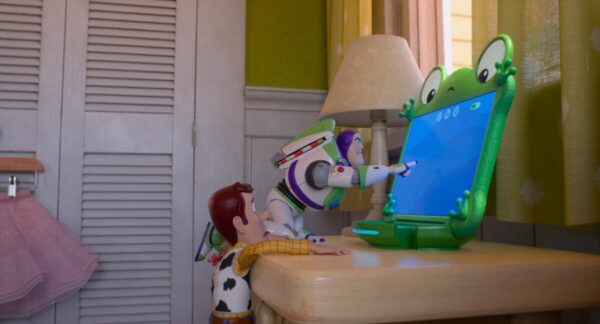
Woody, Buzz Lightyear, and Lilypad in Disney and Pixar’s TOY STORY 5. (Photo courtesy of Pixar. © 2026 Disney/Pixar)
A Cautionary Tech Story
It would have been easy for screenwriters Andrew Stanton and McKenna Harris to play it safe, regurgitating the plight of these plastic characters, introducing some misunderstood doll as a villain, and tying it up with a bow by the film’s end. Instead, viewers may leave the theater still pondering what they witnessed unfold in “Toy Story 5,” which offers parents a jumping-off point for further discussions about screen time use with their kids and among themselves.
The film’s message is not simply that all technology is evil. In addition to Lilypad, new characters include a few unsophisticated, battery-operated toys like Smarty Pants (Conan O’Brien), a light-up potty training assistance device in a VTech style. Atlas (Craig Robinson) is a rudimentary, handheld electronic map. And Snappy (Shelby Rabara) is a kid-friendly digital camera. Though they are outcast by the other toys, these tech misfits don’t have the same capabilities as Lilypad, a device that offers a direct connection to the internet.
Lilypad, though she may be the “villain” of the film, sacrifices herself in the end when she realizes that Bonnie’s mental state is worsened by the constant exposure to screens and the pressures that come with maintaining a life online. Bonnie is bullied and excluded from jokes with her dance friends, a direct result of the new device that has taken over her life.
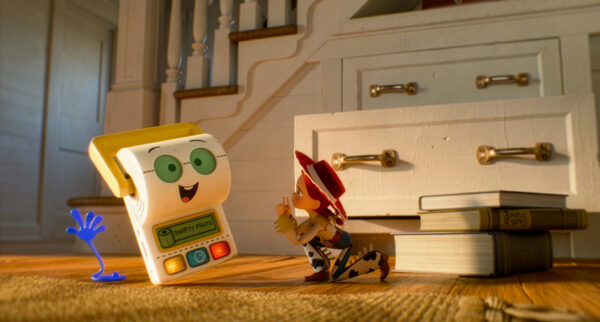
Smarty Pants and Jessie in Disney and Pixar’s TOY STORY 5. (Photo courtesy of Pixar. © 2026 Disney/Pixar)
Adult Supervision Required, Child Imagination Initiated
Therein lies one of the film’s layered thoughts on a very complicated issue. While it may be easy to condemn Bonnie’s parents for introducing their 8-year-old to Lilypad in the first place, the real ills of their actions are what happens after Lilypad joins the family. Unlike a Wi-Fi-less map or a contraption that sings a potty song, Lilypad is not a harmless toy. She is a highly addictive device that requires supervision and adult monitoring at all times.
What “Toy Story 5” encourages in its young viewers is to appreciate the in-person relationships that bring joy to our lives. There is a tear-jerking moment near the film’s end that reinforces the positive effect a simple, analog toy like Jessie has on the child who loves her. At the heart of this franchise, an appreciation for these harbingers of happiness and a reminder to really live in the moment is more important now than ever.
I wondered how my 6- and 8-year-olds would react to the Lilypad character. They don’t know much about social media, nor do they have access to the internet. Interestingly enough, despite much of the movie’s crux resting on the Lilypad subplot, they didn’t mention her in their post- film takeaway. My 6-year-old was excited to see Blaze and Bonnie connect by film’s end. My 8-year-old seemed enamored with the multiple iterations of Buzz Lightyear (and the kiss that the real Buzz shares with Jessie). What I thought would be a topical, buzzword divergence from its brand was, actually, a sweet reinforcement of its core values.
- Where to Watch: In theaters now
- MPAA Rating: PG for some thematic elements and rude humor
- Recommended Age: 5+
- Runtime: 102 minutes
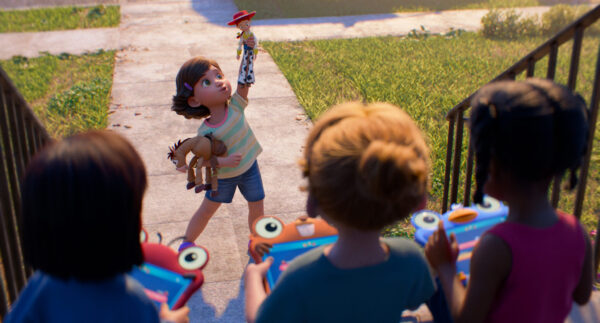
Bonnie in Disney and Pixar’s TOY STORY 5. (Photo courtesy of Pixar. © 2026 Disney/Pixar)
More Parent Reviews and Family Movie Picks
Still deciding what to watch next? Check out more Seattle’s Child movie guides and parent reviews:
- Parent Review: “The Super Mario Bros. Movie” | Despite its colorful visuals and familiar characters, this sequel misses the mark with a chaotic pace and surprisingly thin story.
- Parent Review: “The Pout-Pout Fish” movie doesn’t match the book | See why this adaptation may disappoint families who loved the original story.
- Parent Review: “The Last Whale Singer” | This heartfelt ocean adventure pairs familiar storytelling with meaningful lessons about conservation, courage, and finding your own voice.