I wake to sunlight and crisp hotel sheets. For a moment, I let myself dream I’m in a 4-star hotel in some warm, turquoise-hued vacation spot. A hard kick to my side brings me back to reality: my daughter is sleeping next to me, my two sons are in the next bed, my husband is on a cot, and we are in a Best Western or equivalent somewhere between Olympia and Lacey. Our dog needs to use the potty (yes, we brought him to save on boarding), and I’m already scrolling Game Changer to see what the day holds for play times.
Travel baseball. It sounds like a serious sport reserved for college athletes, or at least those old enough to drive, but select baseball can, and often does, start as young as second grade. The season usually starts in January with winter workouts (depending on what constitutes a “workout” when talking about a 9-year-old), and a school year full of 2-hour practices multiple days a week, usually right in the middle of dinner.
During summer, family trips wait until August; June and July are booked with tournaments anywhere from Lynden and Tacoma to Spokane and Bend. Granola bars and flattened sandwiches are the on-the-road menu, and Chick-fil-A pit stops make up an embarrassingly large portion of certain weekends. All for the low price of nothing less than $1,500 plus travel expenses and gear.
Sounds crazy, right? But we’ve done it for three years.

Baseball weekends are a family affair. (Image: Allison Holm / Seattle’s Child)
Not Your 90s Baseball: How Youth Sports Have Changed
I’ll say it — those words that officially make you a parent of the 10+ crowd: “Back when I was a kid…” I played school sports: soccer in the fall, basketball in winter, volleyball in spring, and a community Little League here and there. My parents dropped me off at the school gym and picked me up when it was over. The uniforms were nothing more than a cheap t-shirt with the school’s name, and my teammates were the same kids I sat next to for 6 hours a day. My parents didn’t drive me 45 minutes to a “facility” with batting cages and paid coaches. We didn’t pre-order dri-fit jerseys with our last name and preferred number printed on the back. There were no sliding mits, no Eastons or Icons or DeMarinis, no elbow guards, no grip tape. We used the school-offered equipment, we carpooled, and our training facility was the fluorescent-lit gym or the field next to the school. We played. We won. We lost. Our classmate’s dad was the coach. We ate warm orange slices from a Tupperware container. We had fun.
Today, youth sports is a 40-million-dollar industry. Training facilities are exceptional, tryouts are cutthroat, coaches are paid, and tournament costs are shocking. Nine-year-olds swing $300 bats and sport on-trend sliding mitts. Some parents (I’ll raise my hand here) feel like they’re starring in a Netflix documentary: “Chauffeur-Life”, or “Money Does Grow on Trees”.

Behind every player is a whole family cheering them on. (Image: Allison Hold / Seattle’s Child)
What We Love About Little League
Good old Little League does still exist, although in many towns, it feels like a dying breed. Kids are heading towards the select route earlier, and many travel ball coaches prohibit participation in both select and Little League (and often any other sport that would interfere with their training time). Little League starts to phase out altogether somewhere around 6th grade, following the All-Star tournament.
It’s a big commitment financially and time-wise, and we know this is a privilege — one that we have said “yes” to for the past few years. We continue to reassess and weigh the pros and cons each year. We are a big Little League family, and my husband has coached both of our sons since t-ball. As a coach, he thinks it’s so important to keep the Little League culture thriving. It’s such a community sport, connecting kids and families from the local area. And, in general, it’s based on fun, teamwork, and learning over winning.
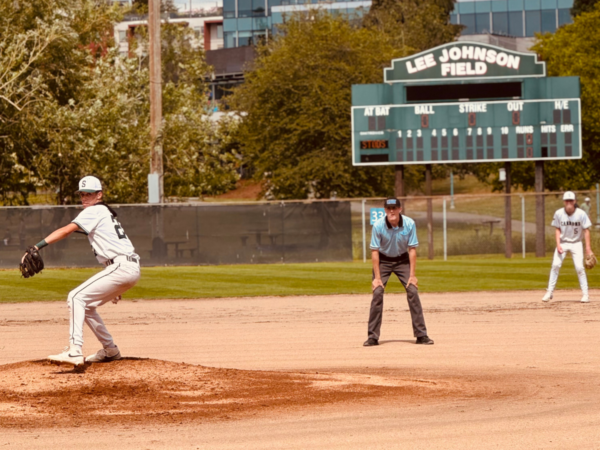
Pitch by pitch, inning by inning — that’s baseball life. (Image: Allison Holm / Seattle’s Child)
Why Our Families Chose Select Baseball
We have two boys who are extremely passionate about baseball. Our oldest played Little League through sixth grade. The select teams are extremely popular where we live, and by age 12, it became clear that we’d have to go the select route if he were to keep playing at a competitive level. The local Select team was off-the-charts intense, with a group of boys who had been playing together since early elementary. We were a new family in a small town, so we decided to drive a little further to a less intense team. We didn’t win as many games, but the energy in the dugout was inclusive and positive, and our son continued to love baseball. Overall, the coaches were knowledgeable, the games were more competitive, and he did receive a higher level of instruction.
The Real Costs of Travel Baseball
Our son also took part in other sports (basketball, cross country, track, and soccer). I think it’s important for kids to do a variety of sports, as each sport presents different sets of skills, learning opportunities, coaches, and teammates. Be wary of the coach who only wants your kid to play one sport. Kobe Bryant himself said that kids don’t need to start travel teams at an early age. When asked (in an interview) what Michael Jordan was doing at age twelve, Kobe said, “playing baseball!” Michael Jordan didn’t get serious about basketball until after age 12, and he didn’t even make the high school varsity team his sophomore year.
If you ask this Select Baseball mom, I think that any kid with a true passion for a sport (along with some skill) can go far with it. I don’t think they necessarily need to hop on the Select bandwagon in third grade. There are plenty of ways to “get your work in” without playing on a travel team.

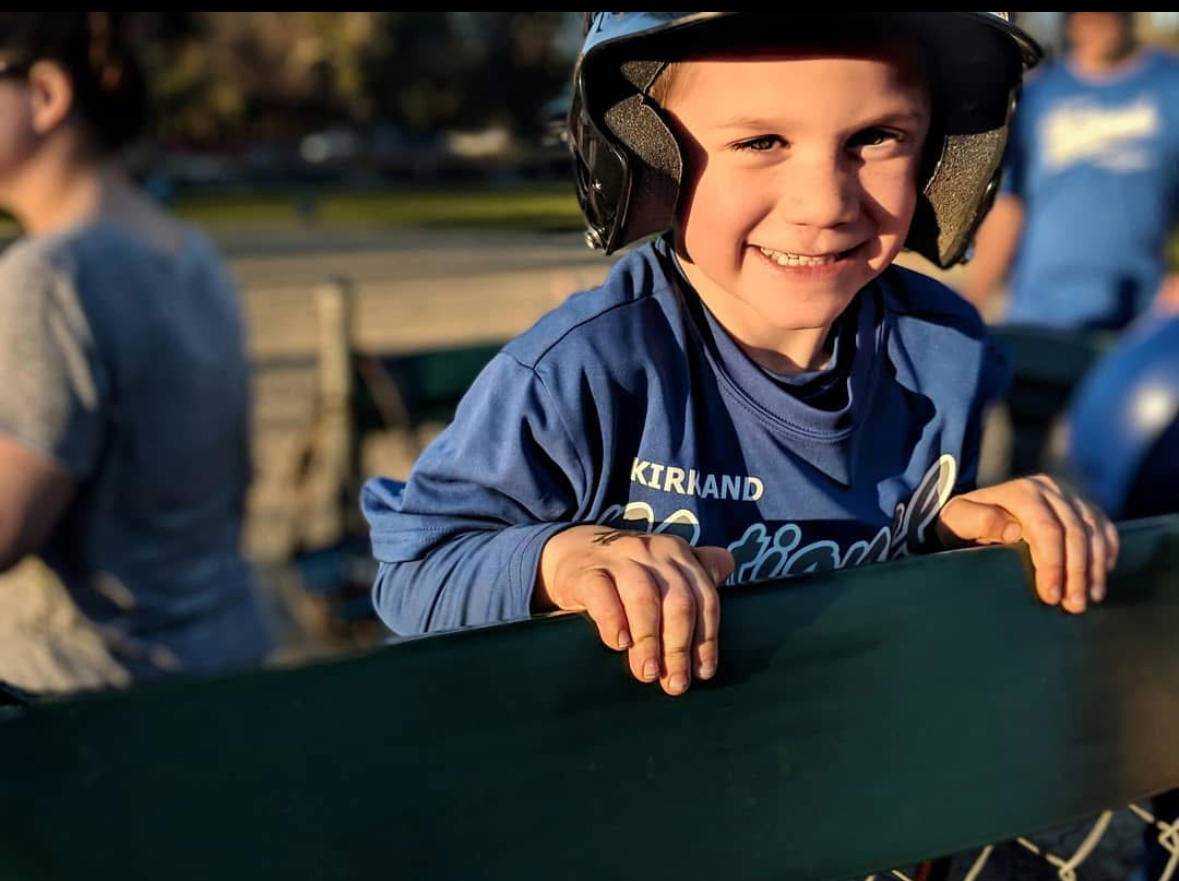
Smiles like this are what the season’s all about. (Image: Allison Holm / Seattle’s Child)
Keeping the Love of the Game Alive
My husband and son spent hundreds of afternoons swinging a bat and taking ground balls at the local ball field. While Select Baseball will offer facilities, a higher level of training, and competitive tournaments, the love for the sport, personal dedication, great attitude, and willingness to learn will bring a player from good to great. Select teams can provide avenues and amenities, but the drive comes from the kid. And that drive can be snuffed out with too much pressure or burnout.
Our oldest is now heading into his sophomore year in high school. He played on the JV baseball team and his Select team last year. The competition in this town is tough, so getting him into Select ball during middle school was the right move, but I’m glad we didn’t start any earlier. We used those elementary years to encourage all sports (and anything else he was interested in), and supported his love for the game without the added pressure of Select. He had fun, he worked hard, and his fire for baseball still burns bright. Our younger son is heading into sixth grade and will be playing on his first Select team this year. Our daughter wants nothing to do with baseball or softball. She’s spent too many hours watching doubleheaders on hot metal bleachers, driving all over the state to different fields, and listening to her brothers talk stats. She is, however, really getting into volleyball. I hear they have travel teams for that, too.