
Being a parent is nonstop hard work, making it challenging to stay on top of news that impacts families in Washington state. This Hits Home is your weekly hit of news, commentary, and, occasionally, opinion. Want to have a say? Look for the “Take action” prompts. Here’s the update for the week of April 27 – May 3.

New SPS districtwide cellphone rules start tomorrow
A new districtwide cellphone policy in Seattle Public Schools takes effect Monday, May 4, marking the first time the state’s largest district has adopted a consistent set of rules across all schools. The policy requires students in grades K–8 to keep phones turned off and stored away for the entire school day, while high school students must keep devices out of sight during class but may use them during lunch and passing periods. Here are the grade span-specific rules as posted by SPS.
- “Off and Away for the Day” Rule in Grades K–8: Phones are off and stored away for the full school day, with no access during instruction, passing periods, or lunch.
- “No Cell Bell to Bell” Rule in Grades 9–12: Phones are off and away during all instructional time. Students may have limited access during lunch and passing periods, supporting responsible device use and digital citizenship while keeping phones out of the classroom.
- Exceptions: Students who require access to personal devices for medical needs or as part of a documented IEP or Section 504 accommodation will continue to be supported.
District leaders say the move is aimed at reducing classroom distractions and improving student focus, following pilot programs at several schools. The policy replaces a patchwork of school-by-school rules and allows limited exceptions for medical needs or accommodations. Families can still reach students during the day through school offices, while schools retain some flexibility in how the rules are enforced.

Thought you were saving family grocery money with buy 1, get one? Maybe not
Washington is suing Albertsons under the state’s Consumer Protection Act, alleging the company used deceptive pricing practices in its “buy one, get one free” (BOGO) promotions. According to the complaint, Albertsons advertised certain items as “free” with the purchase of another item, but the state argues those promotions were misleading to shoppers because they did not provide the kind of savings consumers would reasonably expect from that label.
The lawsuit, filed in King County Superior Court, centers on how those deals were structured. The state alleges that Albertsons set or maintained higher prices on the first item in a BOGO promotion so that the cost of the “free” item was effectively built into what customers paid. In practical terms, the complaint argues, shoppers often paid more for the first item during the promotion than they would have outside of it, meaning the second item was not truly free.
Washington further claims this was not an isolated issue but a consistent pricing strategy used across many stores and over an extended period. The complaint alleges that these practices affected a large number of transactions statewide and resulted in consumers paying more than they would have if prices had been presented transparently.
The state is asking the court to rule that these practices violate consumer protection law, to stop Albertsons from using similar promotional tactics, and to require the company to return money to affected customers and pay civil penalties. At its core, the case argues that marketing something as “free” while structuring prices to offset that cost is deceptive under Washington law.
The complaint specifies that the alleged deceptive pricing practices occurred over an extended, multi-year period from at least 2019 through the present (2026).
In the filing, Washington claims that Albertsons “has engaged in these practices for years,” and then anchors that claim by identifying 2019 as the starting point for documented conduct, continuing up to the time the lawsuit was filed in April 2026. The state uses this span of time to argue the conduct was systematic, not occasional, and affected a large number of transactions over time.
That multi-year window is central to the case: it supports the state’s claim that the pricing strategy was an established business practice, over several years and across the state, and increases the potential scope of restitution and penalties.
Proposed legislation that would have protected shoppers by temporarily banning electronic pricing systems and prohibiting algorithmic surge pricing thosefailed in the 2026 Washington State Legislature. The bill is expected to return next session.
TAKE ACTION: Share your opinion regarding the revival of House Bill 2481 by contacting your state lawmakers.

McGraw Hill Emerge curriculum (Image: McGraw Hill)
SPS board adopts new K-5 reading curriculum
Seattle Public Schools has approved a new reading curriculum for elementary students that will be rolled out across kindergarten through fifth grade classrooms beginning in the 2026–27 school year. The adoption marks a major shift for the district, replacing a mix of existing materials with a single, districtwide program designed to align with the “science of reading,” an approach that emphasizes phonics, structured literacy, and explicit skill-building.
A district website update announced this week: “Seattle School district has successfully completed its K–5 ELA curriculum adoption process. The adoption committee’s recommendation of McGraw Hill’s Emerge!, was formally approved by the school board for a seven-year adoption.”
District leaders say the change is intended to improve reading outcomes after years of uneven results across schools. The new curriculum, selected after a multi-year review and pilot process involving educators and families, includes built-in supports for diverse learners and will be paired with teacher training and ongoing evaluation as it is implemented.

Mt. Si, a popular place to hike for Seattle families. (Image: Holly Cheng)
The summer expect-a-mess hiking trail list keeps growing, includes popular local trails
It’s hard to track which popular hiking and camping spots in Washington will be closed or see their maintenance and staff presence diminished by the millions cut this year from the state Department of Natural Resources budget, but The Seattle Times is doing its darnedest to keep up. This week, the Times reported the DNR crunch is about to hit close to home for Seattle-area hikers, especially along the busy I-90 corridor. Trailheads that serve as gateways to some of the region’s most popular hikes—including those at Tiger Mountain State Forest, Mount Si, West Tiger, Rattlesnake Mountain, and the Middle Fork Snoqualmie Natural Resources Conservation Areas — are among the many. The DNR recently announced the closure of several popular campgrounds due to budget constraints.
When your family hits trails near Seattle, expect to see evidence of diminished maintenance. Your best bet for empty trash and cleanish restrooms? Avoid weekend hiking when trail traffic is heaviest. Keep up with the story in The Seattle Times.
TAKE ACTION: Share your opinion about these cuts to the state Department of Natural Resources. You can’t influence cuts in this biennium, but a new one is on the horizon. Contact your state lawmakers.

Hair Power: The Crown That Grows From Us (Art by Kameirah Johnson)
A picture is worth a thousand words, especially if it’s Google art
What caught my eye in the South Seattle Emerald this week was not the headline, but the art. A brilliant, light-filled piece that reminded me of girls chasing fireflies at night. The article spotlights Seattle teen Kameirah Johnson, a Lakeside senior named one of five national finalists in Google’s annual “Doodle for Google” competition. Johnson’s art, “Hair Power: The Crown That Grows From Us,” takes this year’s prompt “My superpower is…” and reframes it through the lens of Black hair. The result is a luminous image celebrating its beauty, cultural meaning, and resilience. As a finalist, Johnson has already won—a $10,000 college scholarship, a Chromebook, and a party for her neighborhood. If her name is announced as the contest winner on May 12, she would walk away with a $45,000 scholarship and a $50,000 technology package for her school. Check out the Emerald’s excellent story on how Johnson’s own school experience inspired her Google art submission.
WATCH: A perfect parent break or kid soother
If you’re looking for something unexpectedly calming—and a little mesmerizing—queue up the new burrowing owl livestream I caught wind of last week in The Seattle Times. Set up by a partnership of conservation, research, and tribal groups, this livecam captures a real wildlife comeback story as it develops.
The camera is set up in north-central Oregon on land once used as a U.S. Army chemical weapons depot. Conservationists built a network of artificial burrows from repurposed materials, helping increase the owl population from just a handful of breeding pairs in the early 2000s to nearly 100 nesting pairs and more than 400 chicks in a single recent season. The site—named Papuunmí Tanawtpamá Tičám, or “Home of the Burrowing Owl,” by the Confederated Tribes of the Umatilla Indian Reservation—is now a working habitat, research hub, and training ground for wildlife biologists.
TAKE ACTION: Open the stream and give it a minute. The rhythm is slow—owls emerging, chicks peeking, adults keeping watch. It’s real-time nature with just enough movement to keep kids curious, and an easy way to spark conversation about habitat restoration and how species come back when the conditions are right. Want to support the work? Donate to the Owl Research Institute.

(Image: Seattle Parks and Recreation)
Mayor Wilson plan calls for longer hours and year-round child care for city preschool program
Seattle Mayor Katie Wilson announced a plan this week to offer child care year-round and lengthen care hours for the Seattle Preschool Program, which operates 114 sites in Seattle Public Schools. The sliding-scale preschool program currently serves around 2,000 children a year, with capacity growing to about 2,600 kids citywide thanks to the $1.3 billion Families, Education, Preschool, and Promise (FEPP) levy passed by voters in November.
Wilson’s plan, which must be approved by the Seattle City Council but is a clear directive of FEPP passage, also includes more financial support to Seattle’s Child Care Assistance Program, which provides a cost subsidy to eligible families that don’t qualify for state child care subsidies. Read the full story at The Seattle Times.
TAKE ACTION: Contact your Seattle City Councilmember to share your opinion on expanding low-cost child care options in Seattle.

(Image: From Discoverworks website)
Free full-day summer program launching for Seattle–King County students
A free full-day summer program is rolling out across the Seattle–King County region this year, offering a mix of academics, enrichment, meals, and child care for students who need it most. The initiative, called DiscoverWorks Washington and announced by the Association of Educational Service Districts, will launch in more than 100 schools statewide—including sites within the Puget Sound Educational Service District 121 that serves King County.
The program targets students entering grades one through nine and is focused on schools where at least half of students qualify for free or reduced-price lunch—meaning many Seattle and South King County communities are likely to be included. Families pay nothing. Kids receive full-day programming that blends reading and math with hands-on activities like field trips, arts, STEM, and sports, along with daily meals and structured supervision—essentially combining summer learning with reliable daytime care.
Backed by funding from Ballmer Group, the program builds on a model already demonstrating academic gains and improved confidence among students in other states. For Seattle-area families, the impact is practical: expanded access to safe, full-day summer options in a region where both child care and enrichment programs are often expensive or hard to secure.
Here’s how it works:
- Check whether your child’s school is participating. DiscoverWorks is only offered at select schools in the Puget Sound Educational Service District 121 region, generally those where at least 50% of students qualify for free or reduced-price lunch. Find your school here.
- Watch for outreach from your school or district. Eligible families are typically contacted directly—through emails, flyers sent home, robocalls, or school newsletters—with sign-up details.
- Apply through your school or district registration process. Each site manages its own enrollment, often with priority given to currently enrolled students and those with the highest need. Get the details on the Washington Association of Educational Service Districts website.

(Image: Courtesy Seattle Public Schools)
Even more food for kids….
In other news, Seattle Mayor Katie Wilson announced this week a plan that would have Seattle Public Schools offer universal free meals—both breakfast and lunch to all students—starting in the fall. The move, which must be approved by the Seattle City Council, would expand the SPS Free Meals for All Students, which already offers free meals at 106 schools in the district. In announcing the expansion, Wilson said it would be covered in part by the $1.3 billion Families, Education, Preschool, and Promise (FEPP) levy passed by voters in November.
TAKE ACTION: Contact your Seattle City Councilmember to share your opinion on expanding low-cost child care options in Seattle.

(Image: iStock.com
Why are we talking about stronger cancer labels on Roundup? Here’s a great use of a ban
By Cheryl Murfin
The U.S. Supreme Court is weighing whether the federal government has the final say on pesticide warnings—or whether states can go further to protect people by requiring stronger-worded cancer warnings on Roundup, the widely used glyphosate-based weedkiller at the center of thousands of lawsuits. In a recent Missouri case, a jury found that decades of Roundup exposure contributed to a man’s non-Hodgkin lymphoma and that the product lacked adequate cancer warnings.
The legal question before SCOTUS—about labeling and federal authority—misses the bigger question we parents and SCOTUS should be asking: Why is this product still allowed anywhere children live and play? Why isn’t it completely banned?
Glyphosate-based herbicides are not confined to farms. They are used in agricultural and nonagricultural settings, including residential and public landscapes. Seattle has restricted glyphosate and placed it in the city’s most restrictive pesticide category, but it has not banned glyphosate-based herbicides; King County uses integrated pest management and treats with chemical controls as a last resort.
Recent research only deepens the concern. A 2026 systematic review and meta-analysis preprint reported that people exposed to glyphosate-based herbicides had a significantly higher risk of non-Hodgkin lymphoma, with some estimates suggesting up to a 50% increased risk in highly exposed groups. A 2025 peer-reviewed evidence update concluded that new epidemiological and animal evidence provides “consistent, coherent and compelling evidence” linking glyphosate exposure to blood cancers. Earlier meta-analyses also found elevated cancer risk among highly exposed populations. In 2015, the International Agency for Research on Cancer (IARC) classified glyphosate as a “probable human carcinogen.”
And yet, EPA maintains that glyphosate is “not likely to be carcinogenic to humans” and says products used according to label directions do not pose enough risk to children or adults to raise concern.
That contradiction is exactly why families deserve stronger protection than a label. A warning may inform the person buying or applying the product. It does little for a child already playing on grass, soil, or pavement that may have been treated with herbicides. Only a ban achieves that goal.
No one is arguing that agriculture can change overnight. But manufacturers of products like Roundup need to be pressured to find safer, lower-risk weedkiller alternatives. Until then, a complete ban on glyphosate use in parks, school grounds, residential areas, and public rights-of-way would reduce the most routine, involuntary exposure pathways for children.
For now, in the case before SCOTUS, every state should have the right to require stronger cancer warnings on these products. We can only hope the court sees the craziness of not allowing states to protect their people.
As for my dream ban, I don’t care who sets it. Sure, I’d like to see Roundup and other glyphosate-based weedkillers completely banned by the EPA. Or better yet, the federal government moves to restrict or ban glyphosate through regulatory action.
While I’m holding my breath for anything good to come out of the current federal administration, I’ll hope bluish Washington and superblue Seattle/King County will take that leap. Don’t just restrict, ban.
**This article is an opinion piece (Op-Ed) and reflects the views of the author. We encourage thoughtful debate and welcome a range of viewpoints. Readers who wish to submit their own Op-Ed for consideration can do so by emailing [email protected].
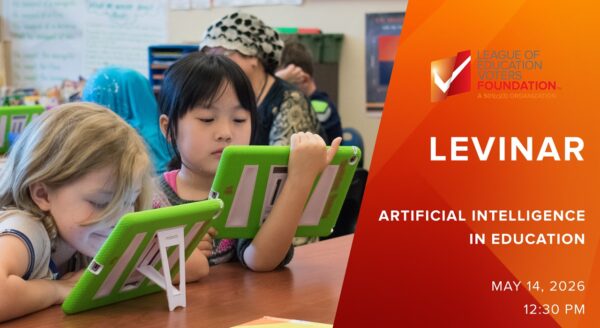
Free Webinar: AI in the classroom
Artificial Intelligence is here to stay. As this technology continues to evolve, educators must prepare students to understand and use these tools. In Washington state, educators are already integrating AI-assisted technologies in schools and empowering students to do the same. The League of Education Voters is offering a free webinar on Thursday, May 14 at 12:30 p.m. spotlighting how AI is now being used in the classrooms. The event will explore which guardrails must be in place to protect students and families and panelists will discuss skills students will need to be ready for the workforce. Spanish interpretation and captioning in English will be available. Register Now
Parents don’t control everything—and that may be a relief
A recent piece in The New York Times examines a growing body of research suggesting that parents may have less long-term influence over their children’s outcomes than many believe. Drawing on behavioral science and longitudinal studies, the article explains that while parenting shapes early development and provides essential emotional grounding, factors like genetics, peer relationships, and broader social environments play a substantial role in who a child ultimately becomes.
The takeaway is not that parenting doesn’t matter—it does—but that its role in determining future success or happiness is often overstated. For many parents, especially those with high expectations, the article offers a reframing: consistency, safety, and connection may matter more than perfectly calibrated decisions or constant intervention. Read the full article in The New York Times.
Letting kids struggle may be one of the most important parenting tools
There are unintended consequences of overprotective parenting. Drawing on developmental research, a recent article in The Atlantic argues that when adults step in too quickly to solve problems or remove discomfort, children can miss critical opportunities to build resilience, independence, and confidence. Small, manageable challenges—whether social conflicts, academic setbacks, or everyday frustrations—are described as essential to growth.
The piece does not suggest abandoning support, but rather recalibrating it. Parents are encouraged to remain present and responsive while allowing children space to navigate difficulties on their own. Over time, this balance helps kids develop problem-solving skills and a stronger sense of agency. This one’s worth checking out in The Atlantic.