Being a parent is nonstop hard work, making it challenging to stay on top of news that impacts families in Washington state. This Hits Home is your weekly hit of news, commentary, and, occasionally, opinion. Want to have a say? Look for the ‘Take action’ prompts. Here’s the update for the week of March 16-22.
The Must Read: Arrest in teen deaths does not fix the problem
Seattle police arrested a juvenile suspect in connection with the January shooting deaths of Rainier Beach High School students Tyjon Malik Stewart (18) and Tra’Veiah Houfmuse (17). The teens were killed at a bus stop just after school on Jan. 30 — an act that stunned the Rainier Beach community, sparked an outpouring of grief, and became the topic of new Seattle Schools Superintendent Ben Shuldiner’s first email to parents.
Police made the arrest on March 17 outside Seattle but have released few details. The suspect was not a student at the school.
At a press conference, city leaders and police acknowledged what families already know: an arrest does not heal what’s been lost. Mayor Katie Wilson pointed to what many in Rainier Beach have been saying for weeks — that prevention has to come first, and that means sustained investment in housing, jobs, and support systems for young people before violence occurs. In the weeks since the shooting, parents, educators, and community members have been organizing around student safety, underscoring a reality Seattle continues to confront: gun violence may be regional, but its impact is deeply local, and solutions will need to be led from within the community itself.
In the meantime, in a deeply personal essay reflection on the killings, South Seattle Emerald founder Marcus Harrison Green addresses the systemic truth beneath such killings head-on. Green writes of the arrest news, “I did not feel the clean, cinematic closure public officials often peddle at press conferences. Because if the person accused of taking two young lives is himself still a child, then what we are witnessing is not simply a crime — it is a community catastrophe.” Green’s call to action, posted on the Emerald website, is as clear as it is spot on:
“Show up,” he writes. “Not once. Not occasionally, when convenient. But with consistency. Mentor. Tutor. Coach. Volunteer at the organizations already doing this work — those that are underfunded, understaffed, yet still showing up year after year. Know the names of the young people on your block. Ask what they are creating, hoping for, and fearing.” Read Green’s column in the Voices section of South Seattle Emerald.
TAKE ACTION: Get involved. Consider offering your time, talents or financial support to organizations like Seattle CARES Mentoring Movement, which recruits Black mentors for youth in Seattle and King County; The 4C Coalition, providing one-on-one and group mentoring, tutoring, and youth development programs; Life Enrichment Group (LEG), where empowerment programs like “Young Queens” and “Know to Grow” focus on academic achievement and college readiness; and My Brother’s Keeper, a program focused on supporting African American male students in middle school.
Louisa Boren K-8 STEM students selected for art exhibition

Louisa Boren K–8 STEM student Shamsah Rahim’s artwork in exhibit at Seattle Asian Art Museum. (Image: SAAM)
Yet another reason to go to the Seattle Asian Art Museum: the artwork of students in the Distinct program at Louisa Boren K–8 STEM is now on display at the museum in Capitol Hill’s Volunteer Park. The exhibition is the result of a year-long, project-based learning effort centered on creative expression and sensory art. The student artists, who all receive special education services, developed mixed-media pieces that reflect their individual communication styles and strengths, using multi-step processes tailored to each
On the walls through May 3, the installation highlights what inclusive classrooms can produce when given time, support, and access to real-world platforms. Moreover, it’s a celebration of a program that connects special education, the arts, and community partnership in a tangible way.

(Image: Carl Lokko / iStock.com)
State can now distribute stored Mifepristone at cost
Earlier this year, Washington quietly returned about 30,000 doses of its abortion medication stockpile before they expired — a stark reminder that access isn’t just about having supply, but getting it where it’s needed.
A new law aims to fix that gap. Under Senate Bill 5917, signed March 14, the state no longer has to sell mifepristone at cost — or tack on a $5 fee per dose — removing a barrier that had slowed distribution to providers.
The law also directs better coordination between state agencies, including the Department of Corrections and Department of Health, to ensure the medication actually reaches patients.
Supporters say the change is about keeping care accessible in a shifting national landscape, while critics argue it pushes the state further into the role of distributor. But the practical shift is clear: Washington is moving from stockpiling medication to making sure it gets used. The law took effect the day it was signed by the governor.
Need the medication? The at-cost (about $5) pill should now be available at state stockpile-affiliated providers, including Planned Parenthood Great Northwest.
Read more from Washington State Standard.

(Image: Jeremy Dwyer-Lindgren/Woodland Park Zoo)
One for the Kids: What’s in a name?
The two South African lion cubs born January 14 at Woodland Park Zoo have finally received their names: Kamari (kuh‑MAH‑ree) and Zawadi (zah-WAH-dee).
The zoo’s lion care team chose the names for the community poll, from which Kamari was selected. According to zoo officials, 460 people donated to participate in the poll.
A parent and, now, a grandparent got to choose Zawadi’s name. It means “gift” in Swahili, symbolizing the joy and positivity that children bring to their families and community.
Cascade Parent Partnership K-8 families protest proposed cuts
Parents and educators packed the Seattle Public Schools boardroom at the John Stanford Center on March 11, protesting proposed budget cuts they say will disproportionately impact some of the district’s most vulnerable students.
The proposed cuts parents protested stem from a March 4 Seattle Public Schools budget presentation by SPS Superintendent Ben Shuldiner, which outlined tens of millions of dollars in “savings and efficiencies.” The plan, aimed at eliminating the district’s $100 million budget deficit, includes staffing reductions, central office cuts to address what Shuldiner labeled “bloat,” transportation adjustments, and other savings.
Much of the parents’ concern centered on alternative programs like Cascade Parent Partnership K–8 and Interagency Academy, where families and staff say reductions could undermine individualized learning models designed for students who struggle in traditional settings. Parents described the cuts as inequitable, particularly for Title I communities, and warned they could further strain already large class sizes.
In an article posted last week by The Seattle Times, Shuldiner said his plan may result in fewer SPS departments and eliminate some roles. Read the full story.
TAKE ACTION: See something of concern in the SPS budget plans? Superintendent Shuldiner invites you to contact him directly with your opinion at [email protected].

(Image: Courtesy Kat Martin/Orca Network)
The Great Listen (and Look): Three mysterious orcas swim into local waters
Here’s one to share with your kids. KUOW’s coverage this week of three mysterious orcas moving through Northwest waters — from Vancouver to Olympia — is loaded with fun facts and intrigue.
The whales’ visit left even seasoned whale watchers doing a double take. That’s because most orcas spotted in the Salish Sea are well known and have been tracked for decades. Not these three. They showed up in Vancouver’s busy harbor in early March, traveled south past Seattle and Tacoma, and scientists didn’t recognize them.
Researchers confirmed they’re Bigg’s (transient) killer whales, the mammal-hunting type more commonly seen in the region. For a place where nearly every orca has been photographed, logged, and followed across generations, that’s rare.
It’s a reminder that even here—where we know these waters and their whales so well—there are still gaps, still movement we don’t fully understand, and still moments that feel, at least briefly, like discovery. Listen to the report on KUOW.
Click here to watch the visiting whales
Applications for summer high school internships are due now!
Do you have a student in grades 9 through 12 interested in exploring a career in tech, education, or biology? Seattle Public Schools Career Quest Internship program is accepting applications, and due dates are looming. The program allows students to earn high school credit while exploring potential future paths. Some are paid, some are credit only, but all require applications. Learn about and apply for internships on the district’s internship webpage, where you’ll find job descriptions, application deadlines, and more. Questions? Contact [email protected].

Black Panther Park design by Stone Soup Gardens.
New in Skyway: Black Panther Park
Nearly 100 people gathered on March 15 at Black Panther Park in Skyway for the unveiling of nine murals created by local artists. The event marked a major milestone in the community-driven project that has been nearly a decade in the making. The park, which honors the legacy of the Black Panther Party, has been developed through the efforts of multiple community organizations, including Nurturing Roots, Stone Soup Gardens, and Sawhorse Revolution, along with hundreds of volunteers. Additional features are still in the works, including new plantings and a panther installation.
Speakers at the event highlighted the historical impact of the Black Panther Party and its continued influence on community-based programs such as food access and public health initiatives. The murals reflect a range of interpretations of that legacy, emphasizing themes of community, activism, and youth. Read the story at South Seattle Emerald.
Lawmakers in the Other Washington move forward with legislation to protect kids online
Last week, House Republicans advanced a package of online child safety bills led by the proposed Kids Internet and Digital Safety (KIDS) Act, aiming to require platforms to protect minors from harms like exploitation and violence, conduct third-party safety audits, and create reporting systems for users.
The package also includes age verification requirements through app stores and mandates that AI chatbots clearly disclose they are not human. Supporters called it the most comprehensive federal effort yet. Democrats, however, opposed it, arguing key protections were weakened—especially the removal of a “duty of care” standard that would have legally required companies to act in children’s best interests. They warned that federal preemption could override stronger state laws.
The approach in Washington D.C. contrasts with efforts to protect kids online in Washington state, where House Bill 1834 stalled out this year. The state proposal took a more direct aim at social media platforms themselves. That bill, which would have required companies to limit addictive features, restrict notifications, and strengthen privacy protections for minors, did not pass. Instead, Washington lawmakers moved forward with narrower measures like House Bill 2225, focused on AI chatbot safety.
Advocates for approval of HB 1834 in Washington say they will bring back a stronger platform-focused protections bill in 2027, a targeted incremental safeguards approach rather than the sweeping regulation approach proffered in Congress.
TAKE ACTION: Do you have an opinion about how the federal government should regulate online platforms to protect kids? Contact your congressional representatives and speak out.
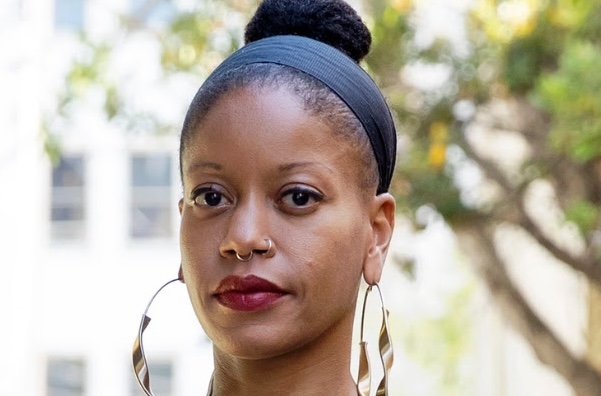
Author Khiara M. Bridges (Image courtesy Town Hall Seattle)
A conversation worth listening to: Khiara M. Bridges at Town Hall Seattle
A leading voice on reproductive justice will bring a critical conversation about race and maternal health to Town Hall Seattle on May 4.
Khiara M. Bridges, a professor of law at UC Berkeley, is known for translating complex issues of race, class, and healthcare into clear, urgent insights. In her new book, Expecting Inequity: How the Maternal Health Crisis Affects Even the Wealthiest Black Americans, Bridges examines a stark reality: higher risks in pregnancy and childbirth persist for Black patients regardless of income or access to care.
Bridges work draws a direct line between today’s disparities and the long history of racial inequities embedded in the U.S. healthcare system. Through in-depth case studies and firsthand accounts, she explores how even highly resourced Black families navigate bias, risk, and decision-making during pregnancy. The resulting book is a deeply reported look at how systemic inequities follow patients across class lines, challenging assumptions that wealth alone can protect against poor outcomes.
The speaker event offers families and community members a chance to engage with research that is reshaping how we understand maternal health—and why addressing these disparities matters for every community. Details: May 4, 7:30 p.m., $10 – $35 sliding scale, youth under age 22 are free. Get tickets.
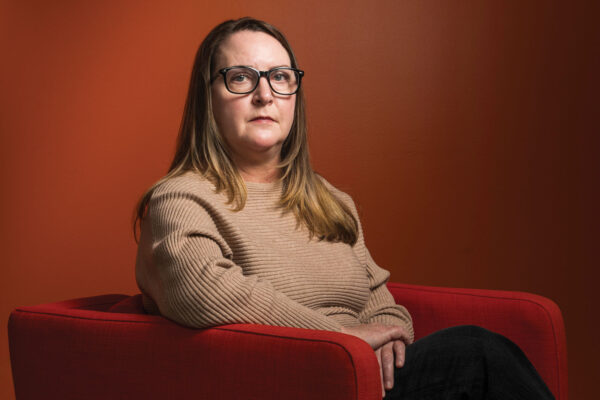
Renée Hopkins is the CEO of Alliance for Gun Responsibility. (Image: Joshua Huston)
Arnie should not have died | Op-Ed
By Renée Hopkins, CEO of Alliance for Gun Responsibility.
Thirty years ago, my world stopped. I was just out of college when my brother, Arnie, was killed by a student who brought a firearm to Frontier Junior High School in Moses Lake. In minutes, he was gone, along with a teacher, Leona Caires, and another student, Manuel Vela Jr. Another student, Natalie Hintz, was critically injured, and more than a dozen students were held hostage. Arnie was 14 years old.f
Every year, February comes with its own weight for my family. Other people may move through the month without thinking twice. We, unfortunately, can’t. We live in the permanent deficit of the years Arnie never got to have. As his anniversary passed again this year, I found myself struck by the sheer volume of life that was stolen from him, and how avoidable that theft was.
Unfortunately, my family’s tragedy isn’t unique.
I am fighting for the “what if.”
What if Washington had the kind of safe storage requirements we have been pushing for since 1996? What if that gun had been inaccessible to a child? Arnie would have come home.
This year, we worked to move safe storage forward in Olympia. It did not receive the urgency it deserved, and the bill stalled. That is hard to accept. My work is fueled by the silence Arnie left behind. It is a drive to make sure no other sister has to measure her life in decades of considering what might have been. We have the tools. We have the evidence. What we need is consistent leadership that treats child safety as urgent, not optional.
The bill may not have moved forward this year. But the need did not disappear. And neither did the families who are still waiting for change. Read the full Op-Ed by Renée Hopkins, CEO of Alliance for Gun Responsibility.
TAKE ACTION: Do you think state lawmakers should bring safe storage legislation into the 2027 legislative session? Contact your state representatives now and tell them where you stand.

Washington Capitol building (Image: Apaschen / CC BY-SA 3.0.
Legislative Wrap-up: More wins and losses for kids and families
The 2026 legislative session ended on March 12. It ended with a familiar mix: meaningful progress in a few areas—and real pullback in others that matter just as much to families raising kids in Washington.
For a clear, easy-to-read synopsis of 2025-2027 funding wins and losses for kids in Washington State, go to the League of Education Voters 2026 Supplemental Budget Summary.
The wins
Lawmakers approved a new progressive revenue measure—often referred to as the “millionaires’ tax”—aimed at collecting billions annually from the state’s highest earners. While implementation details will matter, lawmakers tied the policy to investments families have long pushed for: early learning, tax relief on essentials like diapers and over-the-counter medications, expansion of the Working Families Tax Credit, and movement toward universal free school meals.
The move was “a truly historic step for our state,” according to Dr. Soleil Boyd, executive director of the statewide advocacy leader Children’s Alliance. “It will generate over $3 billion every year to support programs and services that benefit us all. This marks a major step toward a more equitable, balanced tax system that truly reflects our shared values and strengthens families across Washington.”
On youth mental health, legislators made “Washington Thriving” the state’s formal strategy for coordinating youth behavioral health care. It’s a structural change—less visible than a new program, but important if it leads to faster, more equitable access to care.
In early learning, lawmakers also made practical policy fixes—easing licensing requirements for preschool programs in public schools and colleges and adjusting staffing rules to make it easier for providers to operate day to day.
The losses
But the budget tells the harder story. To close an estimated $12 to $16 million deficit, lawmakers reduced funding in several places that families will feel immediately:
- The Working Connections Child Care program took a roughly $143 million hit, largely due to changes in how providers are reimbursed—reducing predictable revenue for providers and, in turn, stability for families relying on care. “While the legislature preserved funding that helps working families afford child care, they did this by delaying promised increases that would cover the costs for child care providers,” Boyd stressed. “These cuts make it even clearer how important it is for us to keep pushing for stable, long-term funding so children, families, and providers have the support they need.”
- The Transition to Kindergarten program was cut by about $27 million, reducing access by roughly one-quarter (about 1,800 seats) and narrowing who can enroll. For many 4-year-olds, that removes a critical pre-K bridge year.
- Lawmakers also stepped back from a planned increase in local effort assistance (LEA)—funding meant to help property-poor school districts—saving the state money while potentially widening inequities between districts.
Another loss: A bill aimed at ensuring that addictive online platforms protect young users from harmful content and encourage kids to develop healthier relationships with their products did not make it through the session.
Beyond those direct cuts, other decisions carry quieter consequences: partial funding of key services, federal dollars not fully replaced, and reliance on one-time solutions like tapping reserves or shifting funds between programs.
Bottom Line
There’s no simple takeaway from this session. Lawmakers made progress—especially in how the state raises revenue and how it organizes youth mental health care. Those are not small things. But they did it while scaling back parts of the early learning and child care system that families depend on every day.