Being a parent is nonstop hard work, making it challenging to stay on top of news that impacts families in Washington state. This Hits Home is your weekly hit of news, commentary, and, occasionally, opinion. Want to have a say? Look for the “Take action” prompts. Here’s the update for the week of May 18-24.
This week, we’re start with an opinion, because when I read it last week, I found myself asking: Why do we doom and gloom all things education in Seattle? Below is a solid case for celebrating the good work our teachers and schools accomplish.

Denny International Middle School (Image: Architectsea / CC BY-SA 3.0)
Seattle School District ranks highest among large districts. Why don’t we act like it? | Op-Ed
Apparently a lot of us are missing a significant fact: Seattle Public Schools is outperforming nearly every major urban district in the country, according to a new gold-standard Stanford University analysis. The report, which examined math and reading performance across roughly 10,000 school districts nationwide, ranked Seattle in the top 12% nationally and No. 1 among districts in the nation’s 25 largest cities. As SPS Superintendent Ben Shuldiner said earlier this year, “I don’t think you get enough credit for being, really, such a high-performing district.”
In a stat-packed column last week, Seattle Times columnist Danny Westneat does give credit where credit is due, and asks a really important question: Why don’t the rest of us?
“It’s a Seattle tic, perhaps an old modesty holdover from our Norwegian days,” Westneat writes. “We’re the Eeyore of cities. We have the No. 1 big-city school district in the nation, and not only does nobody ever talk about that, but much of the public conversation is about how much we suck.”
Westneat does not glaze over the fact that the district’s strong academic standing exists alongside deep inequities. The Stanford data found major achievement gaps between low-income and higher-income students, as well as between Black and white students in Seattle schools. And chronic absenteeism? Whew! Seattle — and Washington as a whole — has a problem that needs urgent attention.
But Westneat’s central message is one we need to hear and heed. Seattle’s public narrative about its schools too often overlooks the district’s broader academic success while focusing heavily on dysfunction and controversy. It shouldn’t take someone from the outside, Shuldiner, “to tell us what we’ve got,” Westneat writes.
“Now that he has, we should drop the Eeyore shtick and fight for it.” This is an opinion well worth reading in full.
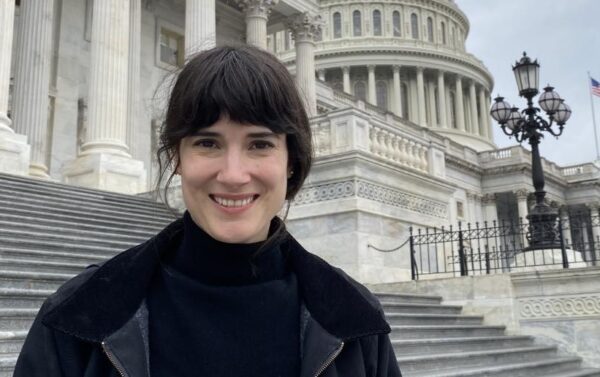
U.S. Rep. Marie Gluesenkamp Perez (Image: U.S. House of Representatives)
WA Democrat votes yes on sweeping U.S. House “gender ideology” bill aimed at trans kids
Southwest Washington Rep. Marie Gluesenkamp Perez, a Democrat, broke with most Democrats Wednesday to support legislation requiring elementary and middle schools to get parental permission before changing a student’s pronouns, name or gender markers on official records. The bill passed 217-198, with Gluesenkamp Perez joining seven other Democrats in backing the Republican-led measure to bar federal funding to districts who support student pronoun and name wishes without parents’ OK.
The legislation would also prohibit federal dollars from being used to teach what the bill defines as “gender ideology” — a term supporters say protects parental rights but critics argue targets transgender students. Schools would need parental consent before allowing students to use bathrooms or locker rooms that align with their gender identity rather than biological sex.
The bill now heads to the Senate, where it faces an uncertain future. LGBTQ+ advocacy groups have condemned the measure as harmful to transgender youth, while supporters argue parents deserve to know about significant changes affecting their children at school. If it becomes law, Washington schools could face new federal requirements that may conflict with state policies protecting student privacy. Read the full story from States Newsroom.
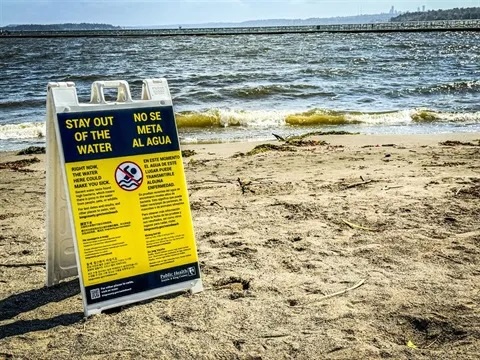
(Image: Courtesy Public Health — Seattle & King County)
It’s swimming season; Watch for beaches closures!
When the sun comes out in Seattle, lakes and family favorite beaches across the region become hubs for swimming and cooling off. Before you pack up for a day at the lake, be sure to check King County beach water quality.
Currently, two popular swimming beaches are closed due to high levels of bacteria:
- Green Lake’s West Beach
- Newcastle Beach
King County’s Lake Swimming Beach webpage has an interactive map that displays water testing results for dozens of public swimming beaches across the region. Green circles on the map mean the water is considered safe. Red markers indicate beaches that are currently closed due to issues like high bacteria or toxic algae. Read the full story.
For more on how, when and why the county health department tests water, check out this piece by Public Health Insider.
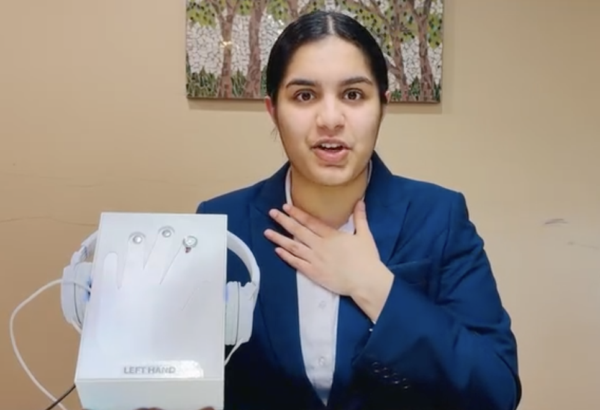
Bellevue student Anusha Arora presenting her project (Image: Courtesy Regeneron International Science and Engineering Fair)
Two Bellevue students win top honors in international pre-college science and engineering competition

$75,000 award winner Lakshmi Agrawal. (Image: Courtesy Regeneron International Science and Engineering Fair)
Interlake High School students Lakshmi Agrawal and Anusha Arora took home major awards at the Regeneron International Science and Engineering Fair, earning a combined $125,000 for projects tackling environmental pollution and mental health access.
Agrawal received the $75,000 Regeneron Young Scientist Award for creating biodegradable sponges from recycled jute that filter out tire chemicals killing Pacific salmon. Her invention removes 6PPD-Q — a toxic compound deadly to coho salmon even in trace amounts — using sustainable materials that cost less to produce than current filtration methods. Check out Agrawal’s video about her winning entry.
Arora won $50,000 for developing an AI music therapy system that reads users’ facial expressions and vital signs to deliver personalized mental health support, showing measurable stress reduction in clinical testing. Check out Arora’s video about her winning entry.
The competition, described at the world’s largest pre-college science and engineering competition drew over 1,700 high school researchers from more than 65 countries competing for $7 million in prizes. Competition officials noted that both Bellevue teens addressed urgent local issues: Washington’s struggling salmon populations and the nationwide youth mental health crisis.

(Image courtesy World Organization for Animal Health)
Study finds a “shocking” number of rodents Sin Nombre hantavirus in PNW
Nearly one in three rodents in Washington and Idaho show evidence of past hantavirus infection, according to new research from Washington State University published in the CDC journal “Emerging Infectious Diseases.” The study found that roughly 10% of tested animals currently carried the Sin Nombre variant at the time of sampling — a significantly higher prevalence than researchers anticipated — and many more showed signs of having had the virus at some time. Lead author Stephanie Seifert said existing data for the Pacific Northwest was surprisingly sparse, and scientists are only beginning to understand how widespread the virus is among regional rodent populations.
The findings come as a Chelan County resident was recently diagnosed with Sin Nombre hantavirus, which humans contract through exposure to infected rodent droppings and urine. Washington typically sees one to five cases annually of this variant, which differs from the human-transmissible Andes strain that killed three people on a cruise ship in April. Sin Nombre has a mortality rate approaching 50% with no specific treatment available, though the CDC notes symptoms initially resemble flu before progressing to respiratory distress in severe cases. Health officials recommend rodent-proofing homes and workplaces to reduce infection risk. Read the full story in Scientific American.
Learn more about the risk and symptoms of hantavirus in King County from Public Health Insider, the official blog of Public Health — Seattle & King County.

(iStock.com)
Washington State leads lawsuit against Department of Education for student loan restrictions
If you have kids, you likely know the wait for medical appointments can be long.
U.S. Department of Education loan restrictions implemented last July means those waits could get longer, which is why a coalition of states led by Washington has filed suit against the U.S. Department of Education. The suit alleges the federal agency unlawfully restricted federal student loan access for professional degree programs critical to healthcare and other essential fields.
The lawsuit — the 60th filed against the Trump administration by Washington — challenges new federal rules that narrow the definition of “professional degree” beyond what Congress authorized, particularly impacting programs for nurse practitioners, physician assistants, and various therapists. Coalition leaders worry these changes will disproportionately impact first-generation college students, those lacking co-signers, and students supporting families—groups already facing significant educational barriers. Washington Attorney General Nick Brown warned the restrictions will worsen healthcare worker shortages when the state desperately needs more medical professionals.
In Washington alone, hundreds of students at major universities face potential impacts, with particular concerns for first-generation college students and those supporting families. This marks the coalition’s second major student loan-related lawsuit against the Department, following November challenges to Public Service Loan Forgiveness program restrictions. Read the full story.
One down, one to go! Baby gorilla arrives at WPZ

Jamani carries her baby (Image: Jeremy Dwyer-Lindgren/Woodland Park Zoo)
Woodland Park Zoo announced the arrival of a western lowland gorilla born early May 17 to mother Jamani and first-time father Nadaya. The infant, whose sex hasn’t been determined, arrived after an eight-and-a-half-month gestation and marks the second baby for Jamani, who previously gave birth in 2012 at North Carolina Zoo. Another expectant mother, Olympia, is due to deliver any day in what zoo staff have called an unusually exciting double pregnancy.
Jamani and her newborn are being monitored around the clock in private sleeping dens while staff watch for critical signs of healthy bonding, including proper nursing, strong grasping, and maternal vocalizations. Curator Martin Ramirez said the first 72 hours are most crucial for gorilla infants. The pair may venture into outdoor habitats within days if temperatures stay above 65 degrees, though public viewing could be limited initially.
Jamani and Olympia both arrived at the Seattle zoo in 2022 and previously raised sons born weeks apart at their former North Carolina home.

Coaches and clergy are mandatory reporters when it comes to suspected child abuse in Washington. (Image: Larado / iStock)
States debate who should report child abuse and neglect, following Washington’s lead
Missouri state Sen. Tracy McCreery sponsored a bill that would require clergy and religious workers to report suspected child abuse or neglect. Her bill would have forced ministers to report even if they learned of abuse during confession or another religious rite.
McCreery’s bill, much like the Washington law enacted last year that requires clergy to report suspected child abuse and neglect even when they receive the information through confidential communication during a religious rite like confession, failed to make it out of the Missouri legislature this year. But other state lawmakers across the country are following Washington’s lead, grappling with the question of who should be required to report suspected child abuse or neglect, known as “mandated reporters.” Not only are they considering whether ministers and other clergy should join that list, but sports coaches, talent agents, camp leaders and other professions with access to children.
After Washington was sued by state Catholic bishops (confession is considered a sacred rite in the Catholic faith and clergy are forbidden by church law from revealing anything said), a federal judge blocked enforcement of that portion of the law, and the state eventually agreed to drop the obligation. Clergy remain mandated reporters here, but state prosecutors do not enforce reporting requirements related to confession. Read more about how other states are following Washington’s example.

(Image: Courtesy Administration for Children and Families)
Head Start Programs report attendance drops amid ICE enforcement fears
Immigration enforcement actions are disrupting early learning programs across Washington and six other states, according to a new survey of 277 Head Start providers.
Nearly half of respondents reported noticeable behavioral changes in preschool-aged children, including increased anxiety, withdrawal, and fears of being separated from parents. Seventy-eight percent said attendance has suffered due to ICE activity, while a third of parents reported feeling afraid to travel to their child’s program or appear in public spaces.
The survey, released by the Washington State Association of Head Start and ECEAP, found that 52% of programs experienced ICE activity near their sites within the past year. Some enforcement actions occurred during drop-off and pickup times or at Head Start locations themselves. Teachers reported children expressing fear about leaving home, refusing to go outside, and in some cases, white children telling Latino classmates “the police were coming to shoot them” or threatening to have them “sent away.”
“The Trump Administration’s aggressive ICE actions are creating fear, trauma, and instability for some of our nation’s most vulnerable young children,” said Joel Ryan, executive director of the state Head Start association in a press release last week. Family engagement has also declined sharply, with parents skipping events, avoiding conversations with staff, and asking whether teachers would care for their children if a parent were detained.
The findings come as Congress considers additional ICE funding. Head Start advocates are urging lawmakers to address documented harm to young children and reinstate early learning settings as protected locations where immigration enforcement is prohibited.
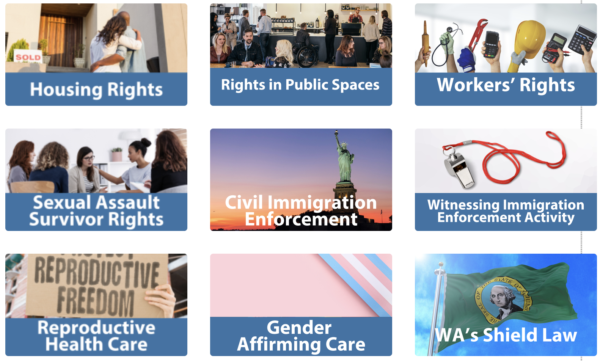
Check out Washington’s new “Know Your Rights Hub”
Washington’s Attorney General launched a new online resource Wednesday consolidating legal guidance for residents concerned about their civil liberties amid federal policy shifts.
The webpage compiles existing information about state-level protections — which Attorney General Nick Brown emphasized remain unchanged despite actions by the Trump administration targeting immigrants, transgender youth, and workplace safeguards. Brown’s office said the centralized hub responds to growing public confusion about whether federal rollbacks affect Washington’s own laws around reproductive healthcare, labor standards, and anti-discrimination measures, all of which continue under state statute.
“Washington law has some of the strongest protections in the country when it comes to civil rights, workers’ rights, reproductive rights, and other fundamental rights,” Brown said in an announcement. “As the federal government tries to trample our rights, people should know that our state protections haven’t changed.”
The Know Your Rights Hub currently includes:
- Know Your Rights in the Workplace – Learn about your rights as a worker, including your right to your wages, your right to a workplace free of discrimination, and your collective bargaining rights.
- Know Your Housing Civil Rights – Learn about your right to be free from housing discrimination.
- Know Your Tenant Rights and Landlord Responsibilities – Learn about Washington’s rent stabilization law and other rights and responsibilities for landlords and tenants.
- Know Your Rights in Public Spaces and Places of Business – Learn about your right to use businesses, public places, and government services free from discrimination.
- Know Your Rights: Civil Immigration Enforcement in Washington – Learn about limitations on federal immigration enforcement power, limits on state and local agencies from participating in immigration enforcement, and the rights of individuals interacting with federal immigration officers.
- Know Your Rights: Witnessing Immigration Enforcement Activity – Learn about your rights if you are witnessing immigration enforcement activity.
- Know Your Rights: Gender-Affirming Care – Learn about protections for gender-affirming care in Washington.
- Know Your Reproductive Rights – Learn about your right to reproductive health care.
- Know Your Rights Under Washington’s Shield Law – Providers can learn about how they are protected when providing reproductive and gender-affirming care.
- Know Your Sexual Assault Survivor Rights and Resources – Learn about the rights of sexual assault victims and survivors in Washington.
Each “Know Your Rights” page also includes information on how Washingtonians can take action if their rights are violated. The AG’s office plans to expand the “Know Your Rights” hub with additional information in the coming months. Visit the Know Your Rights hub.
WA doesn’t do enough to help undocumented kids in foster care, lawsuit says
Two teenage girls from Guatemala in Washington’s foster care system have filed a class-action lawsuit in King County Superior Court, claiming the state fails to help undocumented youth secure legal immigration status. Both girls arrived in the U.S. alone as minors and say the Department of Children, Youth and Families (DCYF) hasn’t adequately screened them for eligibility under Special Immigrant Juvenile classification — a pathway to permanent residency for abused, abandoned, or neglected children.
The suit estimates over 100 foster youth statewide could qualify for similar assistance.
Legal Counsel for Youth and Families, a plaintiff in the case, argues Washington state lags behind states like Tennessee in proactively identifying immigrant minors who need legal help. The organization says timing is critical: youth must apply before turning 21 or risk deportation once they age out of the system. DCYF counters that it doesn’t deny foreign-born children the chance to pursue legal status and screens young adults ages 18-21 who enter extended foster care, though advocates say that’s too late for many.
The lawsuit comes as the Trump administration intensifies deportation efforts. DCYF maintains the claims lack merit and says the agency takes immigrant youth’s unique needs seriously, but former Secretary Tana Senn previously stated the department isn’t legally required to proactively obtain immigration status for children in care. Only one of the two plaintiffs has begun the Special Immigrant Juvenile process, which the suit alleges is moving too slowly given court backlogs that can stretch for years. Read the full story on KUOW.