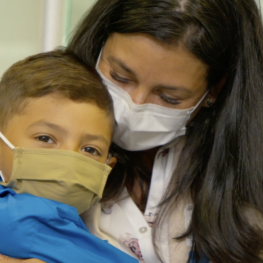
Case in point: When 12-year-old Ashtyn Messinger collapsed during soccer tryouts in Sequim, Wash., last month, the fast action of a nearby coach, bystanders performing CPR, and a portable defibrillator all played a part in saving her life. Messenger was airlifted to Seattle Children’s Hospital, where surgeons implanted a defibrillator in her heart, and she’s now recovering at home.
Only one in 8 to ten children survives sudden cardiac arrest, which is why Ashtyn’s parents are now advocating loudly for better AED access. A Washington state bill that would have required school districts to develop AED placement plans for schools and athletic facilities passed committee with bipartisan support earlier this year — then stalled without a full Senate vote.
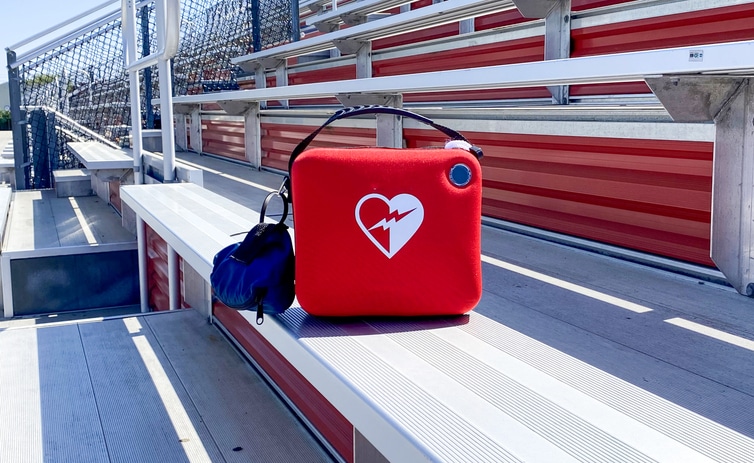
Ashtyn’s experience is a reminder that as kids move into summer sports and activities, parents have an important question to ask: Does the sport, camp, or activity have an AED accessible at all times? AED stands for Automated External Defibrillator, a portable, life-saving medical device used to treat sudden cardiac arrest by automatically analyzing heart rhythm and delivering an electrical shock if needed to restore a normal heartbeat.
A Harris Poll commissioned by the global medical device maker ZOLL Medical found that many parents are in the dark about AEDs.
“Fifty-three percent of parents don’t know whether their child’s sports facility has an AED, and only 22% know where to find the nearest AED at a youth sporting event,” a ZOLL spokesman said. “However, sudden cardiac arrest persists as the leading cause of death among young athletes.”
According to the Sudden Cardiac Arrest Foundation and the American Heart Association:
- CPR alone can double or triple survival chances by keeping blood and oxygen circulating until a defibrillator is available.
- For every minute that passes without defibrillation, survival odds drop by 7–10 percent.
- When CPR and an AED are used within 3–5 minutes of collapse, survival rates can reach 50–70 percent — compared to roughly 10 percent when neither is immediately available.
As part of its”Anything Can Happen, Anyone Can Help” campaign, ZOLL stressed 5 things every parent should ask before a child engages in a camp or a physical activity:
- Is there an AED onsite?
- Where is it located, and is it clearly marked?
- Are counselors or coaches trained in CPR and AED use?
- Has the AED been registered so that anyone can find it?
- What is the camp or league’s emergency action plan if a child collapses?
In the meantime, Ashtyn might well become the poster child for another run at Senate Bill 6118, which was introduced to the 2026 Legislature by Sen. T’wina Nobles, D-Fircrest. Read Ashtyn’s full story at the Sequim Gazette.
TAKE ACTION: Do you have an opinion about AED accessibility and training at all Washington schools and sports facilities? Make your voice heard. Contact your state lawmakers.