STEM education really comes to life when the classroom is a world-class air and space museum with more than 100 aircraft and spacecraft, all kinds of hands-on experiences, and experts in a variety of subjects.
At The Museum of Flight, elementary and middle-grade students learn about planets, design spacesuits, test parachutes, experiment with robotics, and much more.
It’s all free, and it all takes place during the school day, thanks to partnerships between The Museum of Flight and three South King County school districts.
How does The Museum of Flight bring STEM learning to life?
Activities at the Museum are designed to fit seamlessly with the Kent, Highline, and Tukwila districts’ curriculum. That’s probably not at the top of kids’ minds, though: They’ve got livelier things to do and more important things to learn. For some of them, it’s their first visit to a museum.
“They are welcome here” is a key message of the program, says Seth Margolis, The Museum of Flight’s director of education operations. “The Museum isn’t a place where you have to come in and be quiet and not touch things. They get to have an experience here that’s definitely high energy, high impact, high fun — and high learning, too.”
All of this fun and learning comes at no cost to participating districts.
The Museum and the school districts share a common goal of providing enriching experiences for learners. The Museum, though, has more specialized resources to do this, so staffers work carefully with teachers to design activities that are engaging and meaningful and help students meet educational milestones.
What STEM activities do students do at The Museum of Flight?
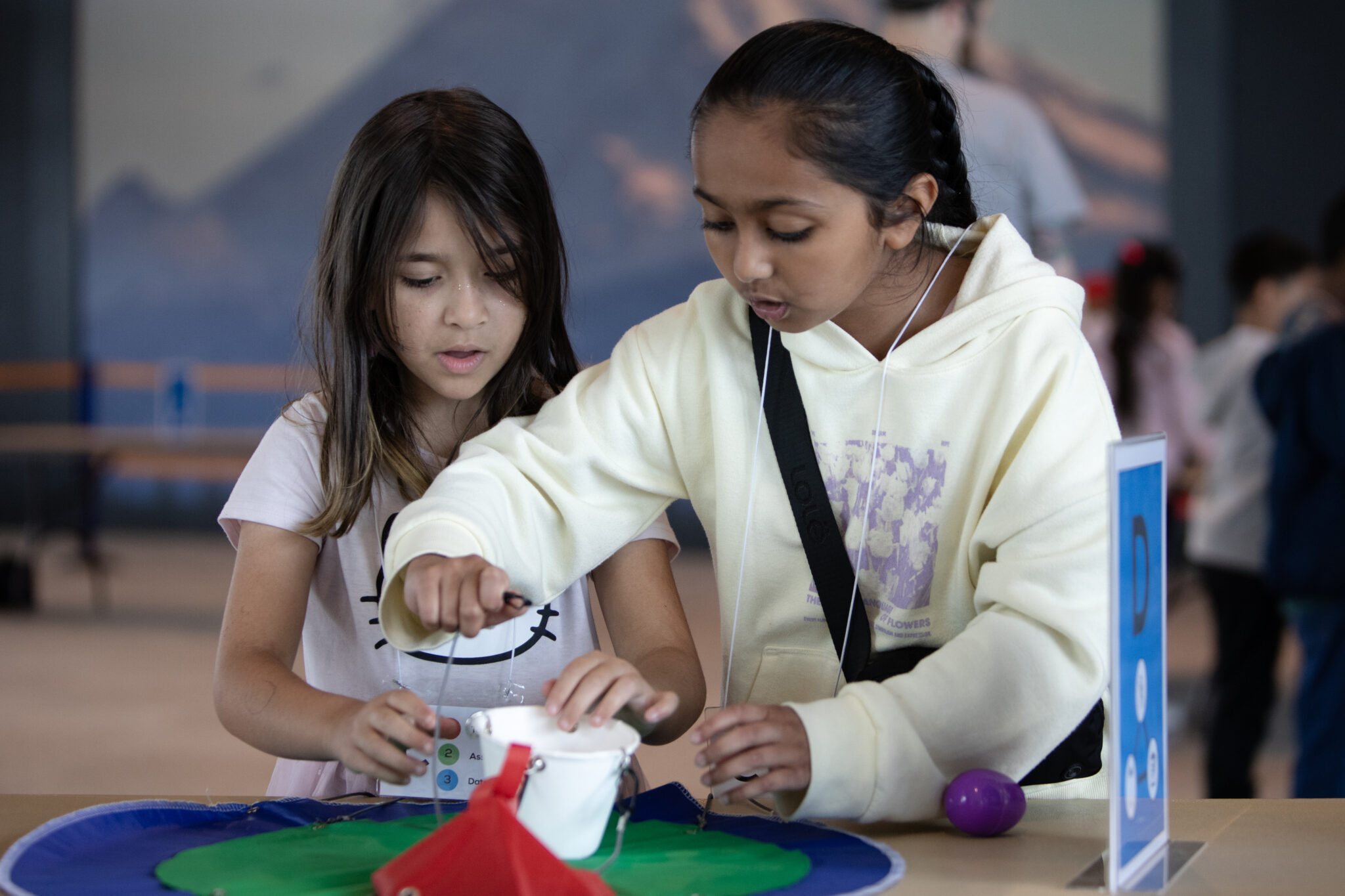
Students get hands-on with engineering, space science, robotics, and coding through activities designed for their grade level and school curriculum.
Kent third-graders, for instance, learn about forces and interactions through a manufacturing design-build-fix project in which they create what they think will be the best parachute to safely transport their cargo (an egg) to Earth, then drop it from a Museum balcony, observe, and record the results of their experiment.
“They have a builder, they have a designer, and they have a tester, and they are documenting and tracking the data of successes and failures to help improve their design,” explains Rafael Gallardo, director of education programs and initiatives.
Tukwila third-graders design a “spacesuit” for a marshmallow astronaut, with the goal of protecting it from the vacuum of space.
Highline fifth-graders step inside the Museum’s inflatable portable planetarium for a vivid lesson in the scale and distance of planetary objects. All lessons and materials for the Highline School District are also available in Spanish and Vietnamese, the languages in which the district offers dual-language programs.
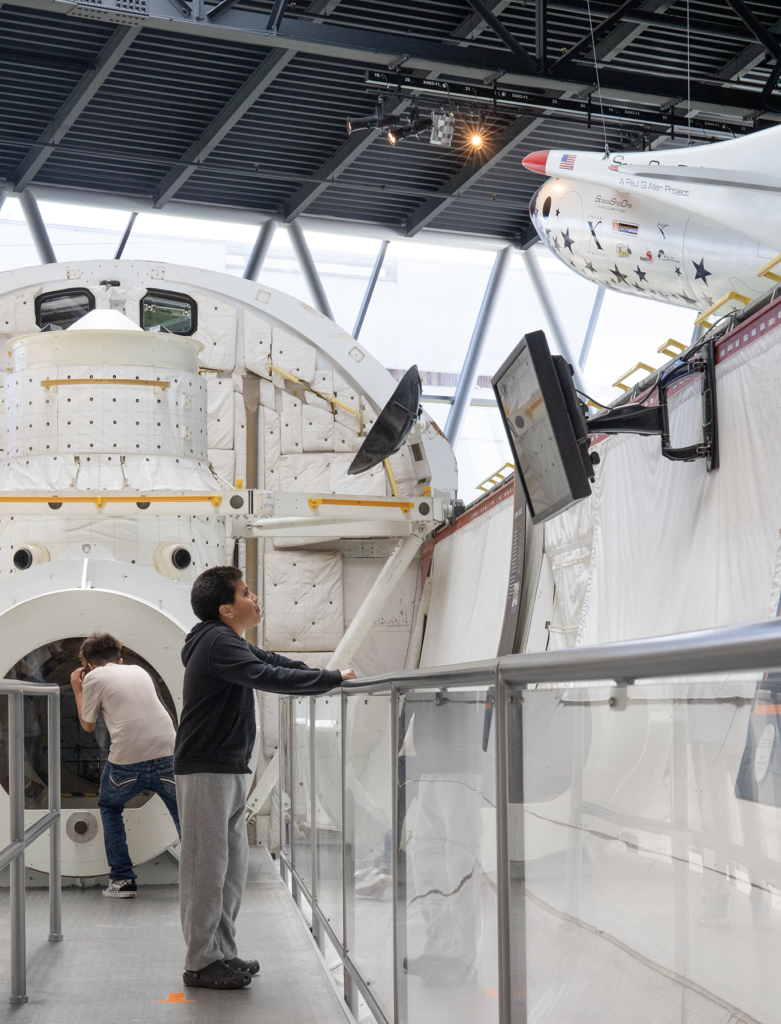
Highline School District fifth-graders are exploring the Space Shuttle Trainer during their field trip exploration at the Museum in June 2026. Photo credit: Ted Huetter/The Museum of Flight
What is a Museum of Flight school field trip like?
Classes are at the Museum for three hours or more, doing several different things. While one group is busy with a hands-on learning activity, others will be exploring the galleries, carrying exploration booklets that guide them to certain features.
“It’s great to see the school groups go around in our galleries and hear their excitement, talking among each other, running around to try to answer the questions in their booklets. It’s really fun,” says Julie Williams, director of marketing communications for the Museum.
Museum staff love welcoming kids who might not otherwise come to the Museum, and they relish the energy that young learners bring. Kids are a huge emphasis there.
“We have students that have grown up at the Museum,” Margolis says. “We have students that have gone through our programs and come back as staff.”
Gallardo adds, “For us, it’s a huge win, exposing those students and providing the opportunity to experience all of the beautiful aircraft and assets that the Museum has.”
How does The Museum of Flight work with local schools?
Museum staff work directly with teachers to create programs that fit the needs of students and complement what they are learning in school.
The programs are all carefully thought out, too. “We work in advance with the teacher to make sure that programming fits their needs and the students’ needs,” Margolis explains. “We try to accommodate the range of experiences that the teachers would like the students to have.”
Sometimes it makes more sense to take the Museum on the road, as it were, and Tukwila schools are very close by: “For eighth grade, we’re going to go to them because we’re going to be working on some computer science and LEGO robotics and coding,” Gallardo explains.
Connecting students with STEM and aerospace careers
This all fits perfectly with the Museum’s mission to serve its community by exposing people of all ages and from all backgrounds to information, experiences, and potential aerospace careers they might otherwise not have known about. “It’s an opportunity for the museum to really be part of the community as opposed to just being in the community,” Gallardo says.
The Museum is looking to expand its educational partnerships to other districts, primarily in Seattle and South King County.