When you’re a parent, your most important questions about child care are: Will my child be cared for and safe? Will they learn? And will I be able to work while they are there?
For more than 14,000 children and families in Washington state, Head Start answers those questions every day.
Now the Trump administration wants to weaken everything Head Start does for working parents. Under the guise of reform, the Department of Health and Human Services proposed sweeping new regulations that would mandate larger class sizes, shorten center hours, reduce the number of teachers, and cut support for parents.
Head Start programs may even have to close their doors.
Read more about how Washington Head Start programs have been struggling with uncertainty and to to keep doors open.
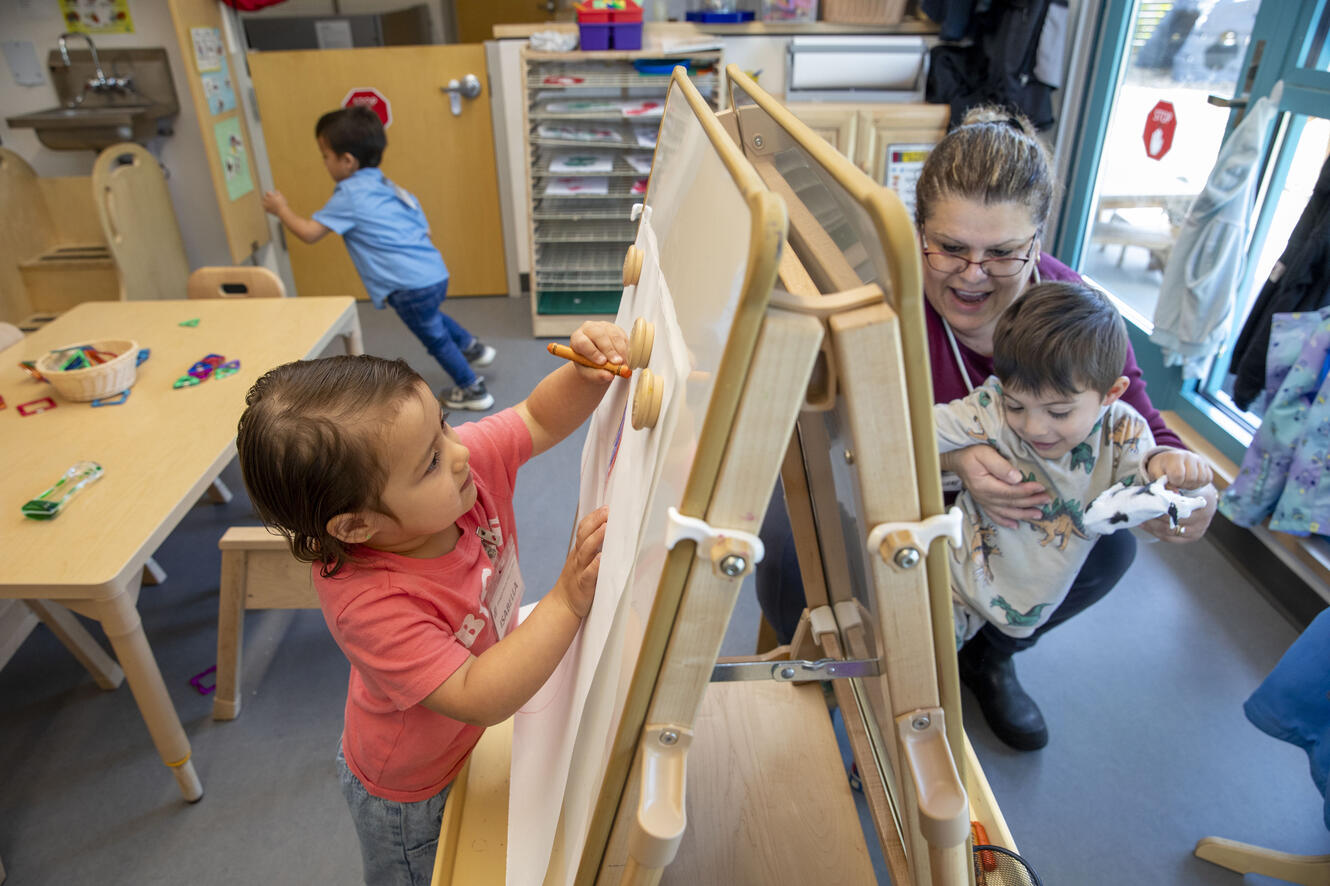
Head Start serves the whole family. A child can get breakfast, a health screening or help with speech or developmental needs. A parent can tap into help getting a job, finishing school, finding housing or getting support during a difficult pregnancy or a postpartum period.
All families deserve safe, quality child care
I have spent more than 20 years working in and around Head Start. But I’m not just an advocate talking about child care from a distance. When my daughter was young, my wife and I relied on child care while we worked and raised our family. We knew how important it was to have a place where she was safe, learning, and known by the adults around her.
That’s why parents should pay close attention to this proposed federal rule. It could fundamentally change how Head Start programs operate and might even be the first step toward its eventual elimination.
The U.S. Department of Health and Human Services claims its proposed regulations would reduce regulatory burdens and give Head Start programs more flexibility.
In reality, however, the proposal threatens Head Start’s quality by largely deferring to state requirements for staff-to-child ratios and group sizes, rather than maintaining stronger federal standards. For example, the National Association for the Education of Young Children estimates that 80 percent of children enrolled in Head Start could face larger class sizes under the proposal.
Kids need someone to notice
That matters because kids need attention. They need someone to notice when they struggle with reading or a puzzle, get frustrated with another child, or finally master a fine-motor skill.
The proposed rule would also reduce federal staff qualifications, change health and mental-health requirements, and move Head Start toward English-only classrooms, even though one-third of all non-tribal Head Start classrooms nationwide primarily serve dual-language learners. And it would eliminate maternal health supports, including services for mothers experiencing postpartum depression.
Head Start has never been simply a preschool program. Early Head Start provides services to babies, toddlers, and their families. Head Start connects families with health, dental, developmental, and mental-health services. For a baby whose developmental delay is identified early, getting connected to services can change their trajectory. For a family experiencing homelessness, a trusted Head Start program can provide stability when almost everything feels uncertain.
Proposed changes are not small—they’s have big impact
For a parent working an hourly job, shortening Head Start’s hours isn’t a small administrative change. It can mean changing a work schedule, finding another caregiver or turning down a job.
Research shows Head Start’s long-term value. The federal program returns “5.4% to 9.1% per year for at least 30 years for every child it put through Head Start due solely to savings on public assistance and a small increase in tax revenue from higher wages earned by participants,” a paper released by the National Bureau of Economic Research found. That’s because children in high-quality early learning programs, like Head Start, are more likely to graduate from college, buy a home, and generally live more stable lives.
As parents, we all need to speak up
Statistics only tell part of the story. I think about parents and children I’ve met through Head Start: a child who had a developmental screening that identified a need for extra help; a parent who could take a job because their child had a safe place to learn; a family who sat down with a teacher to figure out how to help their child succeed.
Those aren’t abstract benefits. They can change the trajectory of a childhood.
That’s why parents should speak up. The public can submit comments about the proposed regulations by Oct. 6. Submit your thoughts in the Federal Register.