Being a parent is nonstop hard work, which makes it hard to stay on top of news that impacts families in Washington state. This Hits Home is your weekly hit of news, commentary, and, occasionally, opinion from our writers here at Seattle’s Child and news sources like The Seattle Times, Washington State Standard, KUOW, Cascade PBS and others. . Want to have a say? Look for the “Take action” prompts. Here’s the update for the week of Nov. 8-15.
LGBTQ+ youth crisis hotline returns
Young people calling 988 for mental health support can once again reach counselors trained to help LGBTQ+ youth. The specialized service, shut down in July 2025 after federal funding was withdrawn, quietly resumed Sept. 30. Callers can press 3 after dialing 988, or text PRIDE to 988. The service is free and available around the clock. Washington officials say they plan to publicize its return because the federal government isn’t promoting it. Washington State Department of Health reported nearly 16,000 calls, texts and chats from Washington youth and young adults were routed to the line in 2024 alone. For direct help, see the Washington Department of Health’s 988 resources.
Seattle schools say goodbye to Minecraft, YouTube, Gemini and more screen time
Minecraft is disappearing from most Seattle Public Schools devices, YouTube is being blocked for elementary students, and the district is closing a loophole that allowed students to access Google’s Gemini chatbot through search results. The caveat: While Minecraft will be blocked for students in all grades, teachers may use it for lessons and although YouTube will be blocked for elementary students, teachers may still use it for instructional purposes.
And there’s more SPS education technology changes coming in January: Students in grades K–5 will share classroom devices rather than receive individual laptops or tablets. District leaders are also recommending daily screen-time limits of 30 minutes for K–2 and 60 minutes for grades 3–5. Those limits are guidance, not an outright ban.
On numerous occasions, Superintendent Ben Shuldiner has said he’s seen too many students using devices when they weren’t needed for learning. Parents pushing for stricter technology rules welcome the changes but say the district still allows too much generative AI in classrooms. Approved AI tools remain available. Read more.
Why is it important to close the Gemini loophole?
Consider the case of California family currently suing Google and alleging that its Gemini AI chatbot contributed to their 13-year-old daughter’s mental health crisis after she accessed it through a school-issued Chromebook. According to the complaint, conversations with the chatbot led the girl to believe she had multiple psychological disorders. University of Washington researcher Katie Davis told Education Week that the lawsuit offers schools an opportunity to reconsider whether their technology actually serves students’ learning needs.
Seattle School Board clears the way for a challenge to I-638
The legal fight over transgender students in school sports is gathering speed. On Nov. 9, the Seattle School Board authorized district leaders to pursue legal action over Initiative 638, which Washington voters approved earlier this month.
The measure restricts transgender girls from competing on girls’ school sports teams and establishes sex-verification requirements for girls seeking to participate. Supporters say the law protects fairness in girls’ athletics. Opponents argue that its requirements discriminate against transgender students and threaten the privacy of all girls participating in school sports.
A separate lawsuit filed by parents, educators and advocacy organizations seeks to block the initiative before its scheduled Dec. 3 effective date. The Seattle board’s vote authorizes legal action; it does not itself mean the district has filed a lawsuit.
Read Seattle’s Child’s coverage of the board vote and the lawsuit.
Pregnancy protections at work could be rolled back
Pregnant workers won new federal protections in 2022, including the right to request reasonable accommodations such as bathroom breaks, relief from heavy lifting and time off for prenatal care. Now the Trump administration is preparing to narrow the regulations implementing that law, according to The New York Times. The proposed changes could eliminate explicit protections for reproductive health conditions and procedures, including fertility treatments, endometriosis and abortion-related care. Supporters of the changes argue that the Biden-era regulations went beyond what Congress intended. Critics warn that narrowing them could leave workers facing difficult choices between their health and their jobs. The Equal Employment Opportunity Commission could release its proposal as soon as this month. Core protections for pregnant workers are expected to remain, but the details of the proposed changes are not yet final. Read more in The New York Times.
TAKE ACTION: The Equal Employment Opportunity Commission expects to propose revised regulations in November, with a public comment period tentatively extending into January 2027. Watch Regulations.gov for the proposal and explain how workplace accommodations have affected your family’s health, finances or ability to remain employed. Contact Congress. Ask your U.S. senators and representative what they are doing to protect workers who need pregnancy, childbirth and reproductive health accommodations. Find your representatives at Congress.gov.
Presidential fitness testing is back. Will local schools participate?
Remember the Presidential Physical Fitness Test? The mile run, pullups and situps that some students loved and others dreaded? The Trump administration wants to bring back a version of it, but Seattle-area physical education teachers aren’t rushing to sign up according to a report this week by KUOW.
The new test is voluntary. Some teachers argue that ranking children’s physical abilities can discourage the very students who most need to develop positive relationships with exercise. Others say testing helps children measure improvement and build resilience. It’s a debate about more than pushups. What should PE teach children — how to perform on a test or how to enjoy moving their bodies? Read more at KUOW.
A Diwali celebration disrupted by hate — but the dancers kept dancing
A group of Eastside high school dancers was performing at Seattle Center’s Diwali celebration when two men entered carrying signs with racist and anti-Hindu messages. According to news sources, thousands attended the family-friendly Diwali: Lights of India festival at Seattle Center on Nov. 7. The disruption shocked performers and audience members, but the crowd pushed back, and the dancers finished their performance despite the hate spewing. The students said in a statement that they were deeply upset by the incident and thanked those who stood up to the two men hoisting racist signs.
The incident has drawn condemnation from elected officials across party lines. U.S. Rep. Pramila Jayapal says she and other lawmakers are seeking a federal investigation. Read more in The Seattle Times.
Seattle’s free healthcare clinic to close after 2027
For more than a decade, the Seattle/King County Clinic has provided free medical, dental and vision care to thousands of people who struggle to access healthcare. Now organizers say the April 29–May 2, 2027, event will be its last. Rising costs, staffing challenges and the loss of essential equipment and services have made the annual clinic unsustainable. The closure comes as an estimated 250,000 Washington residents could lose Medicaid coverage next year under new federal requirements. The clinic serves roughly 3,000 patients annually, mostly adults, although 67 children received care in 2026.
TAKE ACTION: The final clinic will provide free care regardless of income, insurance or immigration status, with no proof of eligibility required. Patients are served on a first-come, first-served basis, and tickets can run out early. Details about the 2027 event are expected in January. Visit the Seattle/King County Clinic website for updates or find other free and low-cost healthcare options through the Washington Healthcare Access Alliance.
Seattle’s consideration of mergers isn’t isolated: School closures surge nationwide
Seattle Public Schools is not alone as it returns again to uncomfortable discussion of possible school mergers and closures. More than 1,150 public schools across the country closed last academic year, the highest number since the pandemic. And new research suggests the closures may be just beginning. An investigation by The Hechinger Report, Associated Press and Stanford University’s Big Local News found that U.S. public school enrollment dropped by more than 1.4 million students between 2019 and 2024, far faster than the number of schools declined. Falling birth rates, shrinking education budgets and families choosing alternatives to traditional public schools are driving the trend. Researchers estimate enrollment losses could cost districts $11.5 billion annually in state funding by 2030–31.
But closing schools doesn’t necessarily solve the financial problem. Transportation costs, empty-building maintenance and staff expenses can swallow anticipated savings, while displaced students may experience lasting academic setbacks. The national findings raise uncomfortable questions for Washington districts weighing school consolidations: How much money will closures actually save, and what will they cost children? Read the full investigation from The Hechinger Report.
A Seattle waterfront family with a much longer history
Three carved cedar figures — a mother, father and child — now stand along Seattle’s waterfront, looking across Puget Sound toward Chief Sealth’s gravesite. The 10- to 12-foot sculptures are the work of Puyallup artist Qwalsius-Shaun Peterson and was dedicated Nov. 14.
Called Family, the installation incorporates Coast Salish imagery and reminds visitors that the city’s newly transformed waterfront stands on Indigenous homelands. Next time you are on the waterfront with kids, consider a stop at Family. It’s an opportunity to talk with children about the people and histories connected to Seattle’s shoreline long before the piers, roads and skyscrapers arrived. Learn more about public art at Waterfront Park.
Well here is an interesting question: Are American families spending too much time together?
Americans are spending less time with friends and, by some measures, more time with family. That’s the social shift explored in a new Atlantic newsletter examining how people divide their lives between relatives, friends and the wider community. Family closeness can be a wonderful thing, but friendships also provide connection, perspective and support that even loving families can’t always supply. For parents, the story offers a useful question: Between children’s activities, work, errands and home life, are we leaving enough room for friendships of our own? Read more from The Atlantic.
The Good Read: A ping-pong table can build a community
At Hing Hay Park in Seattle’s Chinatown International District, two concrete ping-pong tables have become something much bigger than a place to play. It here that retired Chinese immigrants, young professionals, longtime neighborhood residents and people experiencing homelessness gather for games that continue through much of the day. Some players don’t speak the same language. It doesn’t seem to matter much when there’s a paddle, a ball and someone waiting for the next game.
A lovely piece in The Seattle Times explores how friendships form across generations and cultures when people have a reason to keep showing up in the same place. Hing Hay Park is a great place to introduce kids to the game and for them to see intergenerational connection and support in action. Read the full story in The Seattle Times.
Another Good Read: Is tracking your child keeping them safe — or holding them back?
Parents can now follow their children’s movements almost minute by minute, thanks to smartphones, location-sharing apps and GPS devices. But what does that constant surveillance do to a child’s developing independence? In a new Atlantic feature, science writer Sarah Zhang explores how digital tracking has changed parenting, making it easier to know where children are while raising harder questions about trust, privacy and autonomy. The technology may reassure parents, but knowing a child’s location isn’t the same as knowing they’re safe — or helping them learn to navigate the world without constant supervision. Check out one more from The Atlantic.
What that Thanksgiving hand turkey says about arts education
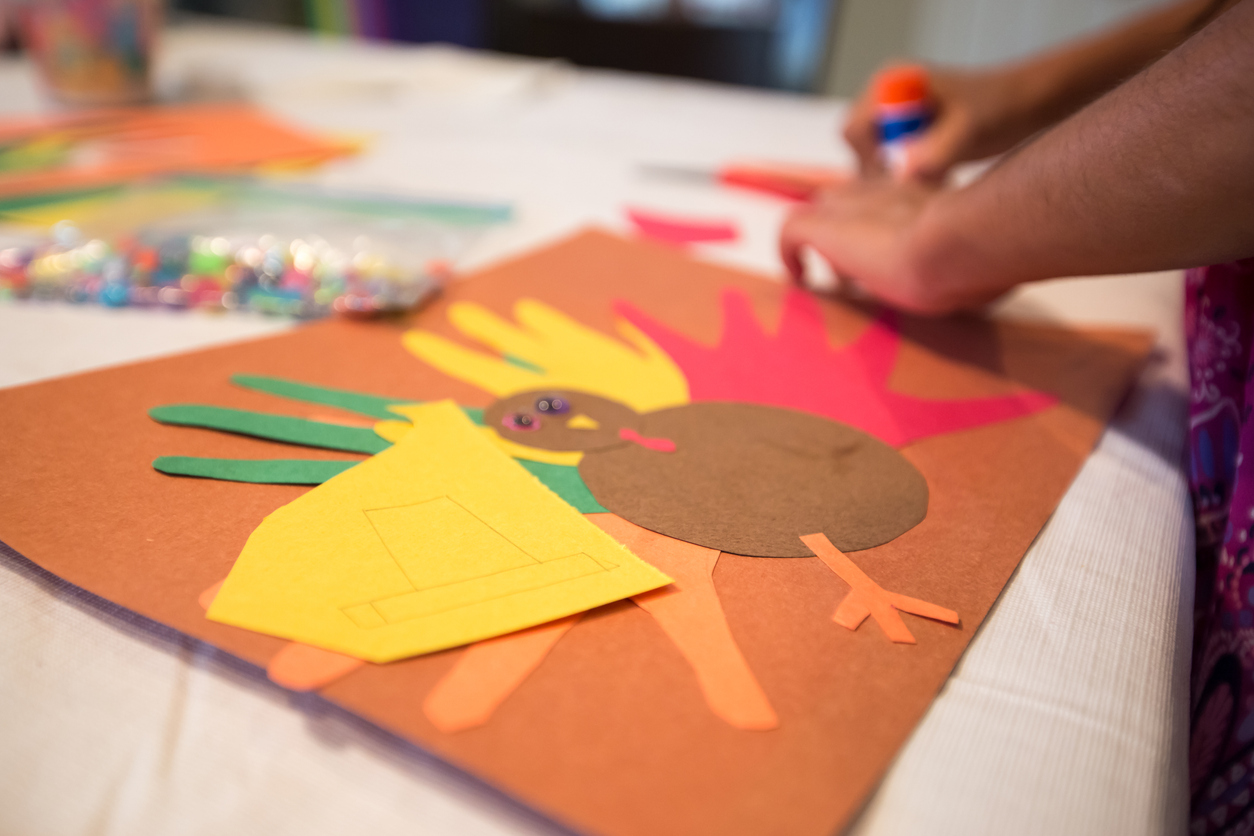
That construction-paper turkey hanging on your refrigerator may be cute, but what did your child learn from making it? In an opinion piece for The Hechinger Report, arts education expert Julia deBettencourt argues that traditional classroom art projects often emphasize following directions over developing creativity. When every child is expected to produce essentially the same turkey, the goal becomes getting the project right rather than exploring original ideas.
Her larger point isn’t that hand turkeys are bad. It’s that arts education should help children develop their own ideas, experiment, make creative decisions and learn from the process — even when the finished product is messy or unconventional. She worries that an emphasis on reproducing an expected result can leave children believing they aren’t artistic. The real measure of a successful art lesson, she argues, isn’t what children make, but how much creative thinking they do along the way.