First came the video building game Minecraft for the two young sons of Kirkland mom Vlasta Hillger. They loved it.
“They were putting in commands and changing the settings,” Hillger recalled. “I said to my husband, ‘They understand how it works.’ I said they needed programming classes. But I couldn’t find any. And I thought to myself that was crazy. How is it possible no one is teaching kids to code?”
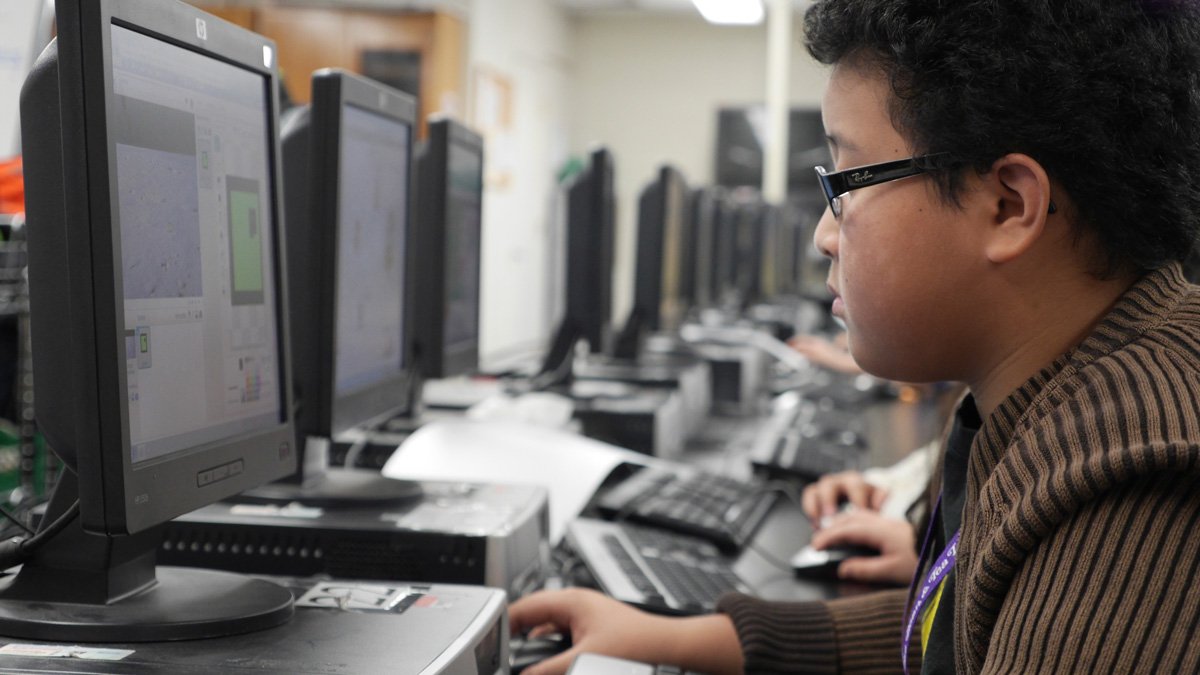
Hillger eventually found a lone summer camp on the topic and signed up her boys. Soon after, a friend introduced the family to Scratch, a graphic programming language aimed at students, teachers and parents. The boys started tinkering on their own. Then last January, a brand-new organization, Coding with Kids, approached their elementary school, Mark Twain in Kirkland, to see if there was interest in an afterschool computer coding class using Scratch. Coding with Kids classes aim to advance students around Puget Sound, from the very beginnings of computer programming in early elementary school up to the higher-level computer science needed for the high school AP exam and beyond.
“It was kind of an instant success,” Hillger says of the program at her school. “I took it on for the PTA to advertise the class. I didn’t need to do much — we signed up 30 kids in less than a week, girls and boys.”
Delighted, Hillger decided that other children needed the same opportunity. “Coding with Kids was so great and I was so passionate about the company, I went to them and said, ‘Give me a job and I will go to other PTAs to start classes,’ ” she says. They took Hillger up on the offer; today, she’s marketing manager there.
They really want to introduce kids to computer coding at a young age, she says. For girls, it can mean the difference between thinking they can achieve in computer science — or not. “When girls are in second grade, they don’t have preconceived ideas what girls do and what boys do,” Hillger explains. “If we can get them excited about coding at that age, they can realize it’s not intimidating, it’s not just a boy thing to do.”
The program is an offshoot, she says, of the nonprofit organization code.org, which is dedicated to expanding participation in computer science by making it available in more schools, and especially increasing participation in the subject by women and underrepresented students of color.
“We want to provide a computer science education to every child in every school,” says Mona Akmal, director of product for code.org. “People assume computer science requires you to be a genius, like a rocket scientist. It’s not — it’s really, really simple. Also, people assume it’s for certain ethnic communities and for certain sexes. It’s not. We’re putting a lot of effort into marketing so people understand that it’s easy, it’s simple to do and it’s for everyone.”
To that end, their product team has been working hard for the past year or so to build an interactive online set of courses for elementary school students, among a number of ambitious initiatives related to computer science education, says Akmal: “It’s three courses and a bunch of really cool apps that lets kids learn computer science in a really user-friendly way. Teachers can supplement it, (but) kids who want to do it by themselves totally can. We provide the learning platform that lets people learn computer science in a simple way.”