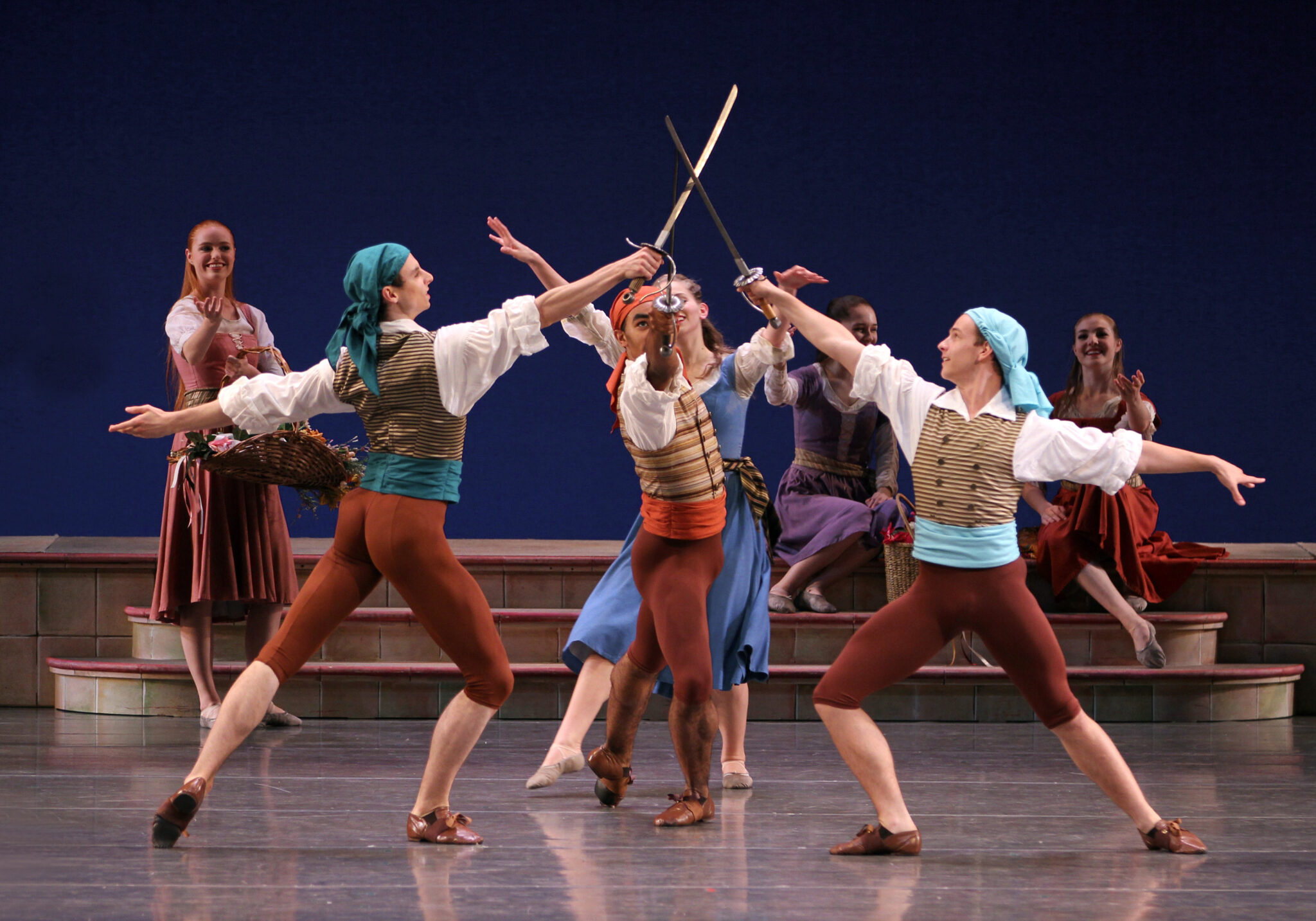
Pacific Northwest Ballet’s new kid-friendly production of Le Corsaire: A Pirate’s Tale accomplishes the impressive feat of offering something for practically everyone – while still managing to preserve the integrity of a ballet originally danced more than 150 years ago.
Le Corsaire features the excitement of swashbuckling pirates with clashing swords, and ballet that is both classically elegant as well as folksy and high spirited. There are captivating visuals including one set that evokes a damp and spooky waterside grotto and a grand finale that packs the stage with dozens of dancers and a bounty of flower garlands.
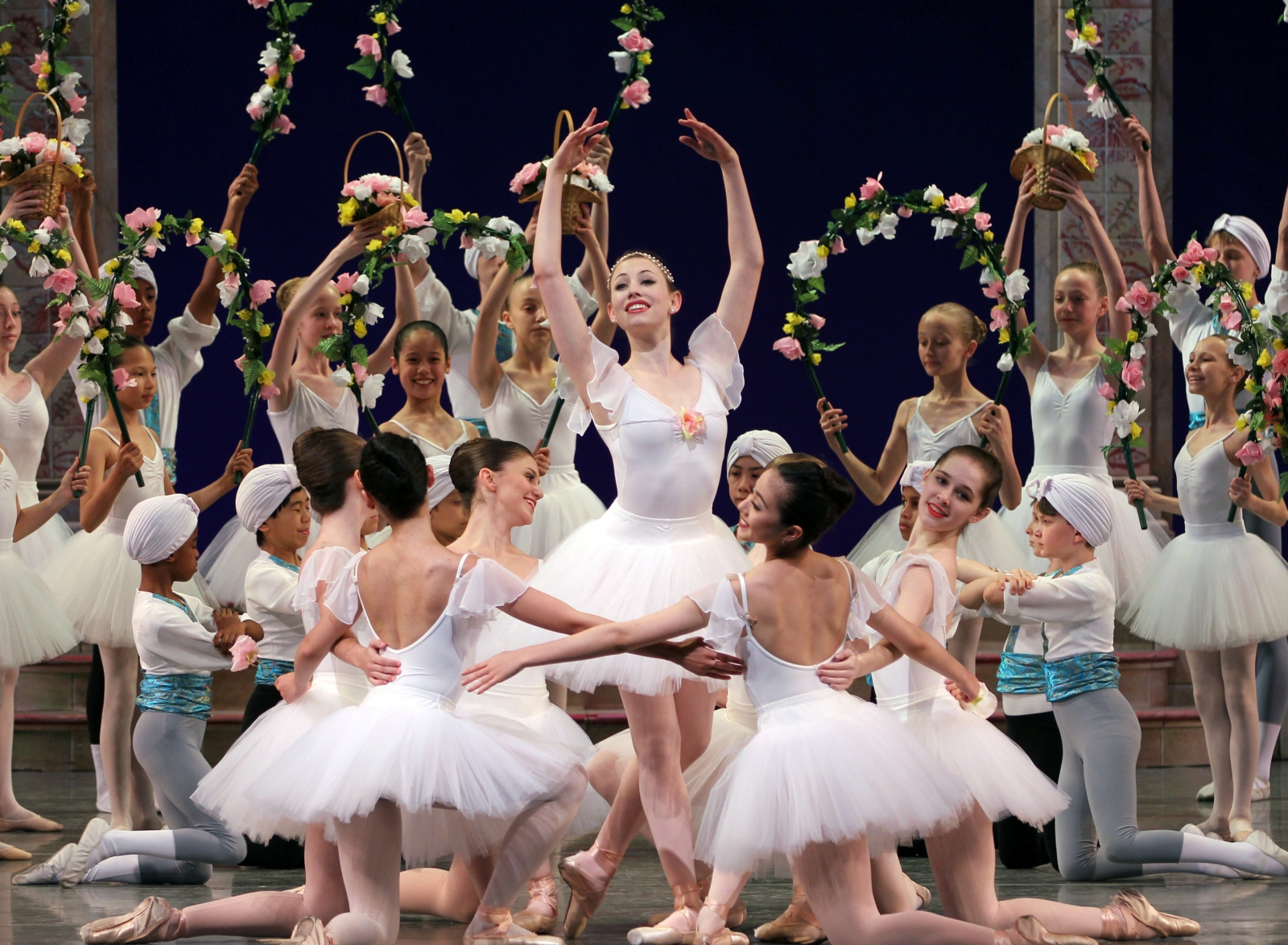 |
The ballet is performed by the Pacific Northwest Ballet School students who dance with a grace, strength and poise that often transcends their years. Likewise, the Seattle Youth Symphony Orchestra delivers such a well-executed score that one quickly forgets that they’re not professional adults.
The story of Le Corsaire is a sufficiently convoluted saga of kidnappings, double crossings and other hijinks that I initially worried it would be hard for my two 7-year-old companions to follow.
But PNB opted for the neat trick of seating a pirate-garbed narrator at the edge of the stage to help the audience navigate the tale. Actor Tim Hyland helped set up scenes and review plot developments, while also serving as a sort of accessible, humorous liaison between the audience and dancers.
The 80-minute ballet was nicely paced with one pause to change sets and a 15 minute intermission. Some families brought toddler-aged kids along, but the production was better suited for kindergarten and older kids.
While this version of Le Corsaire omits the most technically challenging choreography found in productions by professional companies, there is still a sampling of beautifully performed pointe work for ballet lovers to enjoy.
Le Corsaire tells the story of the pirate chief Conrad and his true love, Medora, who has the misfortune of also capturing the eye of a wealthy pasha. Set in Turkey a couple of centuries ago, Medora’s “guardian” sells her off to the pasha, but the pirates manage to smuggle her away to their grotto.
One of the pirates then betrays Conrad and delivers Medora to the pasha’s palace (you’re beginning to see the value of the narrator, no?). More trickery takes place and true love ultimately prevails, reuniting Conrad and Medora once again.
While Le Corsaire includes the trappings of a classic damsel-in-distress scenario, Medora and the other female characters incorporate a sass, defiance and sense of humor that makes them more palatable – if not exactly role models – for contemporary audiences.
“[Medora] was just awesome. She had a tinge a tough,” said my first-grade daughter, “and was a little bit princess. She had dreams, and wanted to marry a man and maybe have children.”
I think my daughter may have done a little happily-ever-after projecting there, but she got the idea.
One feature of the performance that really resonated with my guests was the dancers’ use of pantomime to help narrate the tale, as captives pleaded for their release and they invited one another to dance. The gestures, a staple of the storybook-ballet genre, can have a sort of cartoonish quality, but they seem perfectly suited to a performance for younger viewers.
The kids also enjoyed the grandiosity of McCaw Hall with its twinkling red curtains, tiers of balconies and the chance to stand above the musicians in the orchestra pit, watching them tune their instruments.
So shiver your timbers, pull up your tutus and catch a performance of Le Corsaire before it sets sail.
PNB’s Le Corsaire: A Pirate’s Tale is being performed March 26 at 3:30 pm, plus a show for school groups on March 25 at 10:30 am. Tickets for the public show range from $23 to $60. pnb.org/season/15-16/le-corsaire or 206-441-2424