In today’s education landscape, technology is both a tool and a challenge. Some schools embrace it completely, giving every student a device to use throughout the day. Others take the opposite route, banning screens to protect focus and interpersonal skills. For parents, the mixed messages create confusion: How much tech is too much? What’s the right balance?
Jewish day schools in Greater Seattle and around the country appear to lead the way in developing a balanced, sensible answer. Their secret lies in integrating technology in secular studies while leaving it aside for Jewish practice, values, and community. The unique dual curriculum in Jewish day school education offers students the tech fluency the future demands while ensuring the longer attention spans and emotional resilience that come from screen-free experiences that focus on Jewish traditions, culture, and values.
The Problem: Too Much or Too Little Screen Time in Schools
The debate over technology in schools is deeply polarizing. Proponents of 1:1 device programs argue that students must be digitally fluent to succeed in a tech-driven world. Yet, research increasingly shows that constant screen time can reduce attention span and social skills and even negatively impact mental health.
Some schools ban devices altogether. While this protects against overexposure, some parents express concern that a total ban may leave students underprepared for a future where tech competency is essential. For Jewish day schools, it isn’t about choosing sides – it’s about striking the right balance.
A Balanced Approach: Secular Subjects and Screen-Free Traditions
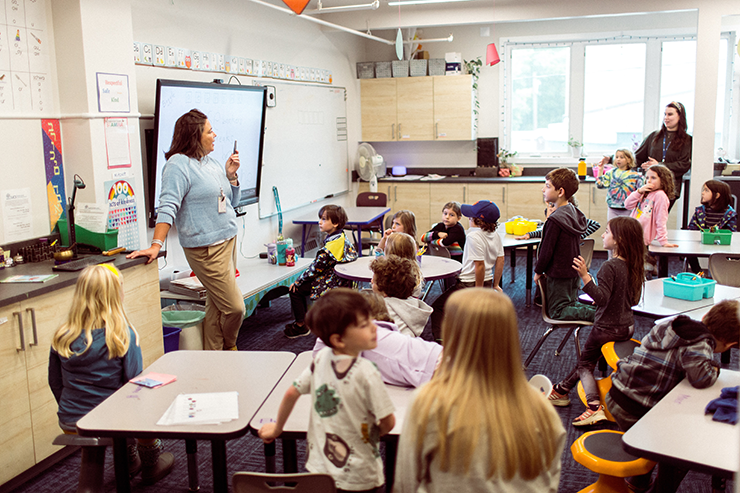
Jewish day schools embrace technology as a tool to support academic success in subject-appropriate ways. Teachers thoughtfully incorporate tech, which makes learning deeper and more engaging.
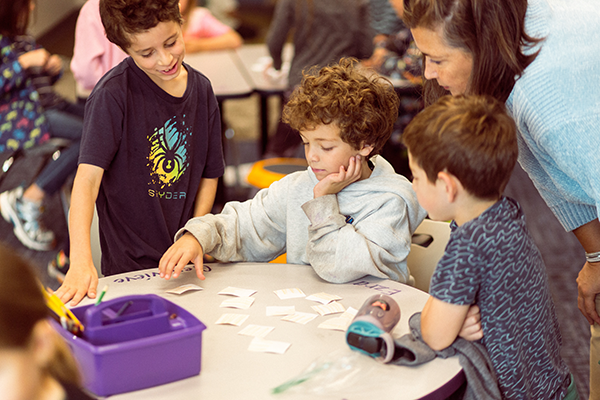
But when it comes to Jewish studies, technology takes a back seat. Torah study, discussions of Jewish values, and hands-on mitzvah projects don’t need screens—they thrive on face-to-face connection and direct engagement. As Mindy Swedarsky, a first-grade teacher at Seattle Hebrew Academy, located in Seattle’s Capitol Hill, explains, “The Torah doesn’t need an iPad. Jewish learning and mitzvot are about relationships, not clicks.”
Building Jewish Identity in a Challenging World
While Jewish day schools are praised for their balanced approach to technology, their true impact goes far beyond screen time. In today’s world, where Jewish identity is increasingly challenged, attending a Jewish day school has taken on new importance for many families shaken by rising antisemitism.
With many screen-free hours built into the school day, Jewish day school students are better prepared to withstand the pressures of the TikTok generation, learning to take a step back and separate entertainment from facts. This critical thinking skill, paired with their strong sense of identity, ensures they are less likely to be influenced by outside voices that deny or diminish their Jewish heritage. Instead, they develop a proud, unshakable connection to their faith, Israel, and the values that guide them.
Parents and educators alike report that this approach pays dividends in their children’s development as individuals and as Jewish citizens of the world. Students gain fluency in Jewish rituals and practices, develop empathy through discussions of Jewish ethics, and build resilience by practicing acts of kindness (mitzvot) within their communities.
“Jewish day schools teach our kids how to thrive academically, socially, and spiritually,” explains Meghan Kimpton, Head of School at Jewish Day School, serving early childhood-8 in Bellevue, WA. “We are building a community of students who are confident, grounded, and comfortable in who they are.”

The Values Behind Balance
At the heart of this philosophy is a broader commitment to teaching Jewish values. Jewish day schools emphasize the importance of human connection, values, and community by keeping screens out of sacred and cultural spaces.
This intentional approach reinforces a strong academic work ethic while giving students the tools to make thoughtful technological choices. It’s no surprise that graduates emerge not only academically prepared but also emotionally resilient and socially comfortable in their identities.
Making Screen Time Accessible in Schools
For families interested in this unique approach, Jewish day schools in Seattle offer more than a great education—they offer support to make it possible. The Samis Foundation Day School Affordability Initiative provides grants to families earning up to $350,000 annually, making a private day school education accessible to a wide range of households.
“We initially thought Jewish day school wasn’t an option for us,” explains a mom of two students at Seattle Jewish Community School in Seattle’s Green Lake neighborhood. “But the Samis grants opened the door, and it’s been the best decision we’ve made for our kids and family.”
A Path to the Future
Jewish day schools prove balance is the key to raising well-rounded, future-ready kids. By blending thoughtful technology use with timeless traditions, they enforce an education that is creating a new generation of proud, empathetic, and resilient citizens.