As much as we’re told not to judge a book by its cover, it’s hard not to — especially for young children. A book’s cover and pictures often are what first capture a child’s attention. Beyond engagement, illustrations also play an important role in developing emerging readers.
In conversations with local illustrators Vikram Madan, Polina Gortman, and Ben Clanton, all three emphasized that an illustrator’s creative process centers first on the reader’s experience rather than educational goals.
A lot of children’s book authors and illustrators “really focus on social issues or serious issues; I’m not one of them,” says Madan, who is both the writer and artist for his award-winning books, among them the “Owl & Penguin” series (winner of the American Library Association’s Theodore Geisel Honor), and the poetry book “A Hatful of Dragon,” a Kirkus Review best book.
“I just try to make books that are fun to read for kids, because if that experience was fun, then you’re going to reach for the next book and the next book,” said Madan. “I’m thinking more in terms of the story I want to tell. Will it be interesting? Will it be fun?”
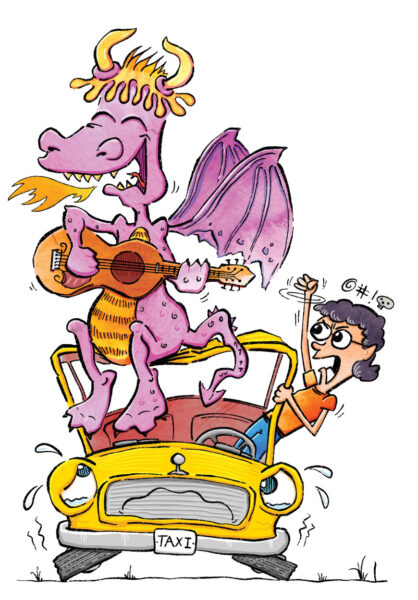
(Illustraiton by Vikram Madan)
What influences drive the art?
Still, the mechanics of illustrating a book influence Madan’s decisions: choosing age-appropriate vocabulary, guiding the narrative across page turns and spreads, and including visual surprises.
Clanton’s illustrations, including those in his “Narwhal & Jelly” series, are similarly guided.
“I tend to be very focused on what’s fun, friendly, and character-centered when it comes to illustration,” he said. “Kids are often drawn to humor. Humor is one of those things that gets devalued by many adults — along with fun, joy, and other elements common within kid-centered graphic novels.”
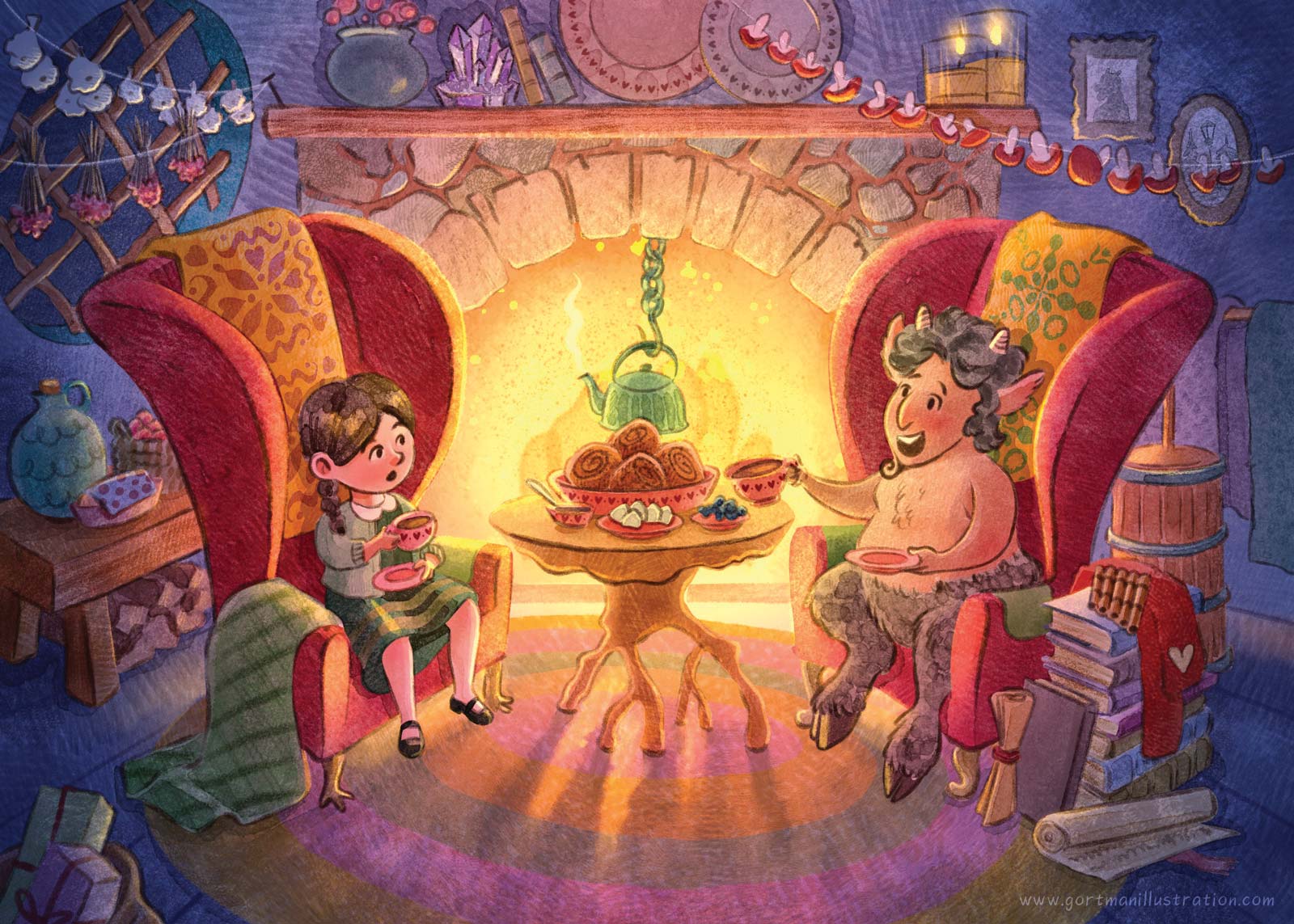
Gortman, whose latest book, “Wide Open Spaces” (written by Robyn McGrath), came out on May 12, aims to depict the world honestly and expansively by featuring people of diverse ages, body shapes, abilities, and backgrounds.
“Sometimes a book is the first place where a child learns about something and puts a name to it,” she said.
Gortman said she also enjoys leaving “space for the reader to figure out something on their own,” whether by spotting the punchline of a joke in an illustration or following a secondary visual narrative woven through the book — an element she enjoyed as a child.
Behind the drawings
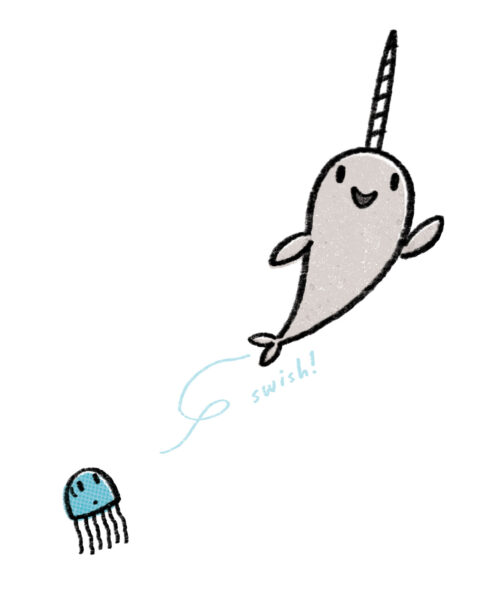
(Illustration by Ben Clanton)
While illustrations create enjoyment, they also support literacy development in ways that may be overlooked. Madan, Gortman, and Clanton all emphasized that images help children interpret stories before they can fully read themselves. Research also shows that pictures add depth to the story, introduce and reinforce vocabulary, and nurture lifelong readers.
Images help younger kids “learn how to process information, especially when they have to interpret the story, understand the sequence of events or how time is passing, how characters’ reactions are changing from frame to frame,” said Madan. He added that these skills support brain development, critical thinking, and problem-solving.
Madan noted that speech therapists have used his Owl & Penguin series because of their limited but intentional vocabulary paired with illustrations. Even before children can read independently, visually decoding a story can help build confidence.
“You feel very important when you grab a book you can’t read — and maybe you don’t even realize that— but you’re able to turn the pages and tell a story on your own and feel that role of a storyteller,” Gortman said. “It’s a huge motivation boost for a kid.”
What about bigger kids?
For experienced readers, illustrations still hold value. Clanton pointed out that graphic novels typically contain more unfamiliar vocabulary than chapter books, building a reader’s word bank. Parents might want to think twice about disparaging graphic novels as not “real” books.
Creating lifelong readers sometimes means prioritizing what kids want to read, Clanton said.
Summer slow
This summer, Madan recommends parents encourage kids to revisit favorite books and look more deeply at illustrations to see what may have been overlooked the first time around.
“I tell kids, it’s summer, slow down, look at all the details, and maybe even try to draw things from the books,” Madan said, encouraging parents to join kids. “It would be a great shared experience for them both.”
Illustrator book recommendations
We asked illustrators what books the recommend to young readers based on the art inside and other than their own books. Here are their picks:
Polina Gortman
- “Finn the Floaty,” by Leanne Hatch
- “Swimming Season,” by Jaimie MacGibbon
- “Tiny Hiker,” written by Natasha Zimmers, illustrated by Jaimie MacGibbon
- “Sandcastles Are Forever,” by Ellie Peterson
- “Ring Ring,” written by Susan Straub, illustrated by Anait Semirdzhyan
Vikram Madan
- “Super Boba Cafe” series by Nidhi Chanani
- “Norma and Belly” series by Mika Song
- “Namaste Is a Greeting,” by Suma Subramaniam
- “Every Monday Mabel,” by Jashar Awan
Ben Clanton
- “Jazzy the Witch in Broom Doom,” by Jessixa Bagley
- “Sashimi,” by Dan Santat
- “Search for a Mysterious Mushroom: Pick Your Path,” written by Amy Seto Forrester, with co-creator/illustrator Andy Chou Musser