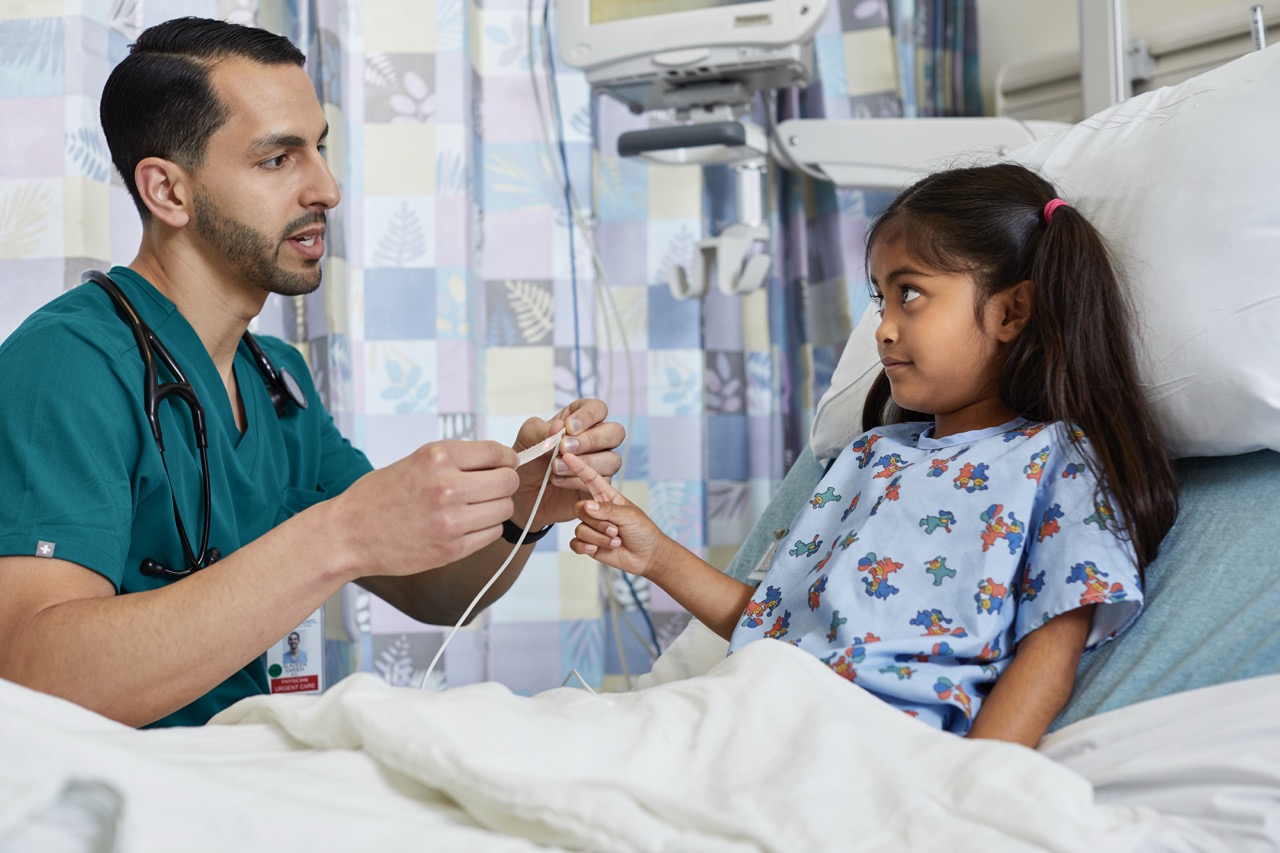
I’m so often reminded that children are more powerful than we notice: Their strength, bravery and empathy can be truly impressive. I see this frequently in my role as a pediatric hospitalist where I support children and teens needing surgery or other procedures that require hospitalization. Part of my role is helping them prepare physically and cope emotionally.
This month, I’m excited to spotlight how one idea — born from a middle-schooler’s personal experience — is growing into a powerful program to connect peers who have been through surgery with kids needing surgery to help them prepare and cope.
When children need surgery, there is so much more happening beyond the surgery itself: isolation from friends and family, fear or feeling a lack of control, and also sometimes relief and hope. Talking to peers who’ve been through the same experiences can be an incredibly powerful way for children to cope with surgery.
One visionary seventh-grader, Chloe Perkins, a student at Billings Middle School, has combined her lived experience, creativity and compassion to launch a project with real potential to make a difference. CHRP, the Children’s Hospital Research Project, was co-founded by Chloe and her mom, Kim. Its mission is simple yet deeply meaningful: to reduce fear and anxiety for children preparing for surgery.
“I just wanted to make it easier for kids to talk about it,” says Chloe. She speaks from experience: She’s undergone eight surgeries, including brain surgery, since infancy. “Sometimes, knowing you’re not alone can really help.”

Chloe Perkins
Turning inspiration into action
With support from her school, a few friends and her mom, Chloe turned her idea into a school club and formal middle-school project. She and her team conducted a survey targeting kids ages 5 to 12 who have experienced or are preparing for surgery. The results were compelling: Nearly 85% of respondents said they would feel more at ease if they could hear from another child who had gone through a similar experience.
“They wanted to know what to expect, what helps with nerves and they liked the idea of a peer mentor,” Chloe explained.
Building the next steps
Now, the CHRP team is working on a series of short videos featuring kids sharing their own hospital experiences, calming tips and advice. The videos will be accessible through QR codes online and a website that is in the works.
The team also plans to include practical suggestions — like what to bring from home and how to prepare emotionally — and they’re exploring ways to offer direct peer-to-peer support. Every step will be informed by ongoing data collection to ensure the project truly meets kids’ needs.
Chloe’s vision doesn’t stop at her school — or even her city. She hopes CHRP becomes a nationally recognized resource that helps young patients feel supported, empowered and understood.
“It’s like a big warm hug,” she says. “Even if it only helps a few kids at first, that still means we’re making a difference.”
To get involved, watch for CHRP’s upcoming website and survey, or reach out to Dr. Block through Seattle’s Child. Chloe Perkins is living proof that a thoughtful idea — rooted in kindness and fueled by determination — can grow into something big.
Tips for helping kids prepare for surgery
Children need to know what they can expect before, during and after their procedure. “Sometimes it’s easier to hear from another kid than from a doctor,” Chloe says.
Whether getting information from a clinician, peers, family or caretakers, one of the most important things for children to know is that they will be safe during their hospital experience. Don’t avoid the topic, talk them through the details of what will happen. If it’s appropriate for your child and their age and maturity, it’s ideal to include them in discussions and decisions about their care which gives them a sense of control and safety.
I also often recommend parents and children create a list of questions together. Children may be unsure what questions to ask, or teens might be hesitant to admit they don’t understand some aspect of the procedure. Helping them prepare questions ahead of time can help them understand the experience and feel respected.
A child or teen having surgery is a significant event and challenge for everyone. Rely on your team of clinicians and also ask for support from friends and family to get you through.
More from Dr. Block and Kaiser Permanente in Seattle’s Child: