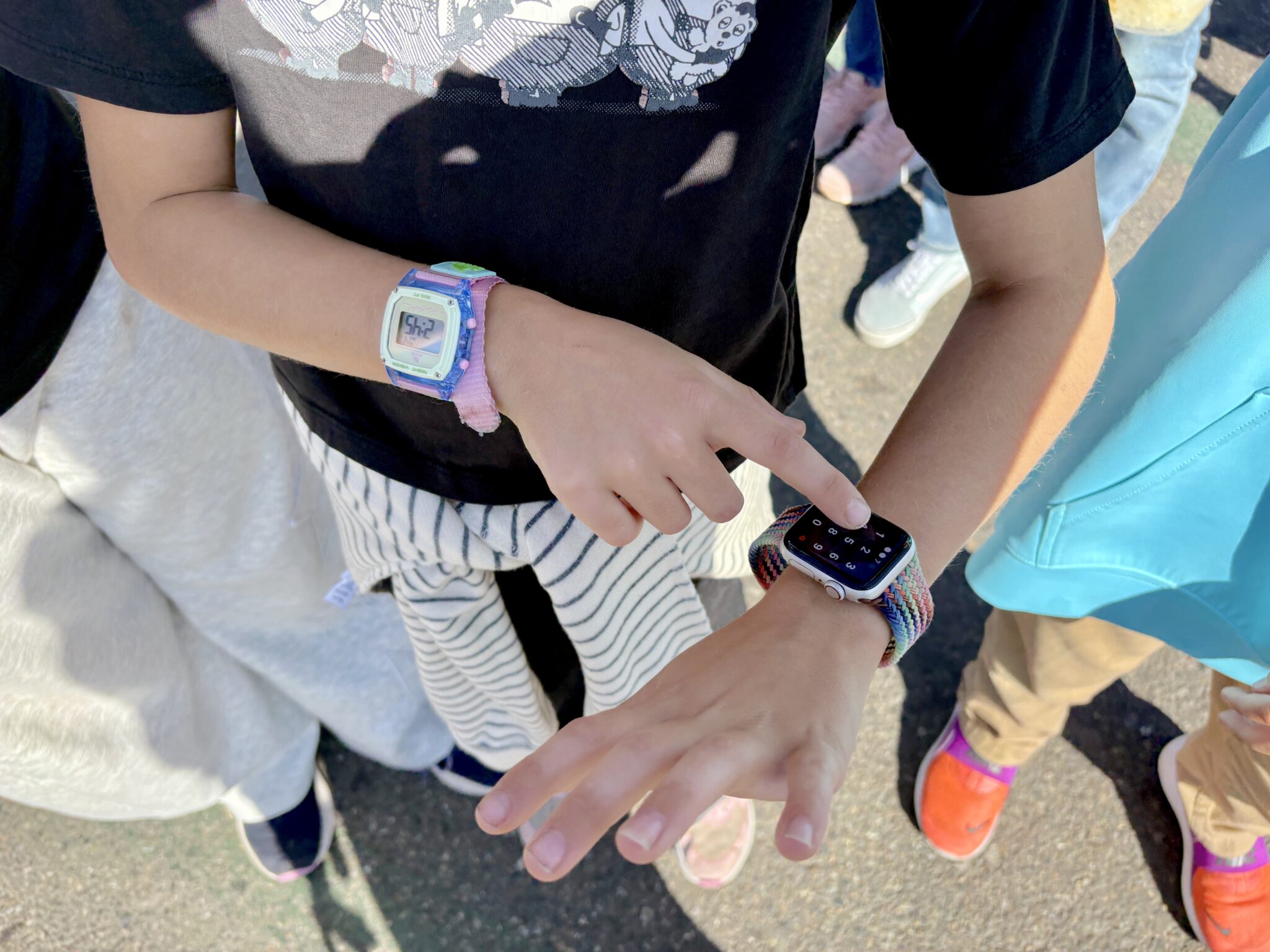
In a few short years, it has become commonplace for parents to use wearable GPS technology to track their children, sometimes well into adulthood. Smartphones, smartwatches, and AirTags are just a few products in the surveillance arsenal used by, according to a recent survey, more than 80% of American parents.
I won’t track my children, and here’s why: I do not want to surveil my children; I want to trust them. And I trust them a lot more than I trust Big Tech.
Trust develops when an act of belief is rewarded. When I tell my children to be home from the park at 5 p.m., I assume they will go to the park, play, and come home by 5 p.m. Every time they come home on time, my trust in them grows, and I feel comfortable letting them range further.
Developing trust requires, among other things, a willingness to take risks. In fact, James Gruenig, a professor emeritus at the University of Maryland who has studied the mechanisms of trust, has emphasized that “openness to risk is the important element of trust.” Tracking devices dilute the risk and sacrifice trust.
In the years since I started letting my children navigate their world independently, they have rarely broken my trust. I cannot say the same for the big tech companies behind these tracking devices.
Child tracking devices are supercharged data harvesters. Doctor’s appointments, tutoring classes, therapy sessions—any place your child ever visits—are logged, analyzed, and then likely sold.
Watchdog organizations like Consumer Reports have found, disturbingly, that most tracking devices are tracking more than your child’s location. These tracking companies collect and store messages, voice notes, and detailed movement patterns. Consumer Reports also gave most tracking devices “mixed reviews” on privacy and security.
In a now-viral story published on August 6, WIRED exposed how easily bad actors can hijack a cheap tracking watch and surreptitiously track a child’s movements, record sound, and snap photos. Cheap convenience comes at a cost.
The cost I am more concerned with day to day isn’t creepy foreign hackers; it’s the depreciation of privacy. Wearable technology, GPS, and apps like “FindMy” are conditioning our youth to think broadcasting their location—to friends, partners, Big Tech, ex-boyfriends—is no big deal. It is a big deal. I don’t want my children to grow up believing anyone is entitled to know their location at all times, especially without explicit consent.
That’s why, as parents, we build trust. There is risk in allowing them out into the world on their own, but that risk comes with lifelong rewards: trust, freedom, privacy, agency, and self-confidence, to name a few.
For parents like me who are wary of surveillance but want to communicate with kids on the go, may I suggest a flip phone? This summer, as my daughter and her friends ventured beyond our neighborhood, we lent her a Jitterbug flip phone. No GPS, no Internet, no social media, just a pay phone in the pocket. In the end, they only used it once. The rest of the time, she and her friends just…figured it out.