At a time when the cost of childcare feels more and more out of reach, looking to extended family for help with caregiving is becoming increasingly necessary. In homes across the Seattle area, it’s grandparents to the rescue! From after-school pickups to homemade cultural meals, grandma, peepaw, appa, and nonni are as vital a part of their children’s and grandchildren’s lives as ever.
The Return of Multigenerational Childcare
Multigenerational caregiving is nothing new. Marian Robinson, Michelle Obama’s mother, moved into the White House to help raise her granddaughters. “There were parts of the girls’ life that I just knew were going to be okay because Mom was there,” Obama once said. And Vice President JD Vance, attributes much of his success to being raised by his grandmother, arguing (controversially) on the campaign trail that more Americans should consider the practice (in lieu of government programs) to meet their childcare needs. Multigenerational caregiving has always been a part of many cultures, and today, grandparents helping with childcare is more relevant than ever.
Why Grandparents Are Part of the Plan
Relying on grandparents as part of a family’s child care plan is common in many cultures. And there’s a reason for that: including grandparents in your family’s child care arrangement can also be healthy for everyone involved – pops, nana and the kids. Research suggests that grandparent involvement has developmental and emotional benefits for both older adults and for young children.
Emotional Benefits for Both Kids and Elders
“In today’s fast-paced world, families are busier than ever,” says Les Kassicieh, a child and adolescent psychiatrist at Kaiser Permanente. “Spending relaxed time with
grandkids can help ease the pressure and stress children may feel.” It’s true. Studies have shown that grandparents who are involved in caring for their grandchildren have improved cognitive health. There are many benefits to grandparents helping with childcare, from emotional stability to stronger intergenerational bonds.
Real Families, Real Impact
Mother of three Maryam Zarrabi-Worrell of Woodinville says her parents’ involvement in her children’s lives is nothing short of life-changing. Over a decade ago, when she and her husband decided to settle in Washington after a brief time abroad, her mother, a retired nurse, stepped in to help care for her then 9-month-old daughter. This enabled Zarrabi-Worrell to return to teaching, and her husband Fred to pursue a career in dentistry, all while introducing their child to Iranian culture.
Over the years, it hasn’t always been easy, Zarrabi-Worrell says. “The discipline and how home rules change with Grandma and Grandpa — that’s been challenging.” But, that is because “it’s all love from them.” She says when she and her husband try to ask for consistent boundaries, “it makes their role feel more like babysitters, and they don’t like that.” They see themselves as much more important than that, and that’s because, of course, they are.

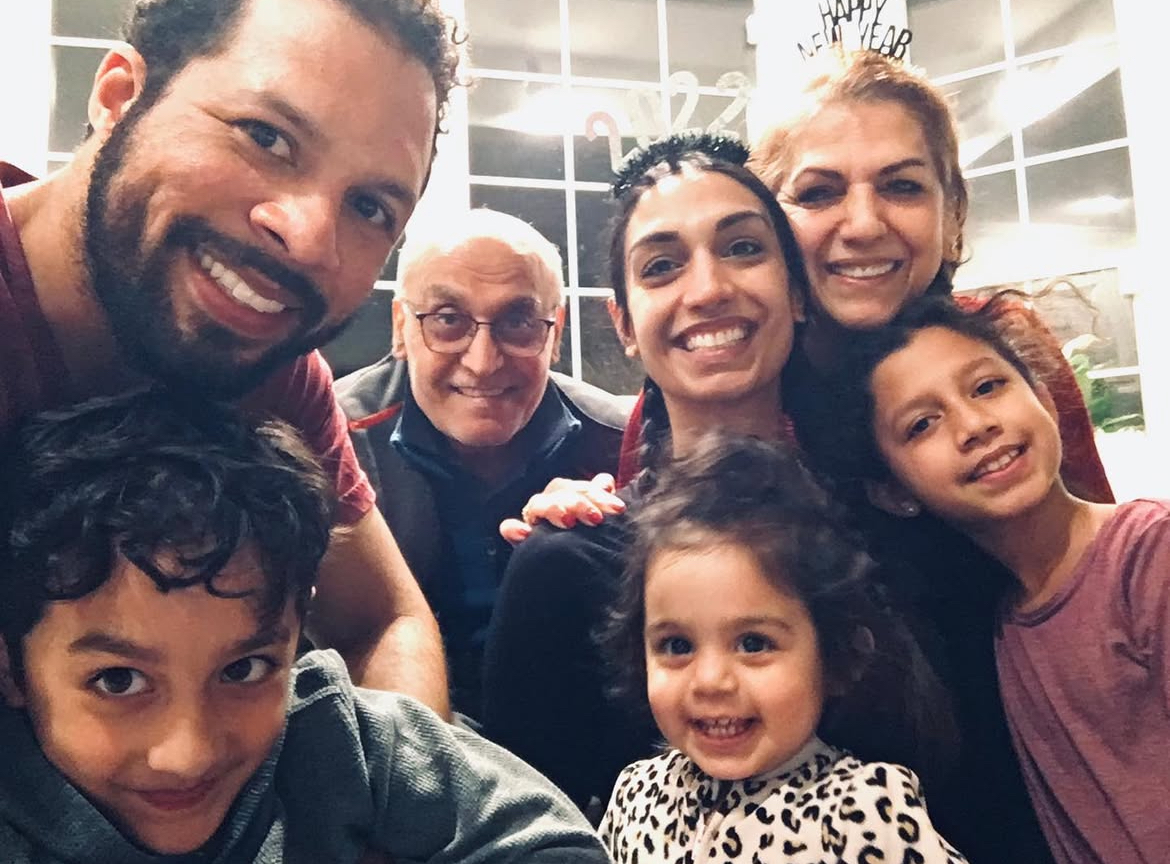
“Let’s be real. She’s taking care of all 8 of us in here!” Matilda Luttrell’s mom, Van (center), is the heart of this multigenerational household. (Image courtesy Matilda Luttrell)
Navigating Boundaries and Expectations
It’s not just parents who sometimes struggle in these arrangements. When grandparents helping with childcare, families must communicate openly about expectations and capacity.
Parenting educator and grandparenting influencer Dee Dee Moore, founder of More Than Grand, says she’s seen firsthand both the joys and challenges of these arrangements. “Too many grandparents are being asked to do more than they can physically and emotionally handle. In fact, ‘grandparent babysitting burnout’ is one of the top search terms bringing people to my site.”
Kassicieh recommends parents and grandparents get on the same page with regular check-ins and suggests a trial period to test out a new caregiving arrangement before making it permanent. “Families should have conversations about things like rules and consequences […] and grandparents should know that it’s okay to say ‘no’ to their grandchildren — even though it can be hard.”
Moore agrees. “It’s important to have a conversation before an agreement is reached that talks about expectations, schedules, and limits. Grandparents need to be clear about what they are willing and able to do, and parents need to be honest about what they expect.”
Zarrabi-Worrell has learned to implement many of these approaches in her and her husband’s arrangement with her parents, and says that ultimately they are so grateful for their parents’ presence in their lives. “If we didn’t have the support from them financially when we came back to the States and with housing, we would have been homeless,” she said. “Because of them, we have been able to own our business and build it up these last 10 years.”
Today, over a decade later, her parents’ influence is deeply felt: Farsi is spoken fluently in their home, her parents bring over Persian dinners weekly, and her father plays soccer with the grandkids and mows their lawn.
Licensed therapist and parenting author Eli Harwood says this is the benefit of having grandparents in kids’ lives. “When grandparents help raise children, they offer a broader sense of support, a deeper connection to culture, and access to stories that help connect the present to the past.”
Julia Lacy, also from Woodinville, says she and her husband, Peter, intentionally moved half a mile from her parents so her kids could grow up close to them. Still, she never imagined how deep their connection would become. Her mom has supported her through everything from early school pickups to mental health emergencies. When her daughter started showing signs of depression and anxiety in middle school, her mom stepped up to help, offering to drive her to therapy appointments and help with care for her other two kids.
“Knowing that she immediately committed to what my daughter needed was powerful,” Lacy said. “That kind of consistency is a gift. Sometimes I’m jealous. I don’t remember her being so involved when I was growing up. She was working full time […] but having her with them means the world to me.”
Kassicieh says grandparents can add a layer of needed support and security, especially in times of crisis. They are “another loving adult in the child’s life,” he said, and “they bring a wealth of experience and knowledge.”
Matilda Luttrell, a mother to two tweens in Northeast Seattle, agrees. Luttrell says her mother is a calming presence to her growing girls right when they need it most. When emotions run high, it’s her mom who seems to have just the right words of encouragement. “I never know exactly what she said,” Luttrell said. “But whatever it is, it always helps.”

Grandparents helping with childcare means more than pickups and drop-offs — for Carol and Ellie, it’s about showing up for life’s big and small moments. (Image courtesy Julia Lacy)
For the Lutrells, their family’s arrangement began with grief. Matilda’s mother, Van, moved in after her father passed away, just as she and her husband, Ian, were welcoming their first daughter. What started as a temporary arrangement is now just a way of life. Van now lives with the family full time, sharing in caring for their two daughters and in household tasks.
“Food is my mother’s love language,” Luttrell said. Her daughters have now learned to cook many traditional Vietnamese dishes, are learning from their grandmother about their heritage, and celebrate holidays like Tết and Lunar New Year as a family.
Why Childcare Is Still a Crisis
When hearing from families like these, it’s clear: Grandparents can be a vital part of a happy, healthy family dynamic. And yet, all three families admit they didn’t turn to their parents for help with child care purely out of choice. According to the City of Seattle, the true cost of child care — when caregivers receive a living wage and benefits — ranges from $40,000 per year for an infant to $13,000 for a school-age child. With state and federal cuts, many families simply can’t afford care.
“Childcare is constantly a piece in a giant jigsaw puzzle for us,” Zarrabi-Worrell said. “We couldn’t find a daycare that was both affordable and accessible,” Luttrell admits.
Even with a robust family support system, Lacy points to gaps in the larger safety net. “We need mental health providers with more availability, affordable insurance, and policies that truly support working families.” Without this, her family has been forced to piece together a support network that can sometimes feel precarious. Despite their arrangements, each family insists that childcare shouldn’t be so difficult to come by. Not every family has loving and available grandparents willing and able to offer support.
Still, the arrangement works for many, and for those families who have access to grandparents helping with childcare, it can be incredibly fulfilling when all parties involved are on board.