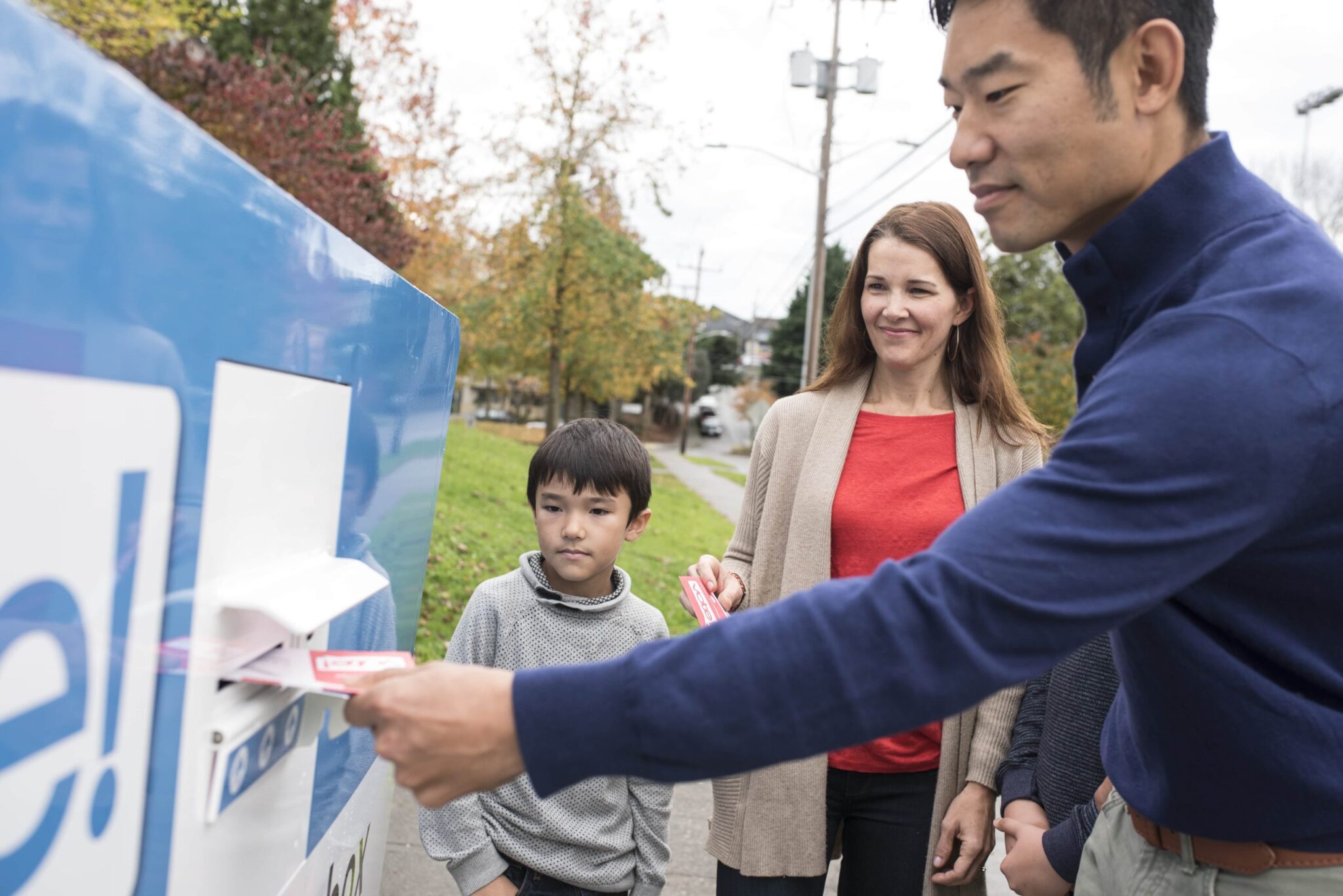
I miss just one thing from the time before Washington started mailing ballots to our homes. I’m nostalgic for the days when we used to show up at our polling places with children in tow and the workers handed them a kid ballot to fill out. Our daughter loved being part of the action and looked forward to the day when she could vote like mom and dad. Now in her 30s, Perry never misses an election and still considers voting an event worth celebrating.
I would pat myself on the back for doing a good job training my daughter to be a voter, but the truth is, she was mostly trained by the state of Washington, her teachers who held mock elections and those kind poll workers.
Becoming a voter starts at home
But research on why young people don’t vote as consistently as their parents and grandparents, and how to change that, gives some of the credit—and blame—to parents.
The Knight Foundation published a study in 2020 about the 100 million American nonvoters (43% of the eligible voting-age population) who did not vote for president in 2016. One of the main conclusions: Voting habits are established in youth with parents setting the example. That study found only 26% of non-voters reported that discussing news and politics was part of their family life growing up compared to 36% of active voters. And it offered further evidence: more than half of voters said they consumed more news when there is an upcoming election. Only 41% of nonvoters said they consumed more news. And, the study found that nonvoters were three times as likely to say their news consumption decreased during an election year. In other words, they were actively avoiding election news.
With 2026 General Election Day just around the corner on Nov. 3, now is a good time to look at what’s happening around your dinner table and, if you want your children to be active voters when they older, consider talking more about the news and politics of the current election season with them and around them.
‘I give you my voice’
Or you could go one step further and be inspired by Everett High School civics teacher Jenna Vandenberg. The Mariner High School teacher dedicates her ballot each fall to her students’ choices after they research and debate them in school.
Before marking her ballot in class, Vandenberg gives a speech about how important voting is—how their vote is their voice.
“I think 16- and 17-year-olds should be able to vote,’ Vandenberg tells her students. “I can’t change the law, so I’m doing a tiny bit to give you my vote. Since you don’t have a voice, I give you my voice.”
Every year Vandenberg has a few students who are 18 and fill out their own ballots. Most of her students are too young to vote themselves, but she makes sure they’re all more prepared than most people to do their civic duty.
A push for civic engagement among young people
Washington education officials also want to strengthen civics education and better prepare students for an engaged life after high school. Under a proposal approved by the State Board of Education in September, the state’s existing one-semester civics requirement would expand to a full year. Students would also receive a separate year of instruction in financial literacy, life skills and planning for their futures.
At the same time, State Superintendent Chris Reykdal has proposed a different approach: a yearlong senior course pairs the current semester of civics requirement with a semester of practical skill-building such as registering to vote, applying to college, preparing a resume and understanding credit card debt. Both plans go before the Legislature in 2027, and some of the Board’s changes would also move forward through its own rulemaking. What else can we do to encourage youth voting?
Our family approach
My family does a version of Vandenberg’s classroom exercise by sharing our research and opinions before we all fill out our own ballots. Some years, a group of my daughter’s friends join us for a bigger ballot party involving food, beer and a lot of fun. But I think if I could go back in time, I would have involved my daughter in our discussions before she could vote herself.
Here are a few other ideas for encouraging civic engagement:
- Sit down with your kids of all ages when you fill out your ballot and talk to them in age appropriate terms about the different positions up for election and about any initiatives and what they mean. What’s the difference between a Washington Senator and a U.S. Senator from Washington?
- Teens can pre-register to vote. Washington, like 23 other states and the District of Columbia, has automatic voter registration, also known as the “motor voter” law. When young people sign up for their first driver’s license, if they are an American citizen, they are invited to pre-register to vote, even if they are just 16 or 17. Encourage them to say yes to pre-registration. When they turn 18 they will need to update their registration if they have moved since getting their driver’s license. Learn more about Washington’s Future Voter Program.
- Engage in healthy debate with the young people in your life concerning the political issues you disagree about. Share your perspectives and really listen to what they have to say. Be open to changing your mind and be careful not to just dismiss their point of view, no matter how committed you feel to your side of the issue. Ask them to explain why they feel that way and try to find some areas of agreement.
- Hold a voting party in a public place where you can vote together. Be prepared with voter guides and where to look for more information about candidates. Print out sample ballots for kids and youth under age 18 to fill out as well. My family fills out our mail-in ballots in a pub nearly every election and sometimes my daughter invites her friends to join us.
- Find an issue that you and your children care about and make a commitment to advocacy around that issue. It doesn’t matter whether the issue you pick is big or small, but should be something that your political differences won’t divide you on. One idea I’ve been thinking about lately is making Election Day a holiday so work won’t prevent people from voting and to highlight the importance of voting.
Election fun with young kids
Get kids interested in voting and what it’s all about by printing out the “Washington State Elections Activity Book,” published by the Washington Secretary of State’s Office. The book is designed to introduce young children to voting, elections and civic participation. Target audience? Kindergarten through third grade. Click here to print the book.