When her son was a junior at Seattle’s Franklin High School, Shannon Underwood offered his school something most parents can’t: her expertise as an immigration attorney.
It led her to a legal clinic there, where she sat down with immigrant families answering a hard question: Who would care for their children if they were detained or deported?
“Every parent’s number one concern is what happens if I’m arrested and my child’s left behind,” she said. “There’s a lot of tears and a lot of fear in this.”
Underwood and other volunteers helped parents fill out guardianship and power-of-attorney paperwork, naming a trusted adult to step in if a family is separated. Some parents went a step further at the 2025 clinic, preparing papers that would let their children travel alone to Mexico to join them if they were deported, Underwood said.
“We were encouraging people to essentially prepare for the worst,” she said. “It was wonderful to see the community come together the way that it did — the efforts by the school to take care of their immigrant community.”
Amid a surge in immigration enforcement, attorneys, advocates and some schools across Western Washington are urging more immigrant families to make these documents, often called “immigrant safety plans.”
“It’s absolutely important,” said Lu Jiang, who manages the immigrant safety plan program at Legal Counsel for Youth and Children, a Seattle legal nonprofit. “This is a community resource. It’s a resource for everyone.”
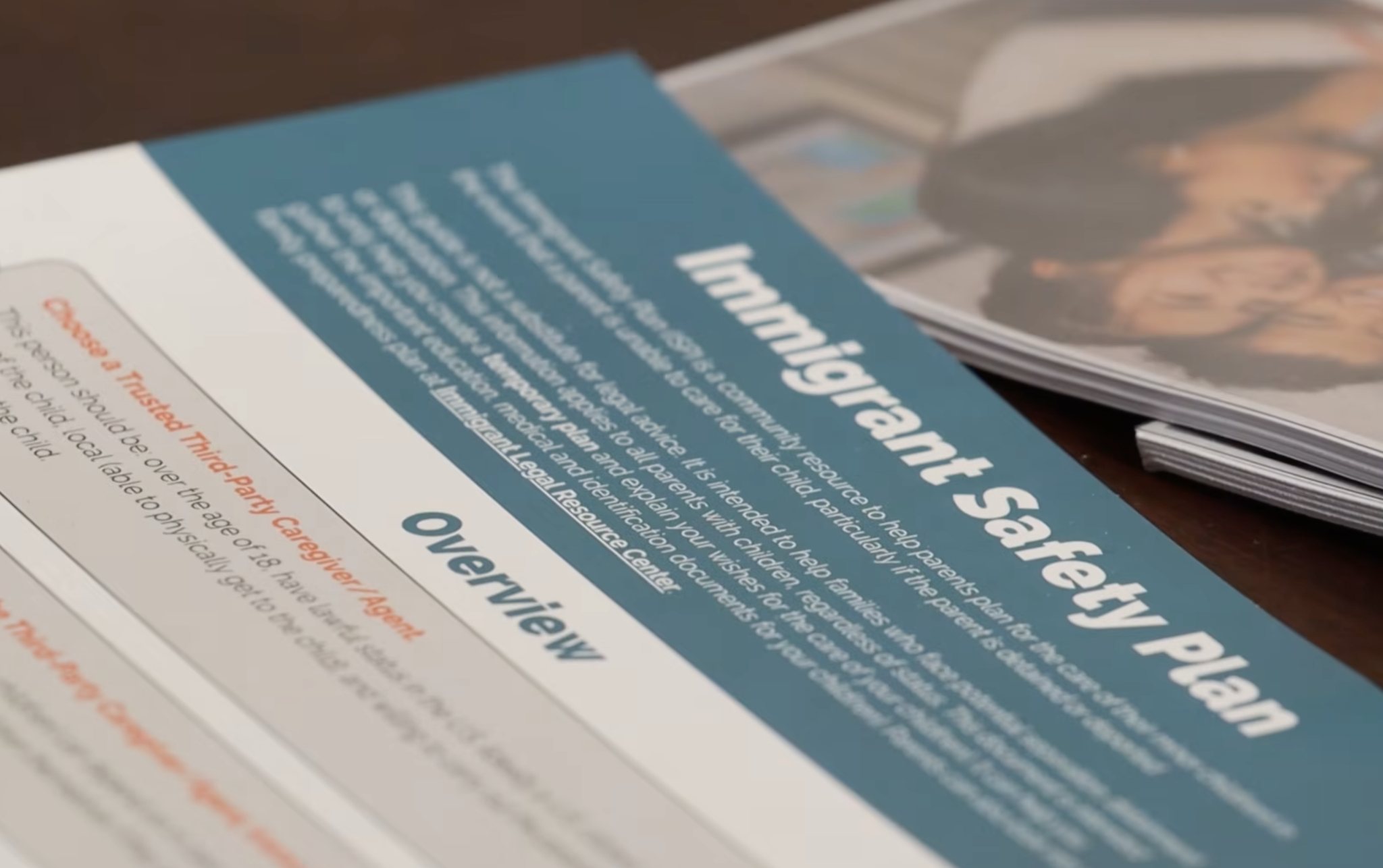
LCYC created its plan in 2017 in response to the first Trump administration’s immigration policies, Jiang said. Today, its 46-page packet, available in 12 languages, includes a step-by-step guide along with two legal forms parents can fill out. LCYC’s version is among the best-known plans, but it’s not the only one.
“There are multiple ways to do this,” Jiang said.
The program, partially funded by the city of Seattle, offers in-person workshops and one-on-one video appointments to help families complete the plan. Jiang said the group has worked in King, Pierce and Snohomish counties.
“We’ve definitely seen an uptick in requests coming through,” Jiang said.
After noticing last year that fear was keeping families away from in-person events, the group shifted much of its work to private video appointments. So far this year, through those appointments and 16 in-person workshops, the program has helped families create plans for 174 children, Jiang said.
“Most people come to us with anxiety,” she said. “You can see their body language when they come in. It’s very tense. But when they have this document done, it’s almost like a weight is off their shoulder.”
Keeping kids out of foster care
Advocates say immigrant safety plans are meant to keep kids in a stable environment and out of the foster care system.
“We also believe in giving the power and agency back to families to decide what should happen to their children, rather than let some other entity or agency decide their fate,” Jiang said.
So far, no children have entered foster care in Washington due to immigration enforcement, according to the Washington State Department of Children, Youth, and Families. Often a relative, neighbor or friend steps in to care for the child, the agency said.
“DCYF would only be involved if law enforcement reaches out because they can’t find someone to care for the children or if there are concerns about the people the parent’s identified,” Kortney Scroger, a DCYF communications manager, wrote in a statement.
DCYF lists LCYC’s immigrant safety plan among its resources for families facing immigration-related separation.
Schools on alert
Jiang said it’s important for parents to have a family meeting and distribute the completed safety plans to the right people. She recommends the parents’ chosen caregiver keep the original signed plan, and that their children also always carry a copy, including in their backpacks.
“We can never predict when the parent is going to be unavailable,” Jiang said.
Some school districts are preparing for that possibility, too. In the Highline and Tukwila school districts, which have large immigrant populations, school leaders have been reminding families to update their emergency contacts.
“We’re not going to release them to an adult unless their legal guardian has told us in our student information system that that adult can pick them up,” said Tamasha Emedi-Frye, principal at Highline’s Glacier Middle School in SeaTac.
Highline also trained its principals on what to do if immigration enforcement reaches their schools. Emedi-Frye said she passed the training on to her staff, and she felt their relief.
“Our staff was starting to get nervous, too,” she said. “Families go to the teachers first. That’s who the kids trust the most, so that becomes who the families trust the most, and the teachers weren’t really sure what to do.”
In Tukwila, Superintendent Concie Pedroza said some students worry they’ll come home to find their parents gone. Others, she said, have been detained along with them.
“It’s been really heartbreaking,” she said.
She said the district has reviewed and updated its policies related to immigration enforcement, trained staff in rapid response and held several legal clinics for immigrant families on school property. The first clinic, offered in three languages, drew 300 people.
“I’m doing as much as I can …and I still don’t feel like it’s enough,” Pedroza said. “We need to get more education out to our families.”
Jiang said she’d like to see more safety plan workshops in schools, and LCYC is in talks with other districts.
In the meantime, she has trained more than 100 volunteers — including ordinary citizens, to share the plan in their communities.
“You don’t have to be a lawyer to help someone understand how to fill it out,” she said.
For Underwood, who still supports immigrant students at Franklin High School, the best outcome for the plans she helped families make is that they’re never needed.
“We are going to hope that this work is futile,” she said.
Support Public Journalism
This article has been reposted with Creative Commons license permission from Cascade PBS, committed to fair, high-quality, fact-based journalism. Click here to support nonprofit, freely distributed, independent local journalism. Read this article and others online at Cascade PBS